 Amphibians and Reptiles
of Europe
Amphibians and Reptiles
of Europe
Mexico
Chiapas, Oaxaca & Yucatán
From the 5th of May until the 7th of July 2026
Our half a year in Africa was over. We spent some time in the Netherlands to catch up with friends and family, recover from being nine months on the road and enjoy some proper food again. But then it was time for another rainy season in the neotropics! Our time of arrival was a bit on the early side, but we gambled that some targets might actually be easier while the dry season lasted For we had tried them several times already in the rainy season. Moreover, we also hoped to catch the first rains and bring out some cryptic species that eluded us many times before. Our gamble turned out to work against us in the beginning of the trip, as the lack of rain made it especially difficult to find animals. As was to be expected probably. Finally the rains did arrive, although much more sporadic then they usually do. Maybe the tough El Niño this year? Or climate change in general? We simply don't know. We never had an easy time finding animals, but our hard work and some rain in the right places delivered many of the species we were hoping to see!
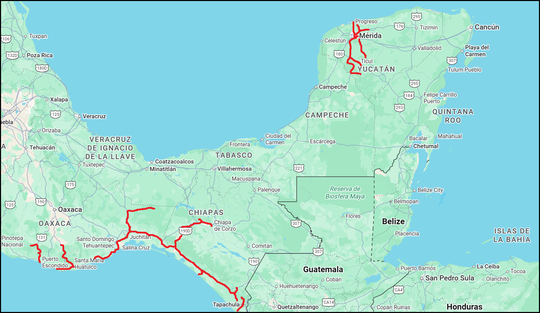
Ocozocoautla
From the 5th until the 9th of May 2026
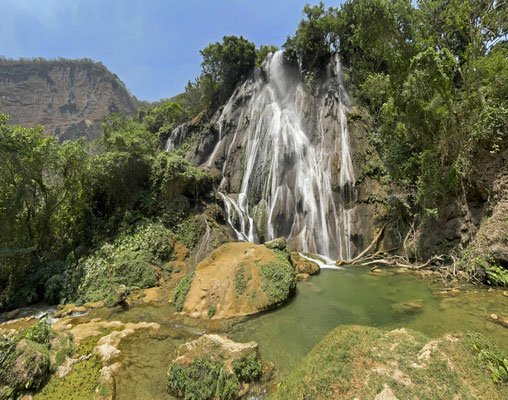
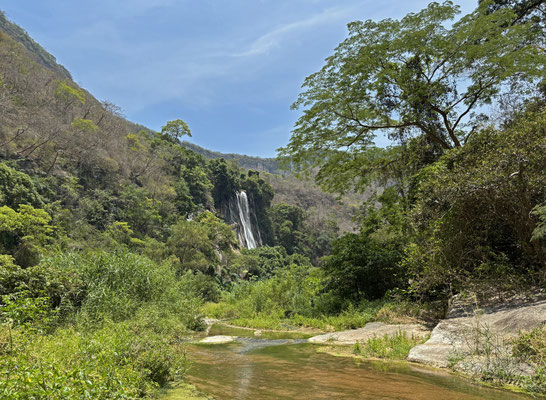
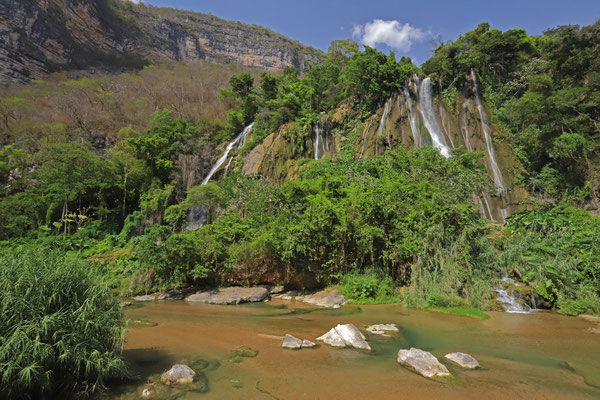
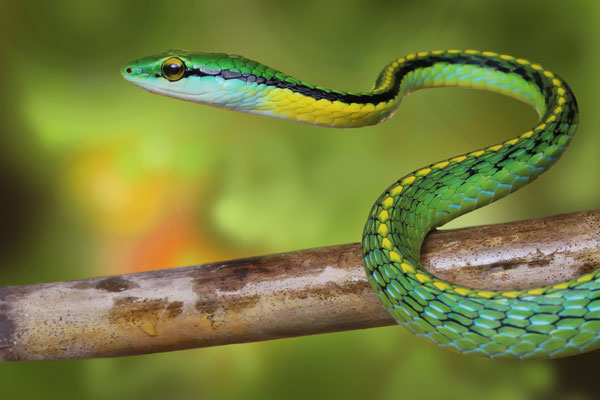
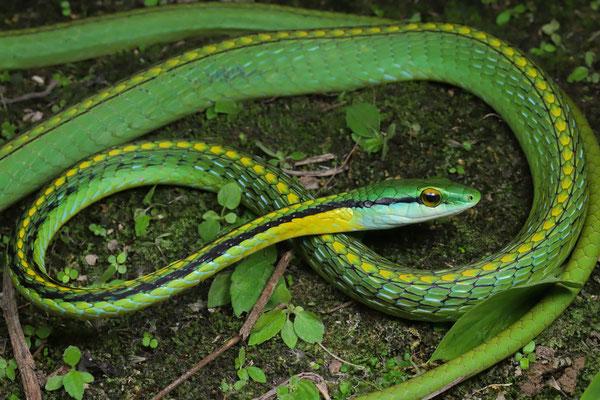
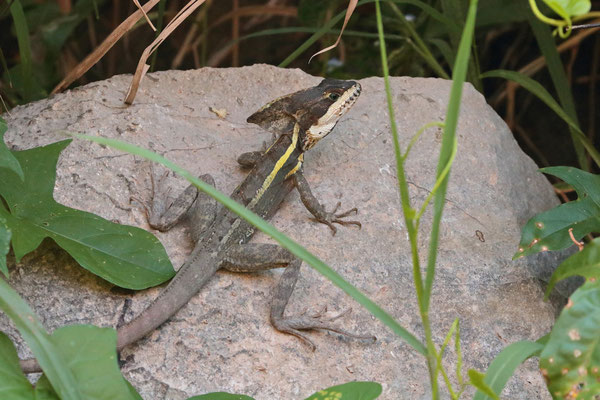
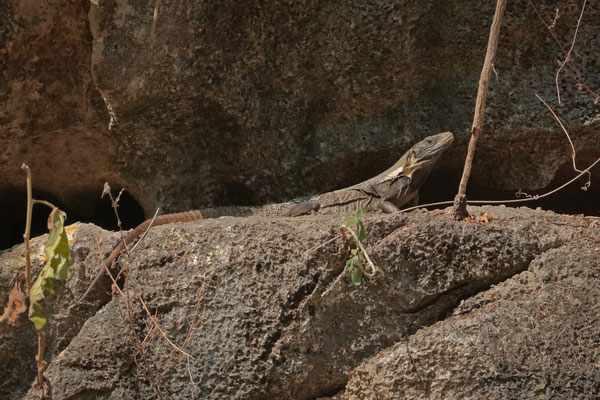
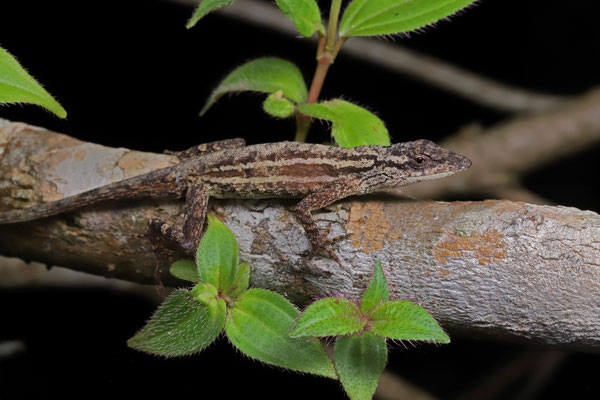
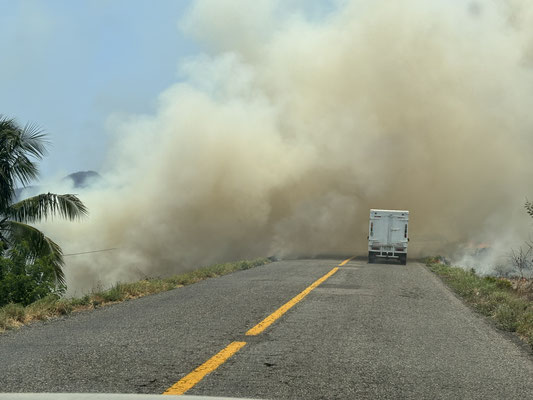
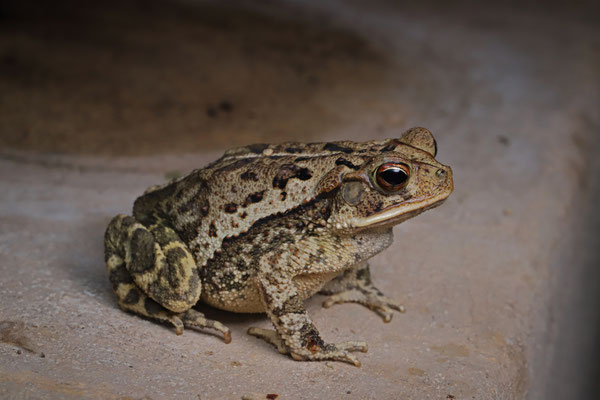
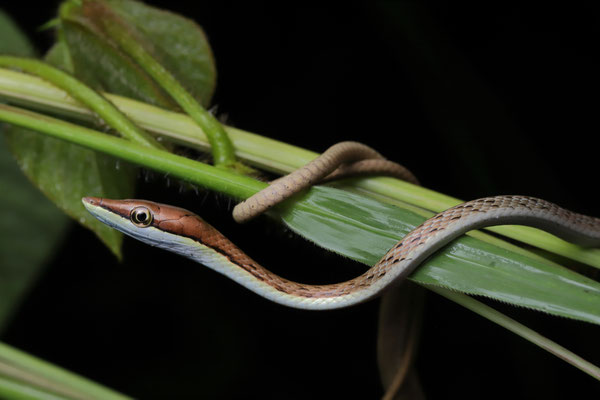
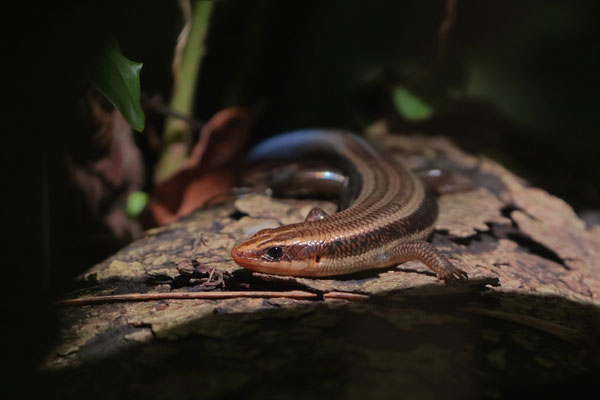
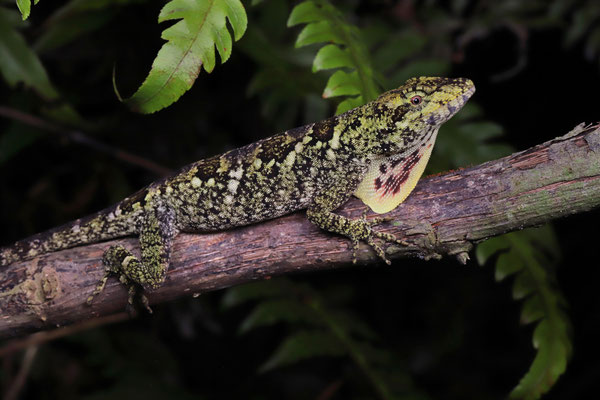
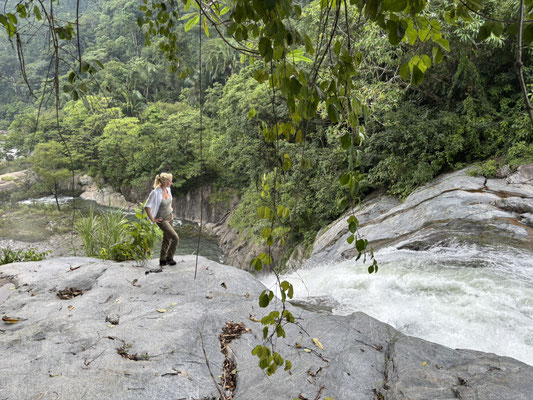
After arrival in Tuxtla Gutiérrez, we took it easy and spent some time in the town of Ocozocoautla (or locally also known as Coita). Here we could adjust to the climate and recover from our jetlag. It is the end of the dry season, temperatures were soaring, humidity was high nonetheless and the soils were bone dry. These weren't the best conditions for herping, but we knew it would be like that before coming here. We did some hikes to some stunning waterfalls in the area and lost liters of sweat. On our hike to the most spectacular waterfall we were kind of hoping to have the place all to ourselves. We descended on the steep cliffs and followed a river upstream towards the waterfall. With all the river crossings we had to make, I decided to walk barefoot and finally after around 6 km we finally arrived. The scenery was absolutely stunning, but shortly after we arrived a whole army of people turned up. Not exactly the experience we wanted, but luckily these people were volunteers who came to remove the copious amounts of trash from this wonderful area. They also left rather soon so we could properly enjoy the waterfall and the swimholes below it. I even spotted a Pacific Coast Parrot Snake (Leptophis diplotropis) hanging in the vegetation while swimming! Other species also turned up and we saw several Basiliscus vittatus, Ctenosaura similis, Anolis unilobatus, Sceloporus variabilis and Scincella cherriei. Night times searches in the area only yielded the usual suspects such as Rhinella horribilis, Craugastor rhodopis and Leptodeira septentrionalis. At night we also frequently encountered bushfires and even some people who were a bit in panic as their friend went missing on a hike. As we continued our night search we encountered the missing person a bit further on the road. Luckily he had been found by some other friends, but in that moment a lot of cars arrived with crying family members and police and in the confusion people were thanking Laura and me for all we had done... we had the feeling we were in the wrong place in the wrong time, but played along and decided to get away the moment we had the chance!
Berriozábal
From the 9th until the 12th of May 2026
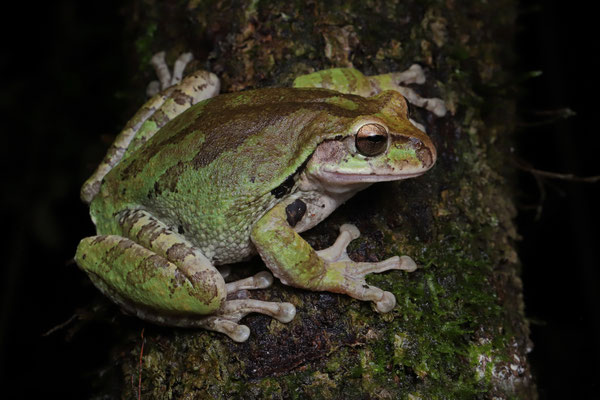
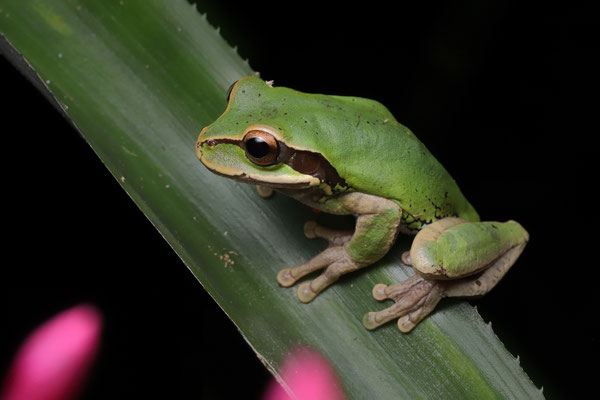
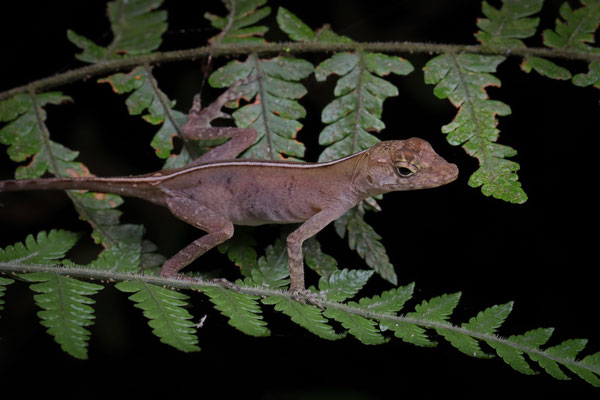
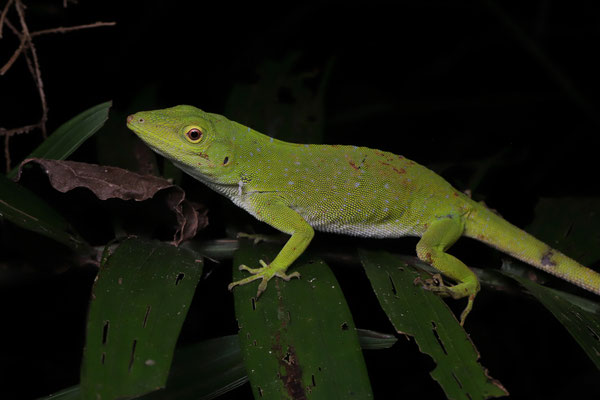
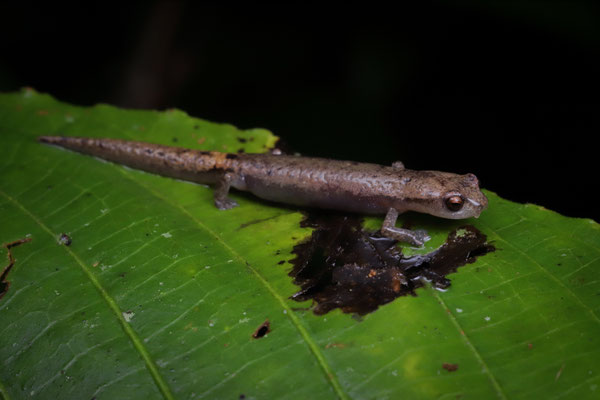
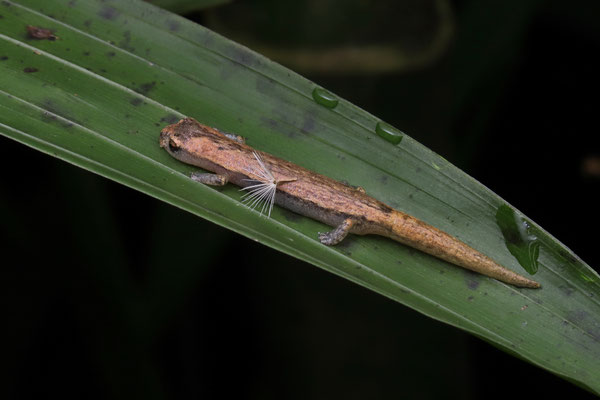
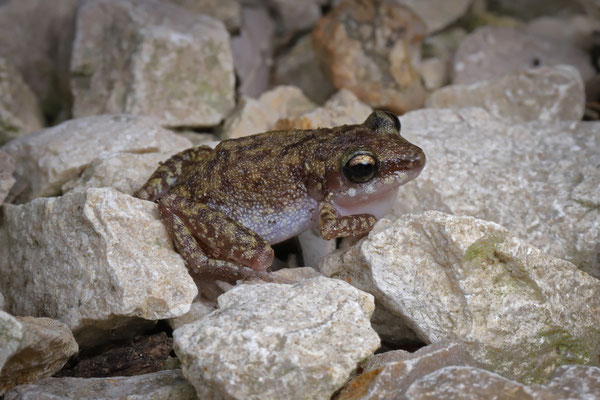
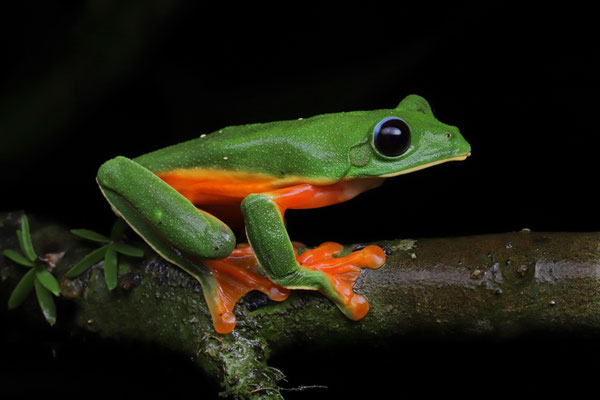
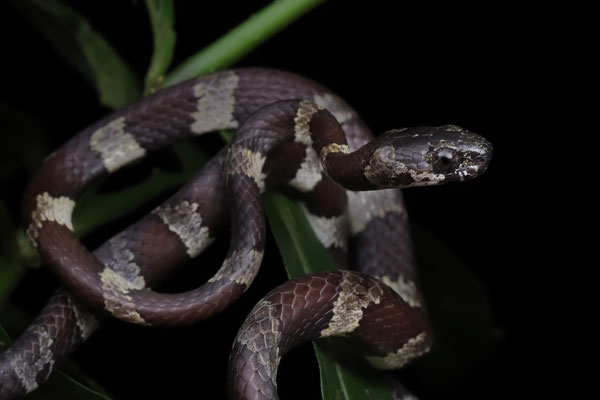
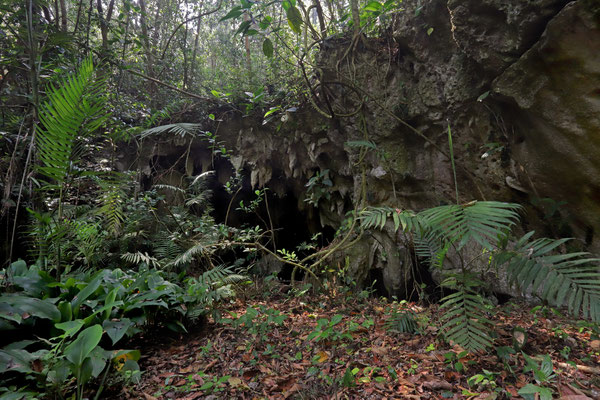
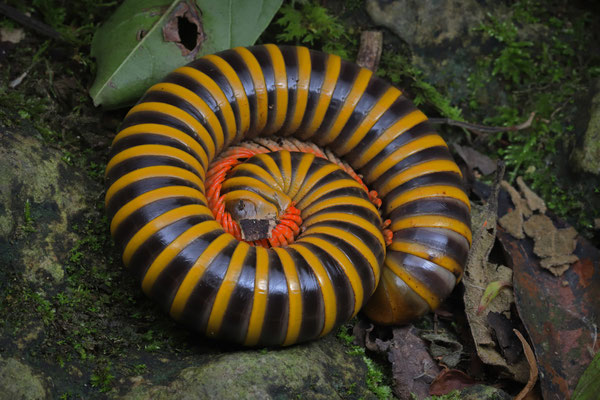
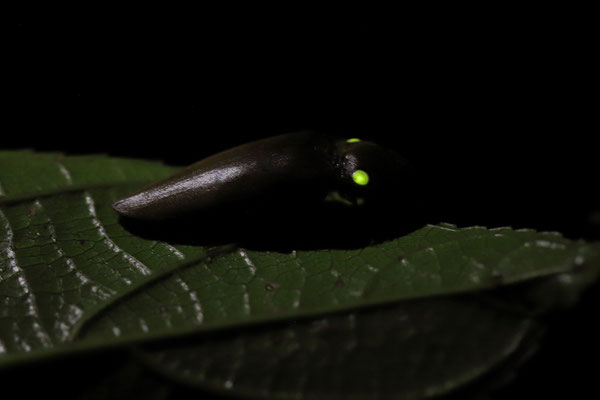
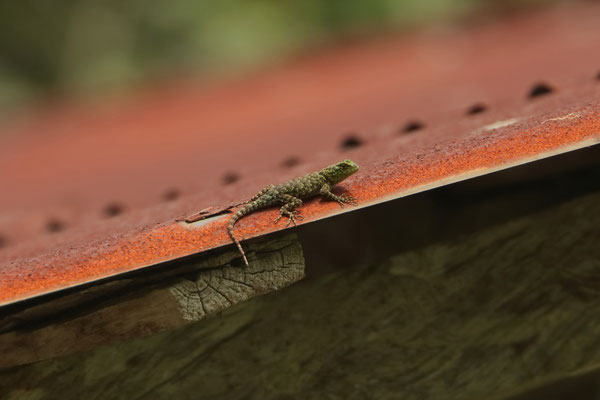
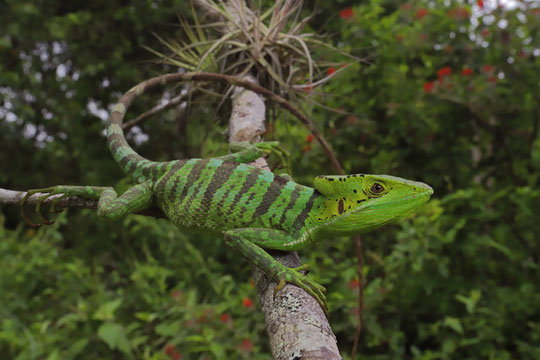
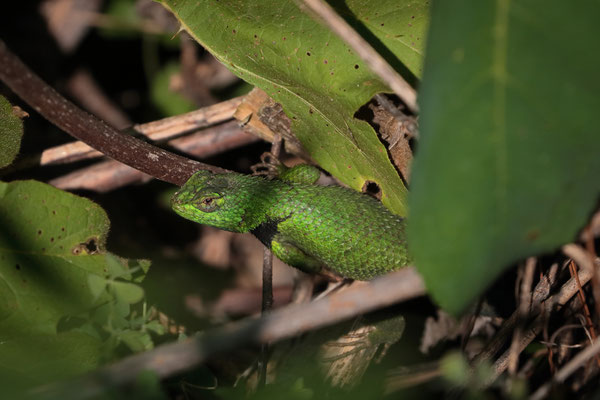
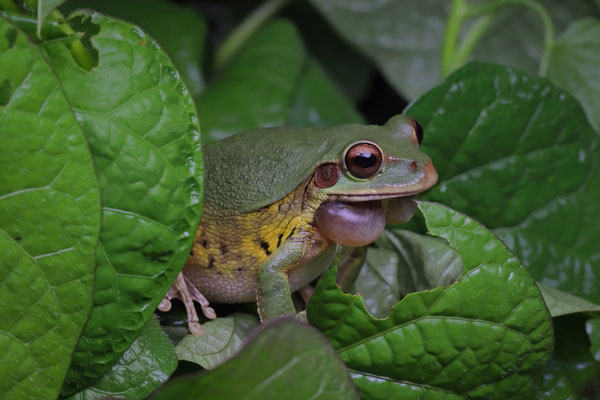
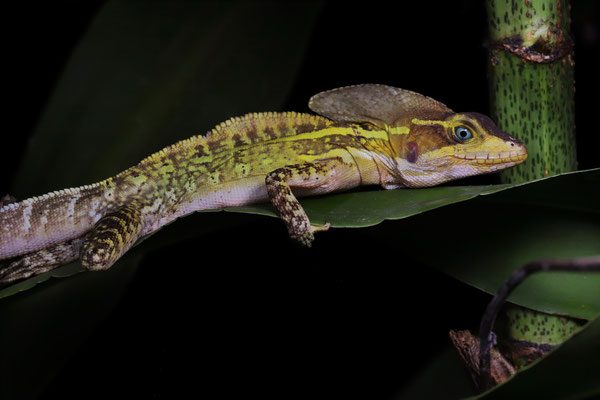
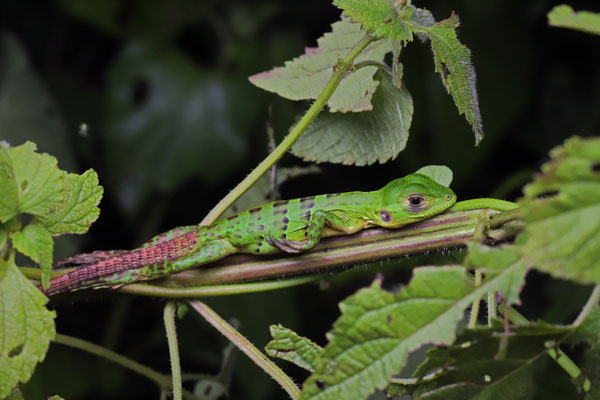
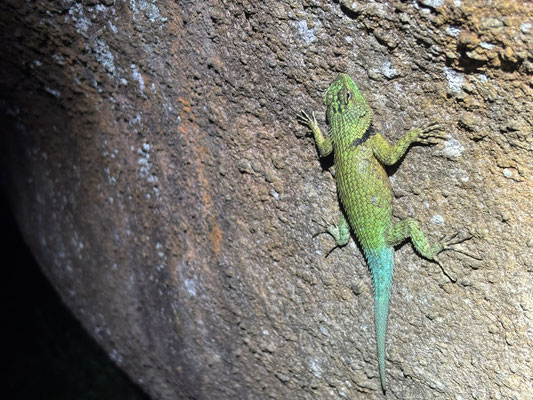
Back to a place which we visited both in 2019 and 2023 and where we always had a good time. We didn't find our two viper targets in this area though, so we thought we give it a try under conditions without rain to see if that would make a difference. While driving the bumpy roads towards the remote location, we overtook quite some cars full of people. We were already joking that again we wouldn't be alone in this remote place and they call came to search for vipers. Well, the latter wasn't correct, but the former definitely was. A birthday party for a 7-year old draws quite a crowd apparently and we had music, cake and piñatas. Luckily at night we had the place for ourselves and could explore the forests. Without rain we had a hard time finding animals and we didn't see any of our viper or arboreal lizard targets. We did see the more common species such as Bolitoglossa occidentalis, Incilius valliceps, Rhinella horribilis, Craugastor alfredi, Craugastor loki, Craugastor xucanebi, Eleutherodactylus pipilans, Agalychnis moreletii, Smilisca baudinii, Smilisca cyanosticta, Anolis alvarezdeltoroi (which sadly disappeared in a deep crack), Anolis biporcatus, Anolis laeviventris, Anolis parvicirculatus, Sceloporus internasalis, Imantodes cenchoa, Leptodeira septentrionalis and Sibon dimidiatus. Over the course of three days and nights, real highlights didn't show up and we left a bit sad that our gamble didn't work out. But just when we drove the bumpy dirt road and were talking about the arboreal lizard we would have loved to see and where else it might occur, we saw a large green lizard sitting on the road! A stunning Eastern Casquehead Iguana (Laemanctus longipes) female! We felt very lucky indeed to see this rarely observed species that often eludes the earthbound observer.
Ejido Tierra y Libertad
From the 12th until the 14th of May and the 6th of July 2026
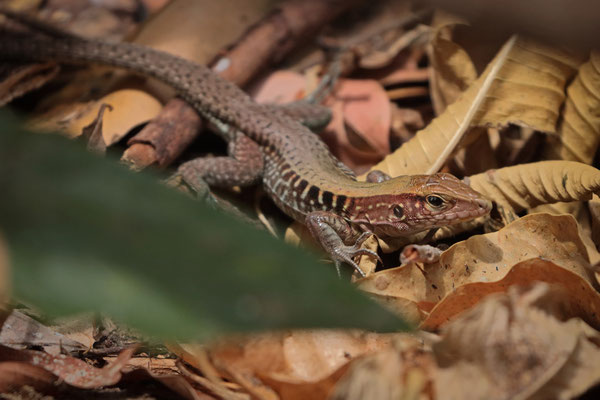
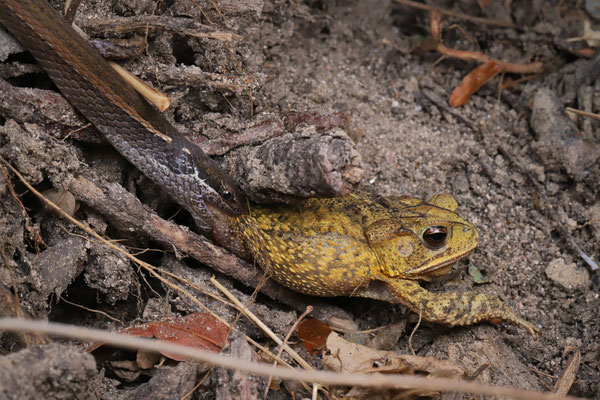
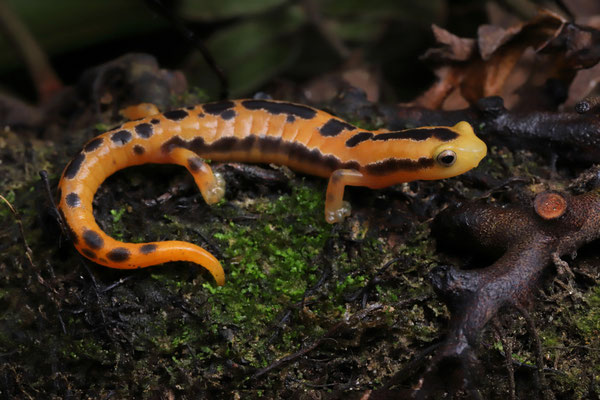
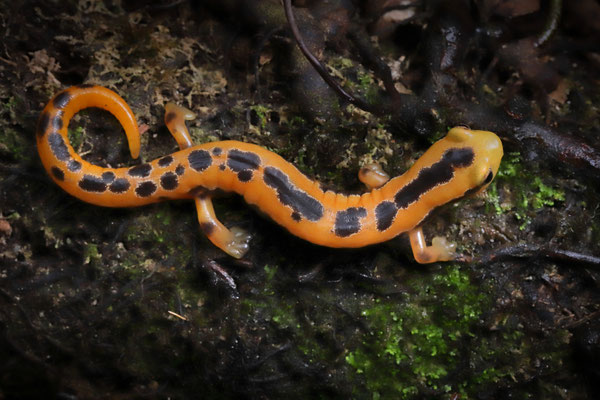
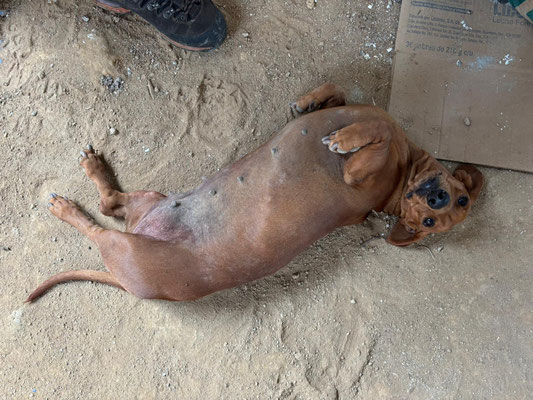
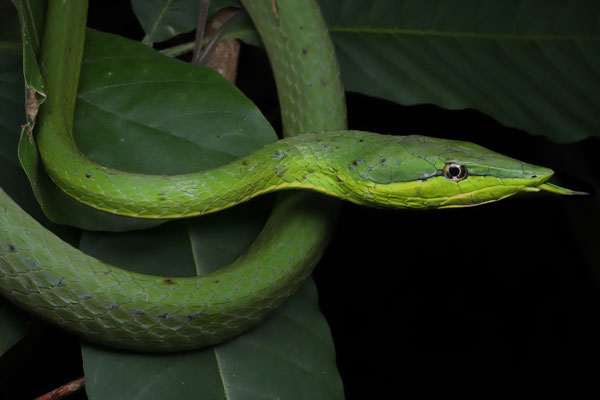
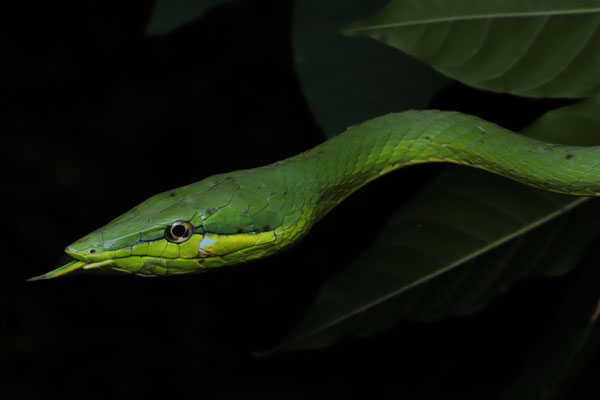
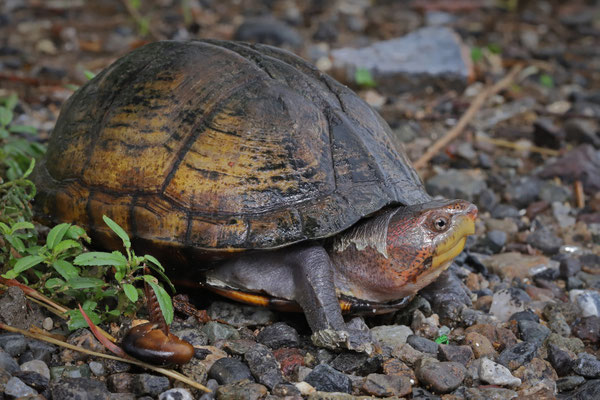
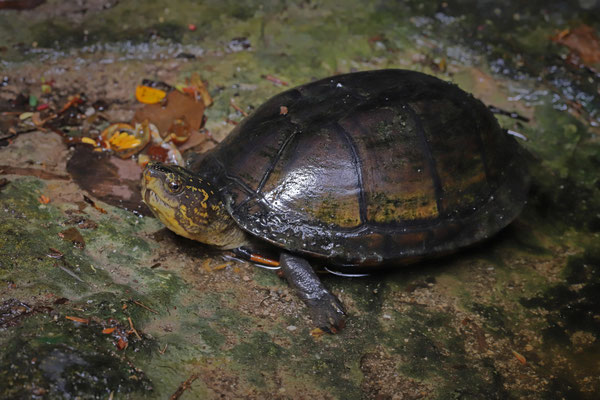
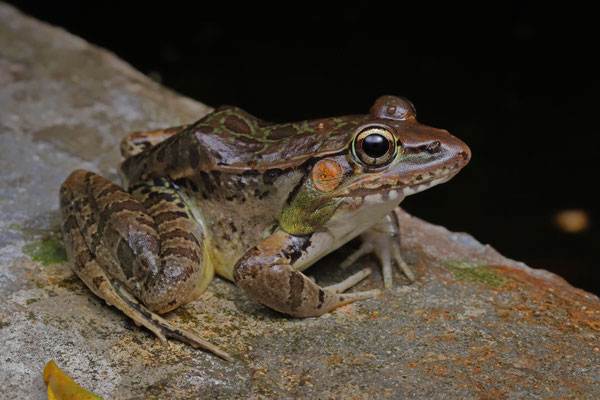
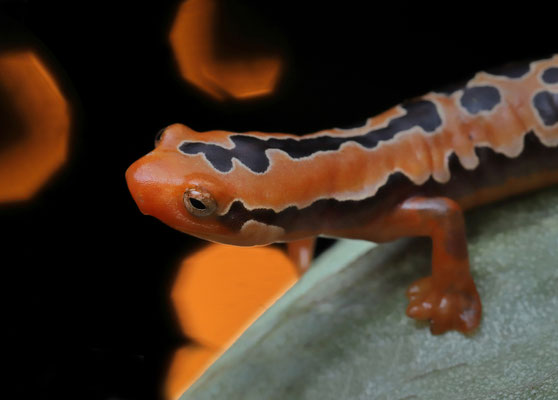
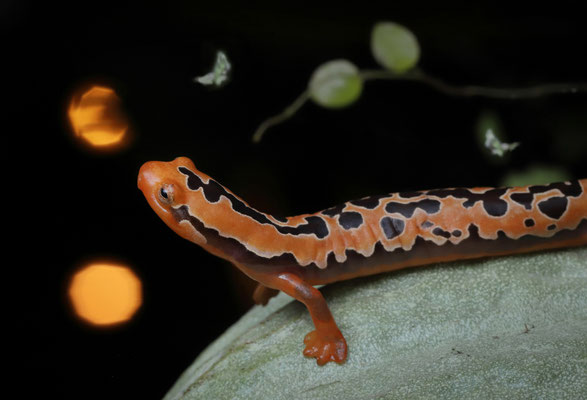
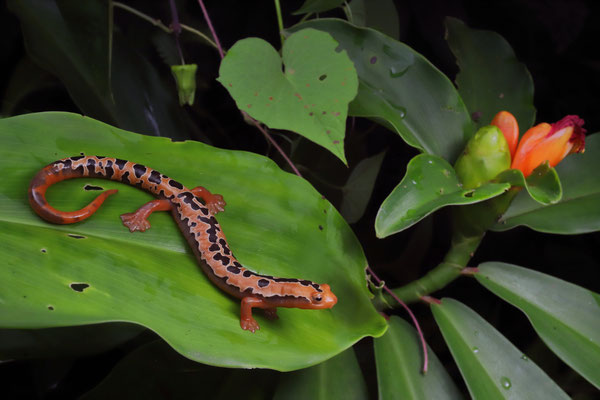
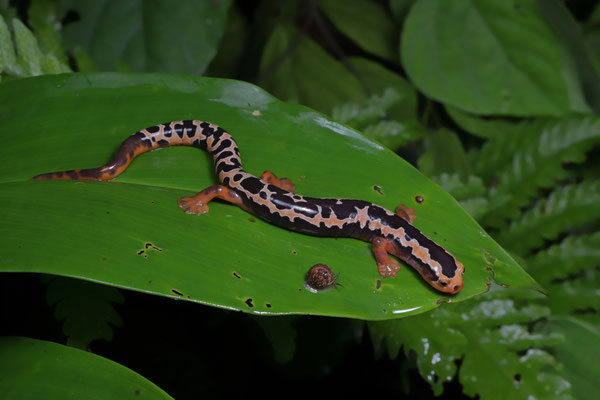
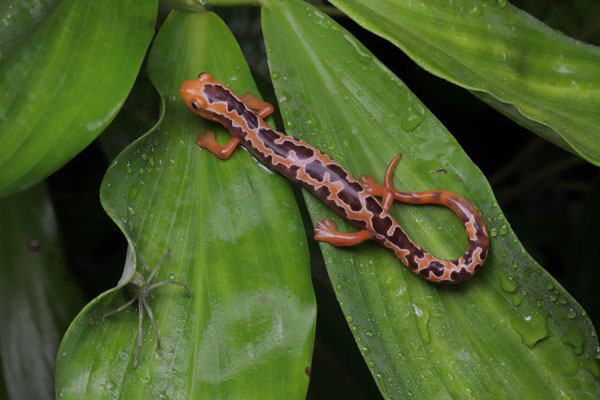
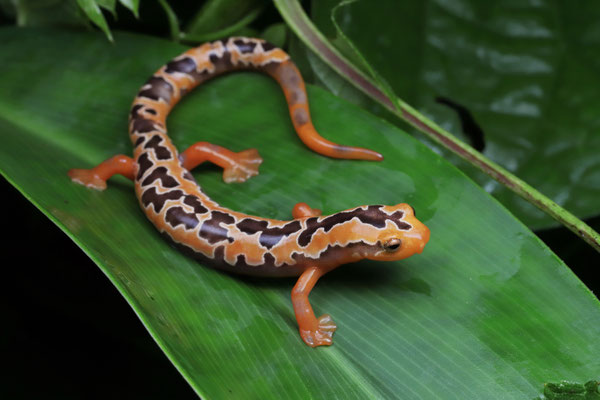
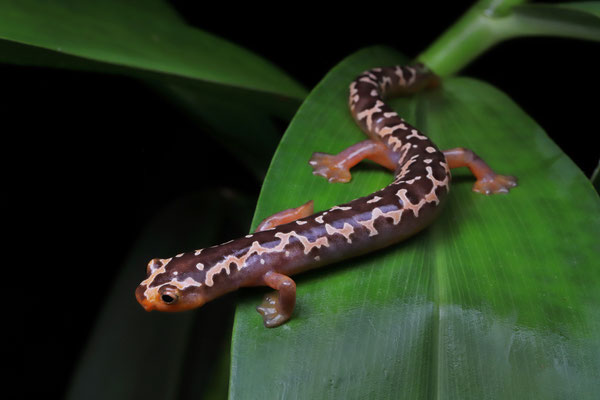
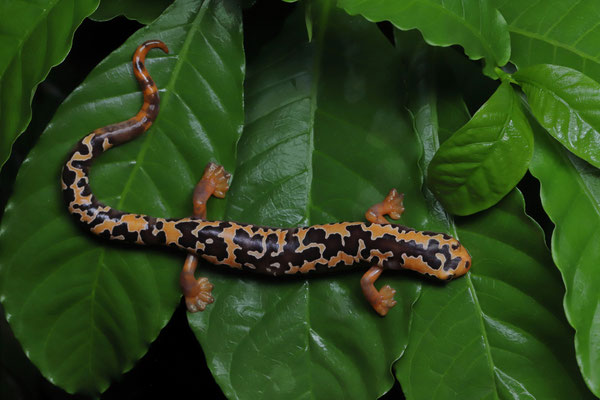
Of course we couldn't visit Chiapas and not visit our hermano Emmanuel! We could sleep at his place and enjoy the fabulous home-cooked food from his family. Our main target here (besides playing with Dotty) was seeing a certain salamander which, during the dry season, likes to hide in the few remaining moist places. So despite the heat and the dust flying around, we were searching for salamanders! We searched endlessly for two whole days and nights, but finally we could see a small individual thanks to Emmanuel. What a wonderful species and great to see a Yellowbelly Mushroomtongue Salamander (Bolitoglossa flaviventris) so early into our trip again! During our searches also other species turned up, such as multiple Dermophis mexicanus, Incilius canaliferus, Incilius valliceps, Hypopachus ustus, Dendropsophus robertmertensi, Lithobates forreri, Kinosternon abaxillare, Hemidactylus frenatus, Anolis unilobatus, Basiliscus vittatus, Ctenosaura pectinata, Iguana iguana, Holcosus parvus, Aspidoscelis guttatus, Leptodeira maculata, Tropidodipsas sartorii and a Coniophanes fissidens eating a toad. Another highlight was a massive Green Vine Snake (Oxybelis fulgidus) which Emmanuel found in a mango tree on our last night.
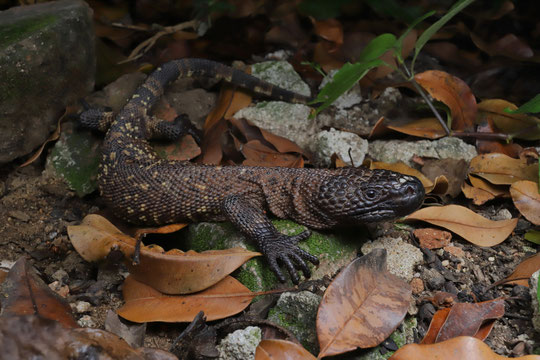
On our very last day in Mexico we again steered towards our home away from home, for one last visit and one last dinner in ETL. A small surprise was waiting for us, as Emmanuel just had a rescue call to save a Mexican Beaded Lizard (Heloderma horridum) from being killed. Always a pleasure to see these strange lizards in the flesh!
Cerro Baúl
From the 14th until the 17th of May 2026
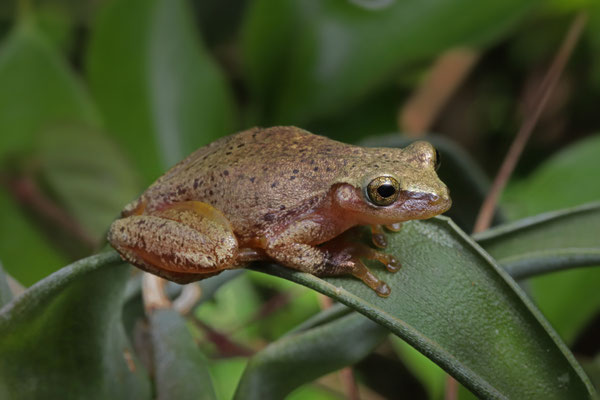
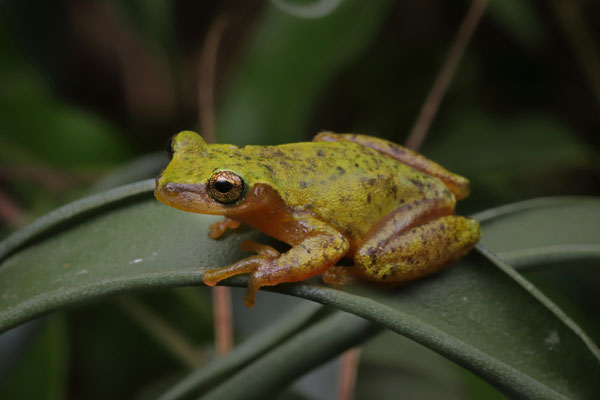
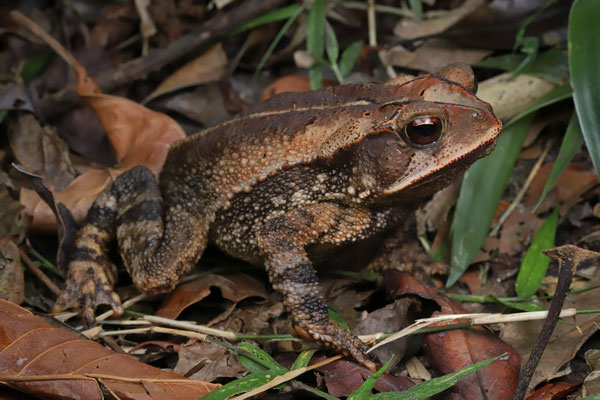
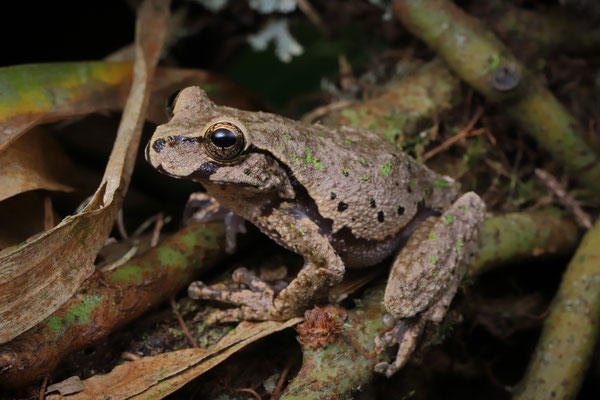
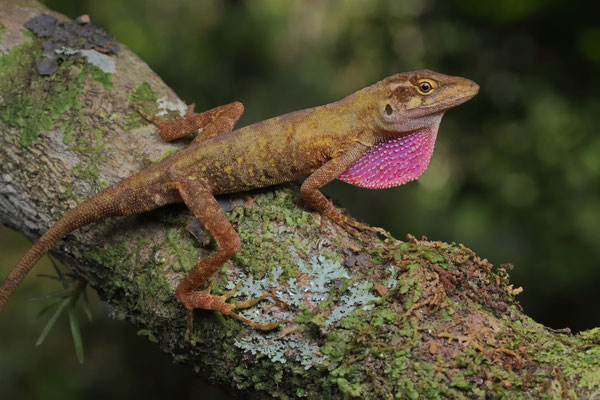
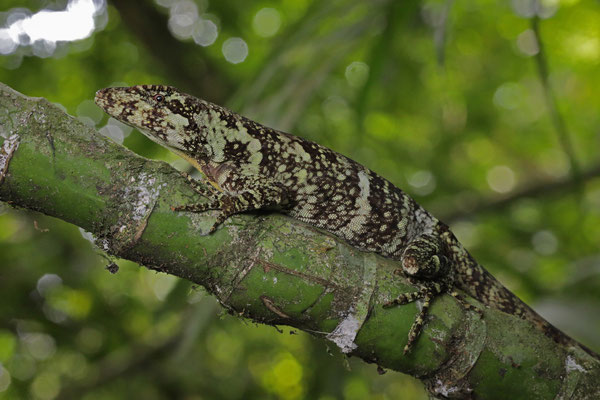
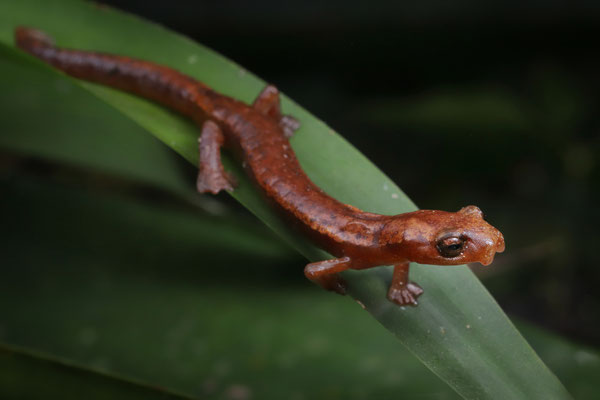
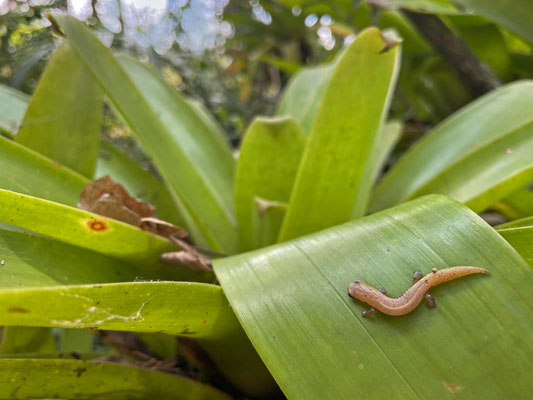
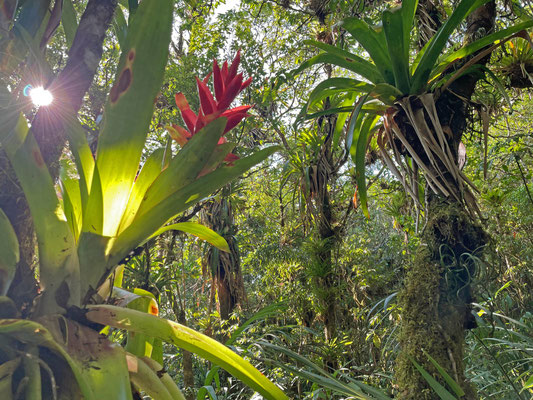
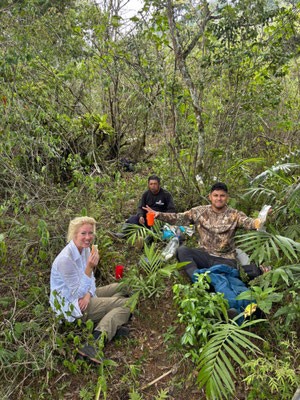
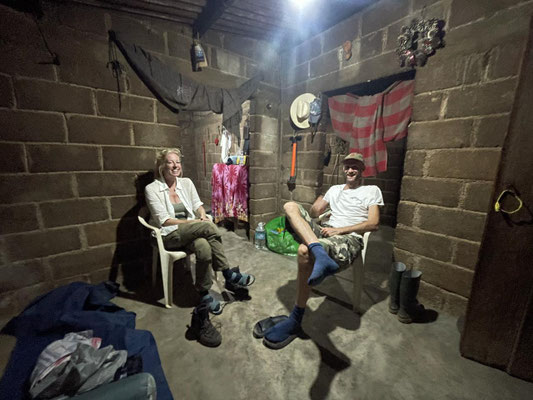
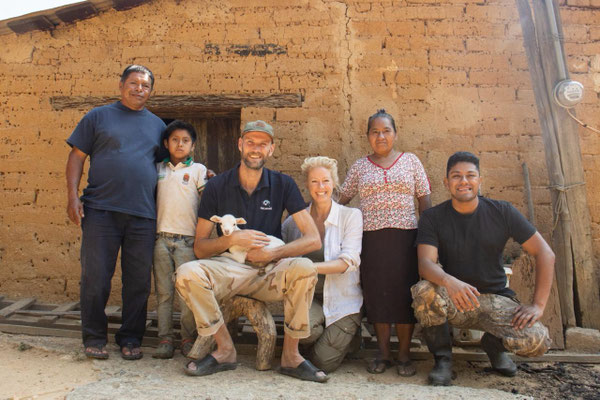
A small and relatively unknown species of salamander brought Emmanuel, Laura and myself to the remote area of Cerro Baúl. With no tourist infrastructure in place, our search started with having to find a place to eat and sleep. Initially, locals pointed us towards an abandoned school where we could sleep in a drafty building full of trash and feces. Not very appealing... Luckily Don Isidro intervened and invited us to sleep at his house. Here we could use the bedroom of his son and his wife was able to cook for us. There were cute cats and even lammetjes running around, perfect! Having found a home base, we could explore the surrounding forests for all the interesting species that are native to this area. Over the course of three nights and two full days we hiked up the slopes where progress was slow due to the steep karst geomorphology and the absence of trails. We hacked our way to the proper altitudes where we could search for our Ixalotriton, Bothriechis and Abronia targets. In the dry season, salamanders often seek out moist places such as bromeliads and these would be the focus of our search. The first salamanders indeed turned up pretty quick, but all of them were Bolitoglossa rufescens and we didn't find a trace of an Ixalotriton. Inside the bromeliads, frogs also turned up and Chimalapa Tree Frogs (Exerodonta chimalapa) were commonly seen, as well as a single Plectrohyla matudai. We also found a Chimalapas Toad (Incilius tutelarius), Ptychohyla euthysanota, Anolis compressicauda, Anolis petersi and a Sceloporus formosus. Not really the haul we were hoping for, but we had a great adventure all the same!
Sierra Madre del Sur
From the 19th until the 25th of May 2026
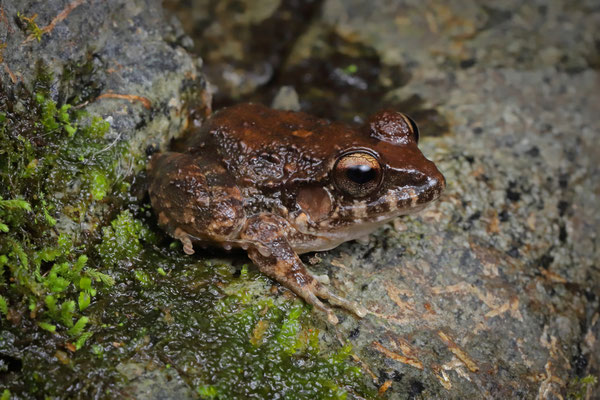
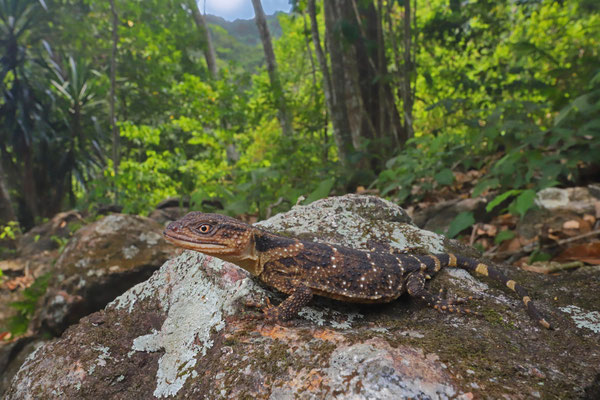
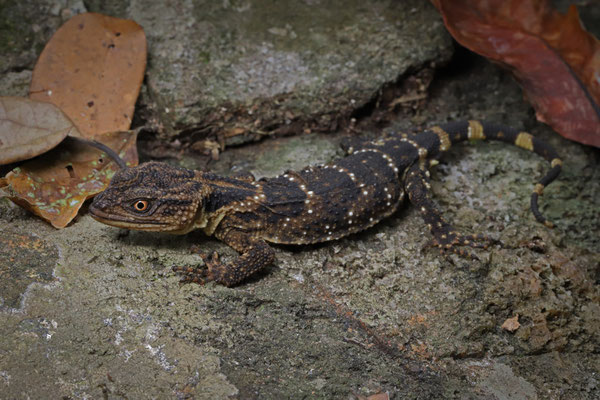
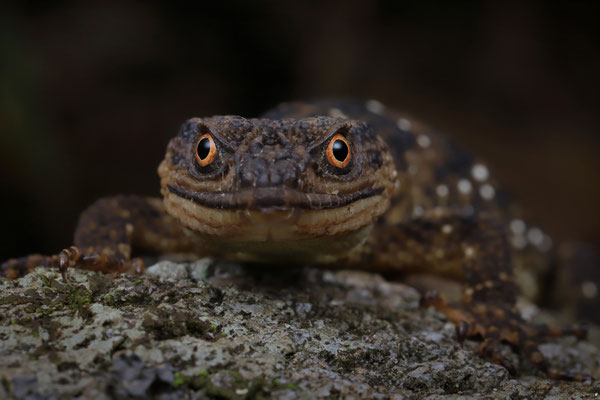
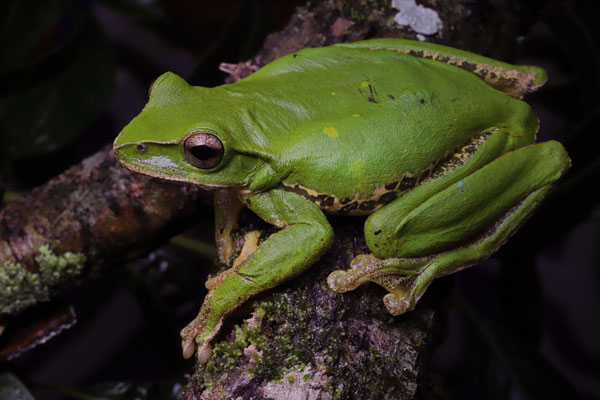
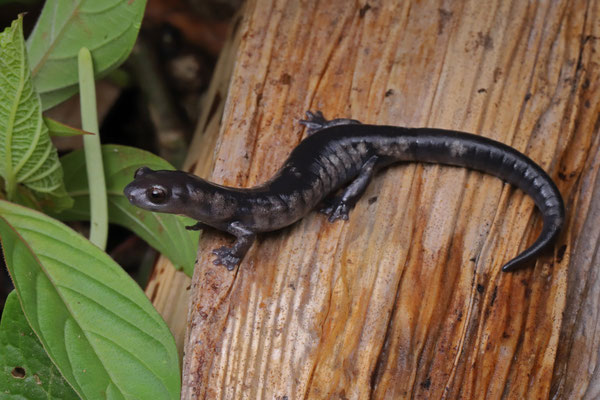
Laura and I continued our way westwards, had a little break in Salina Cruz, and drove into the mountains of Southern Oaxaca. At mid-elevation we found a decent hotel to stay and from where we could explore the surrounding mountains. Without rain we had hoped our salamander target for the area would hide in moist places again, and in the absence of bromeliads, banana plants offer a good alternative. We readily found three Oaxacan Mushroomtongue Salamanders (Bolitoglossa macrinii) this way. We also spent quite some time shining into rocky cracks for a special lizard, and finally I found what we were looking for. After a hike up a steep cliff we spotted a nice rocky outcrops and inside a crack I saw a Mountain Knob-scaled Lizard (Xenosaurus agrenon) staring back at me. Incredible lizards which reminded me a lot of the Cordylidae which we had seen in South Africa. One night we got a heavy downpour which brought out all the frogs. On one particular stretch of road there were several Agalychnis moreletii on the tarmac, and some got already squashed by passing cars. I helped some of the frogs cross, when I noticed a pick-up truck parked next to the road and inside a guy looking at me a bit funny. I walked up to the car to show him one of these beautiful frogs and explain what I was doing. Only just in time to make it extremely awkward, I also noticed the head of a girl coming up from the guy's lap. That dude must have had a pretty weird evening... Well, we found it hilarious and rescued also some other frogs of the road such as Hypopachus variolosus, Rhinella horribilis, Eleutherodactylus pipilans, Smilisca baudinii and Tlalocohyla smithii. At a nearby waterfall we found plenty of Craugastor rugulosus and the first Ptychohyla leonhardschultzei.
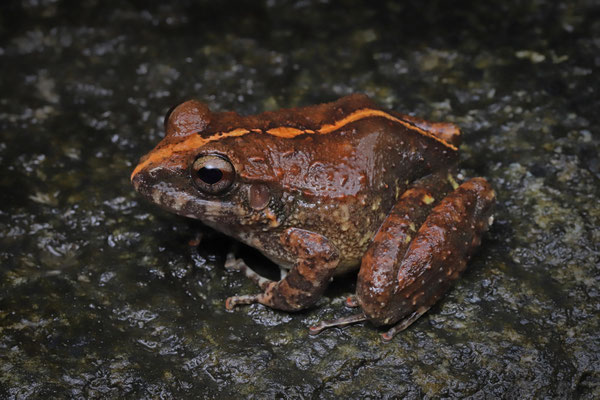
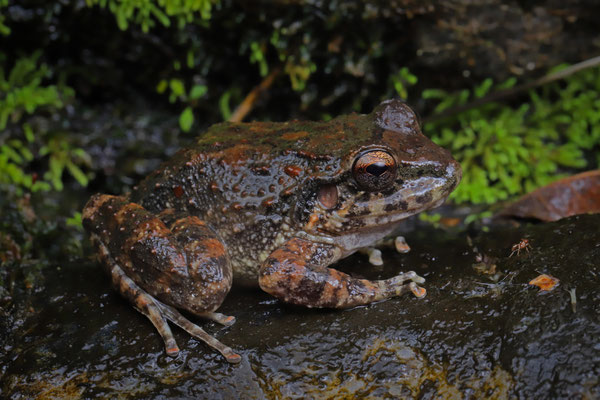
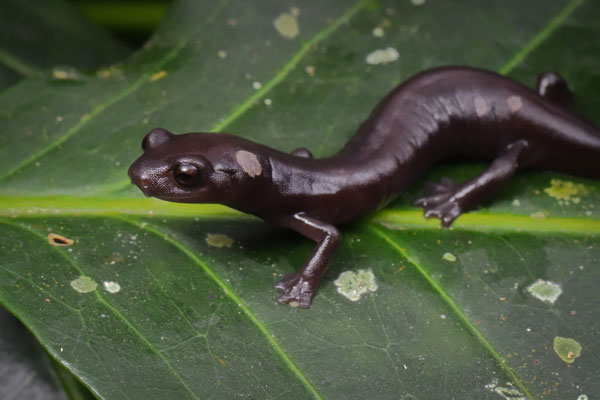
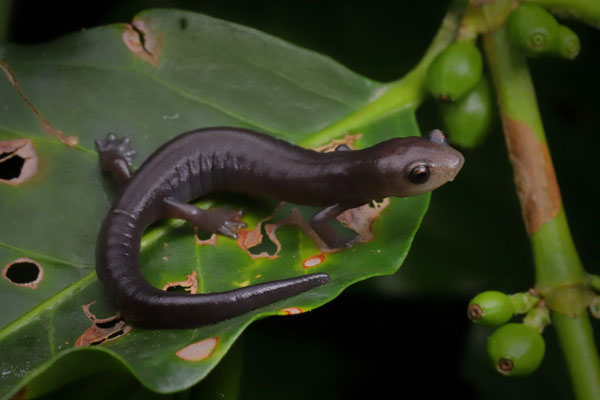
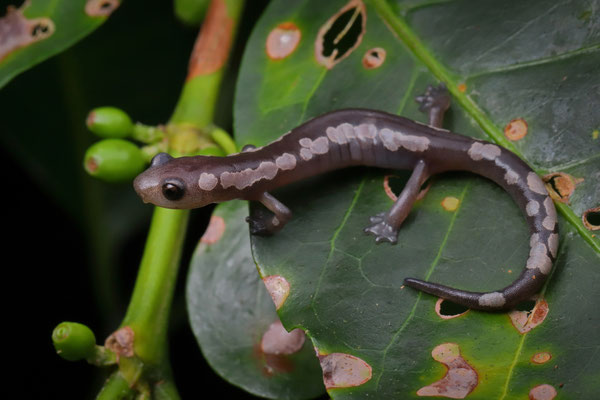
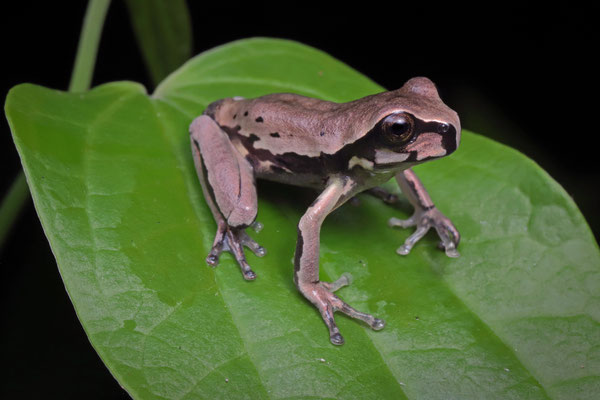
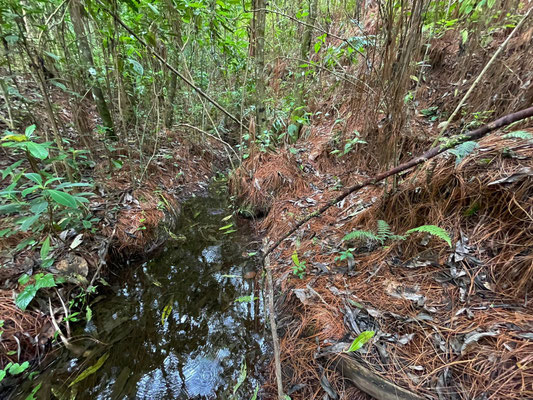
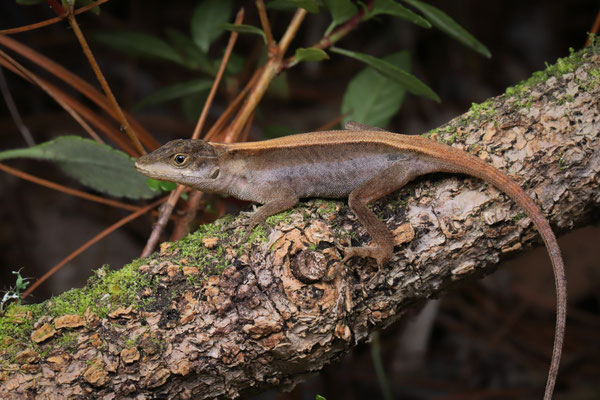
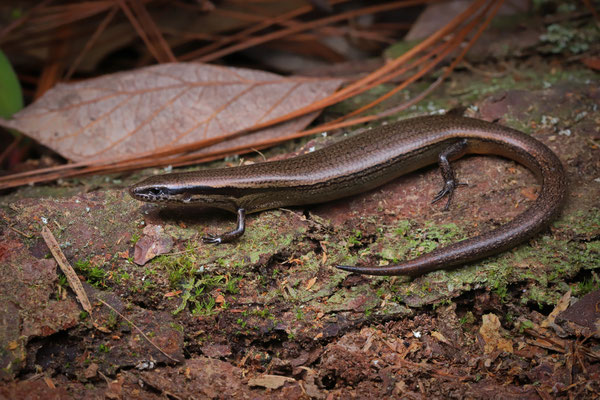
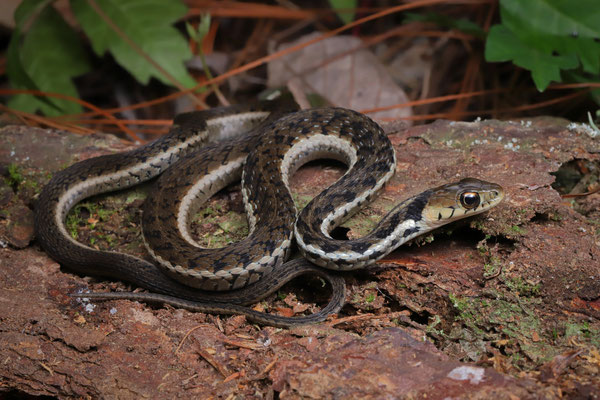
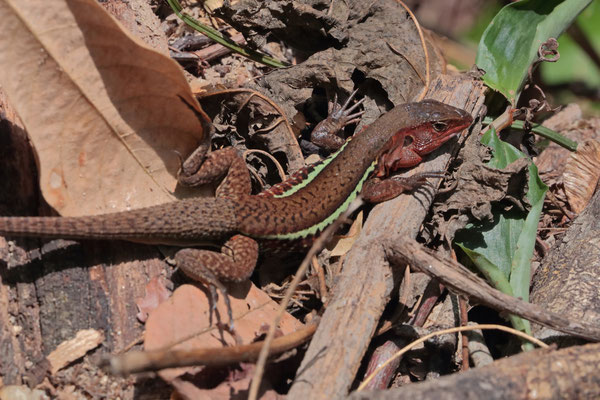
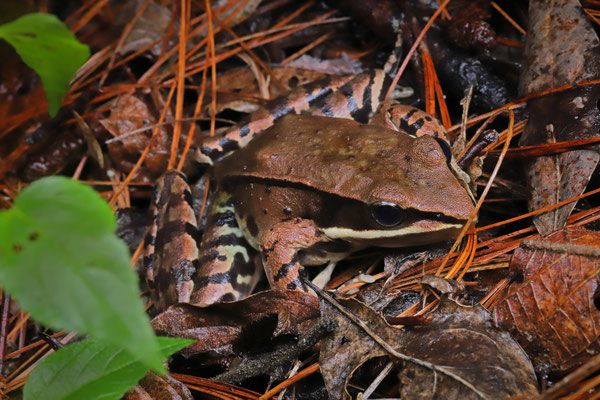
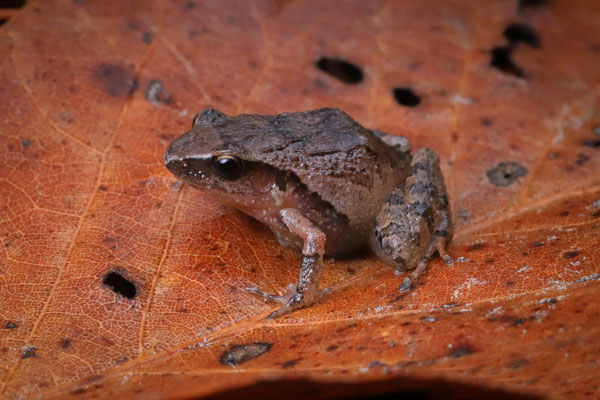
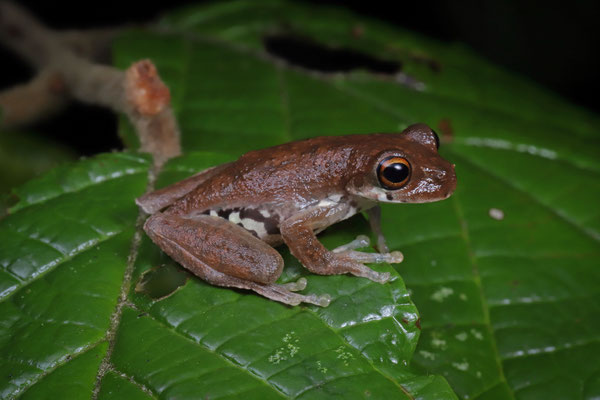
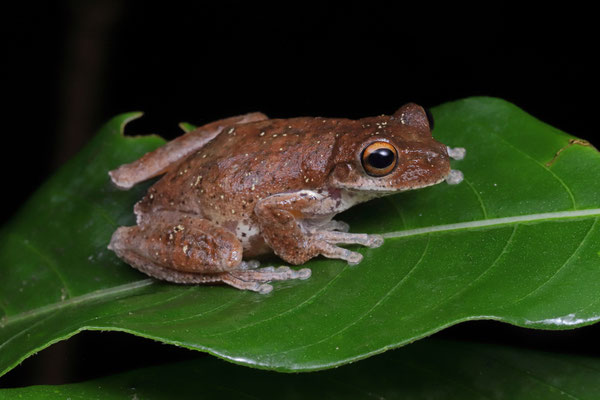
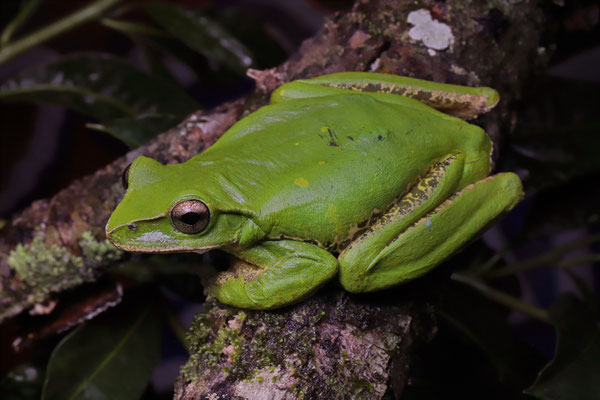
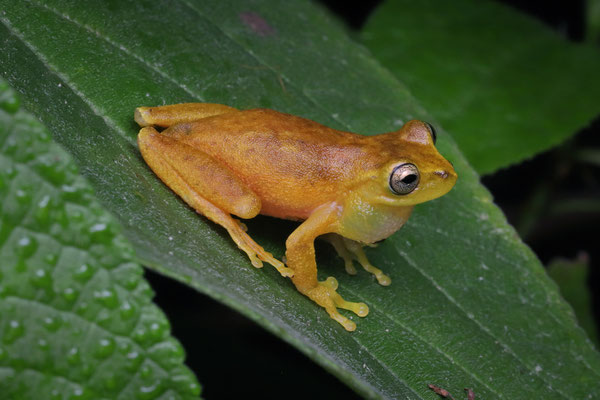
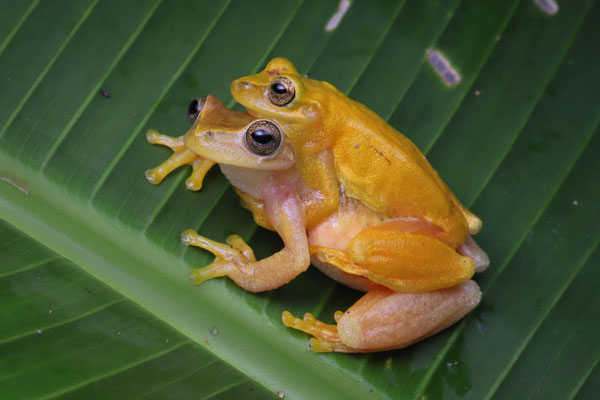
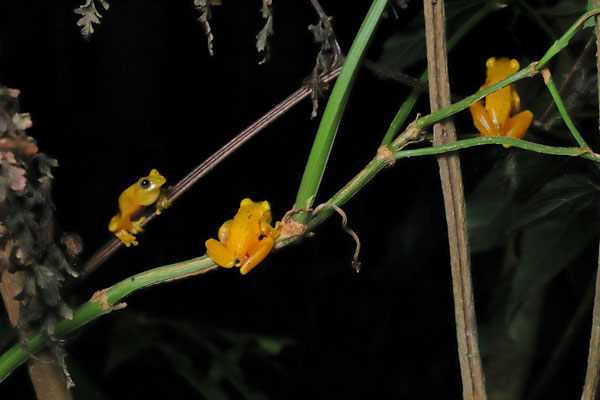
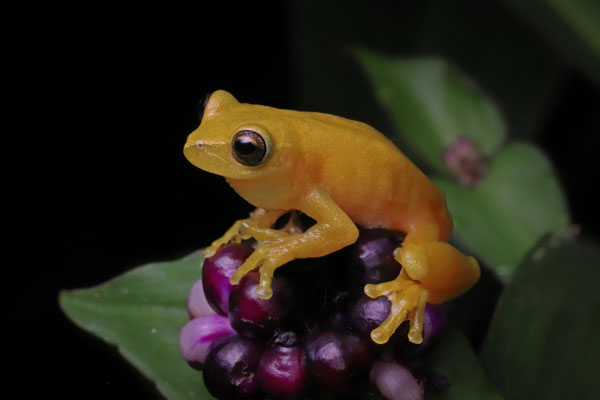
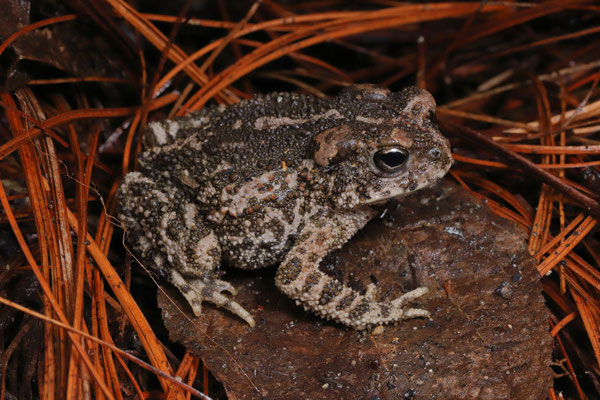
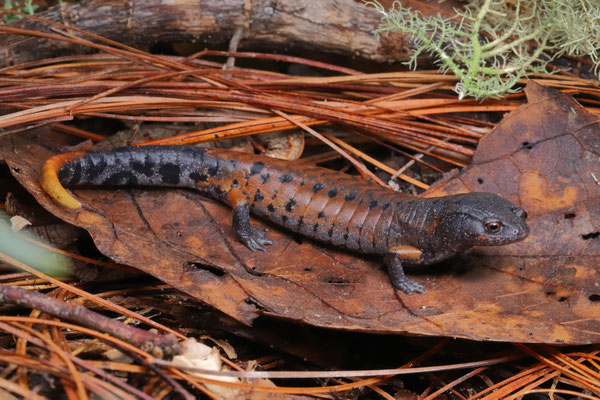
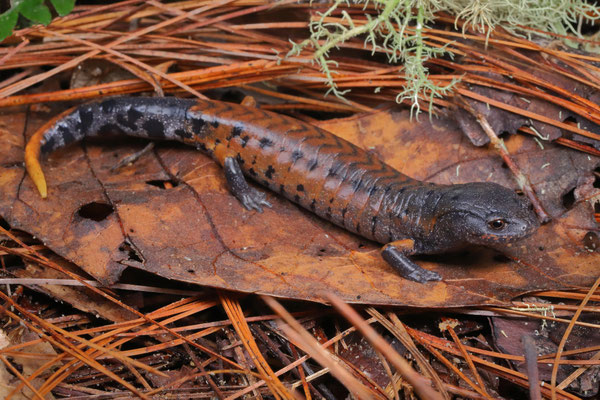
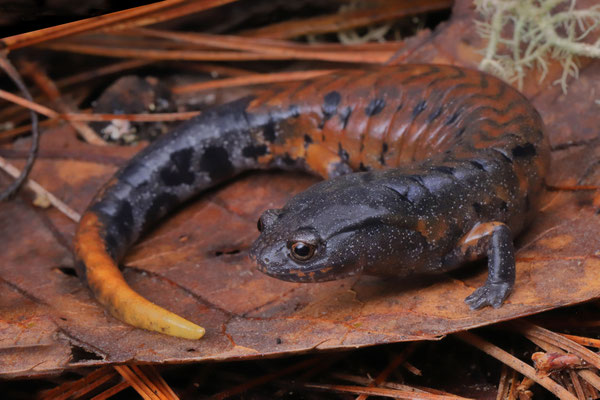
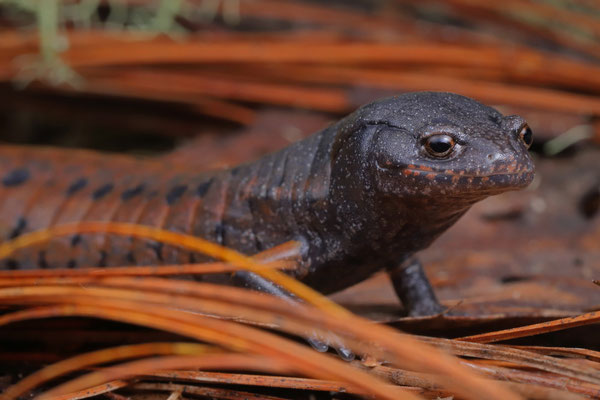
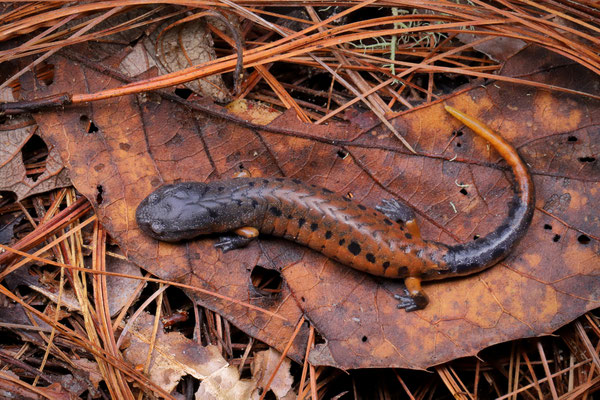
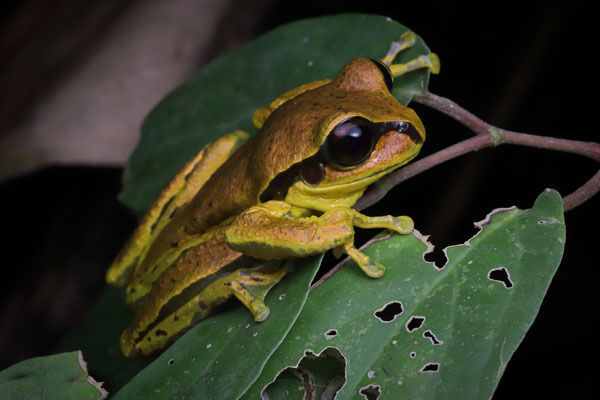
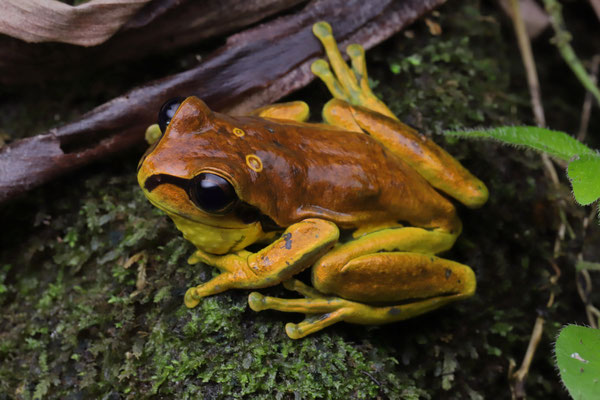
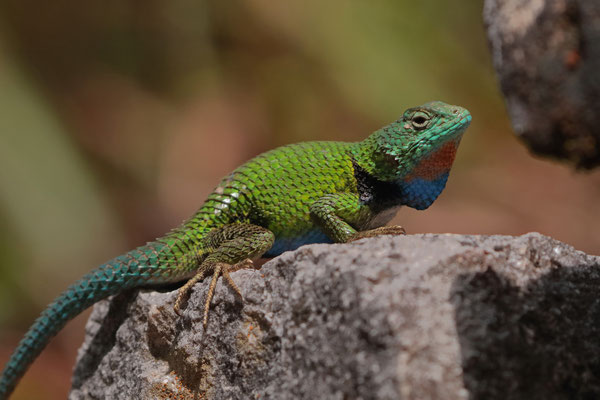
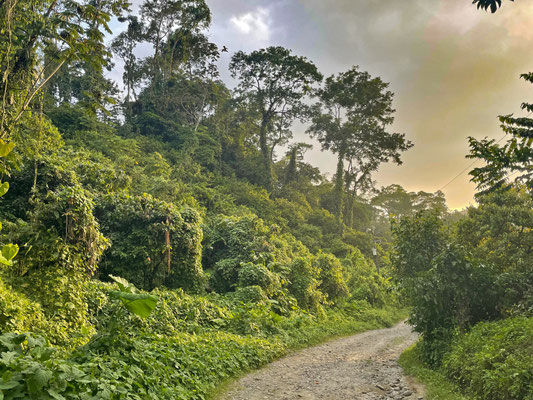
When we moved to higher elevations, we found a second hotel with even less privacy than the first one. As it was facing the road and our door came out directly at the pavement, there were all the time people sitting in front of our door or dogs barking at you whenever you stepped out. The tiny hot room was however not the reason why we visited, because the surrounding forests where absolutely fantastic. Everywhere along the road we could easily park and explore the streams flowing through the mixed pine-oak forests. For days on end we raked leaf litter, lifted mats of pine needles and scrutinized through rotten logs trying to find our main objective. Just when we had started to lose hope, Laura struck gold and unearthed an absolutely stunning Fire-tail Pinewood Salamander (Pseudoeurycea conanti). Amazing to see this enigmatic salamander in real life! Also in these highlands we had luck with rain. The streambeds were full of Sumichrast's Tree Frogs (Exerodonta sumichrasti) and it was amazing to see such an explosive breeding event. We saw Incilius occidentalis, Craugastor mexicanus, Craugastor pygmaeus, Lithobates sierramadrensis, Sarcohyla pentheter, Charadrahyla juanitae and finally also a huge Yellowbelly Voiceless Treefrog (Charadrahyla altipotens) hopping on the road when the rains got so heavy, it wasn't safe to be inside the forest anymore. Some reptiles were also seen such as Anolis nebulosus, Anolis stevepoei, Sceloporus tanneri, Plestiodon brevirostris, Scincella montana and a Thamnophis chrysocephalus.
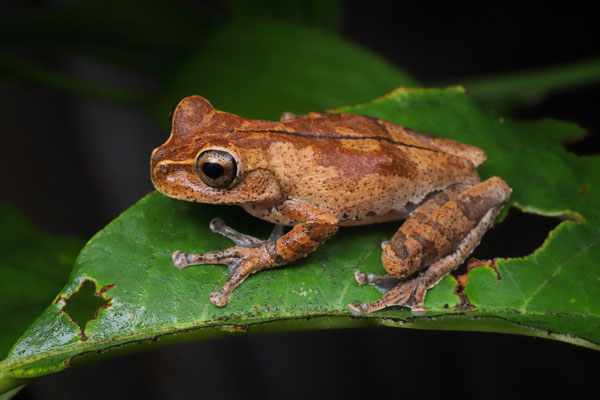
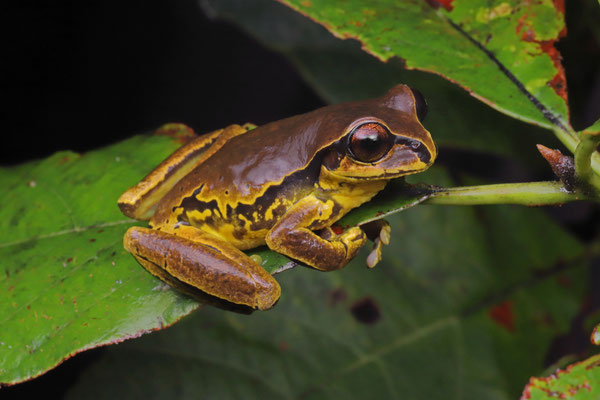
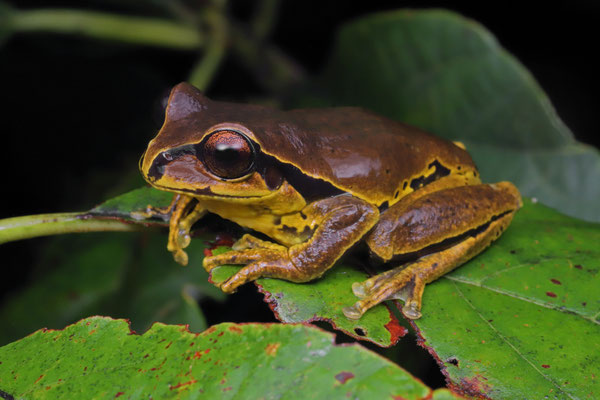
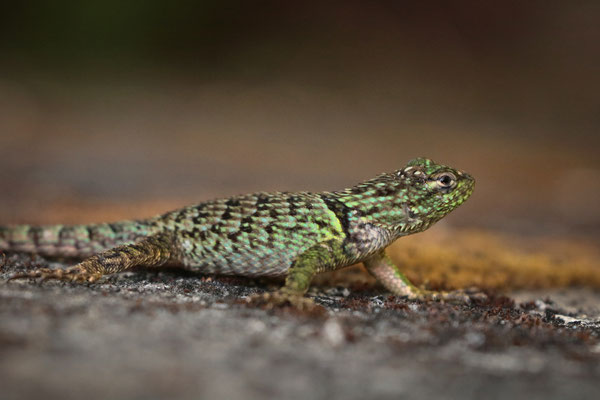
From the 31st of May until the 5th of June 2026
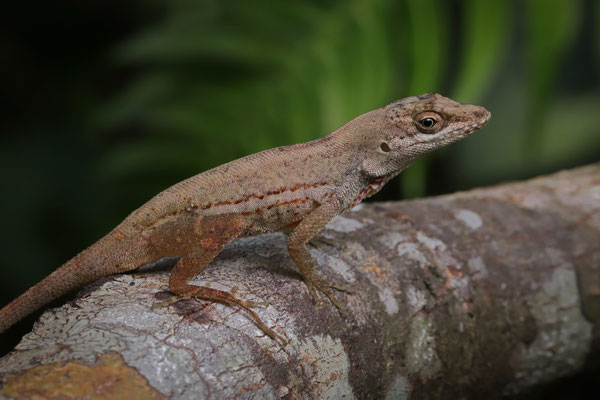
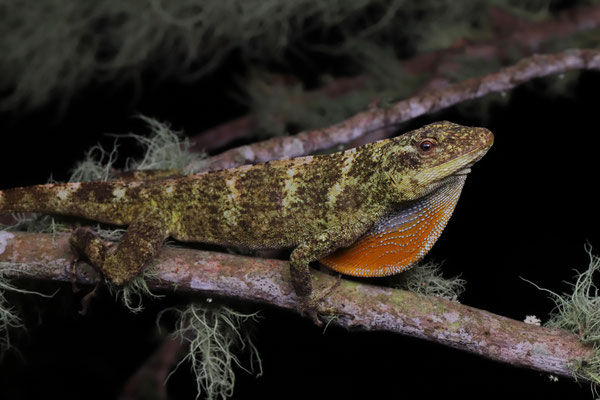
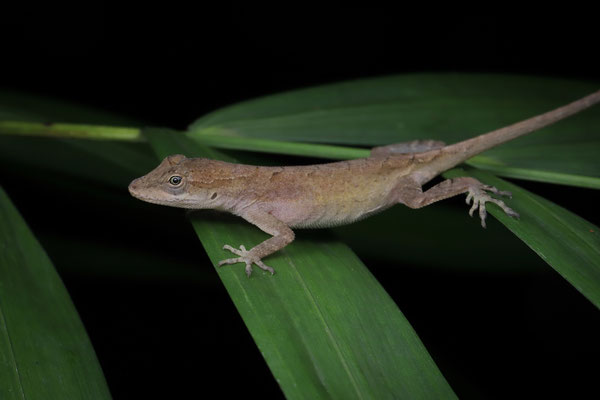
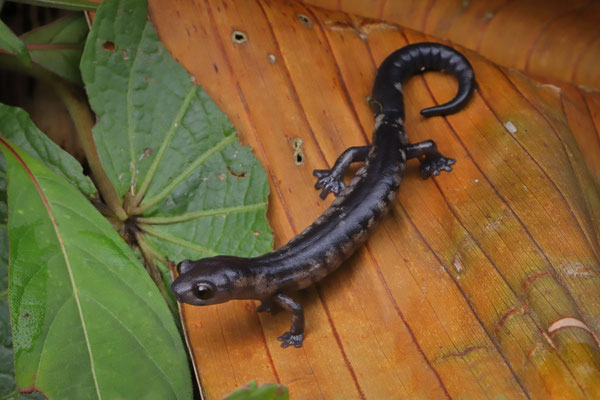
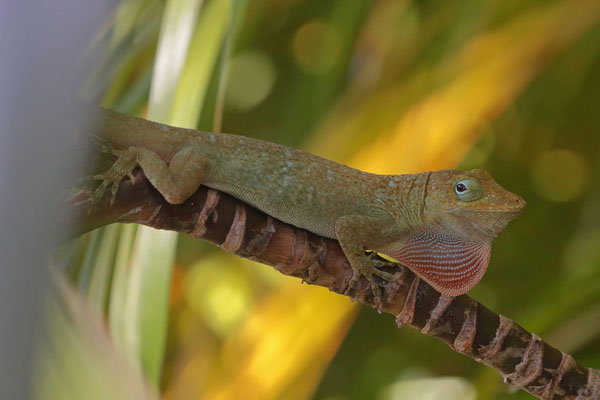
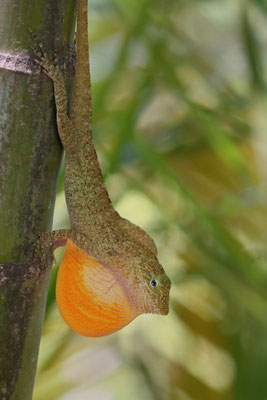
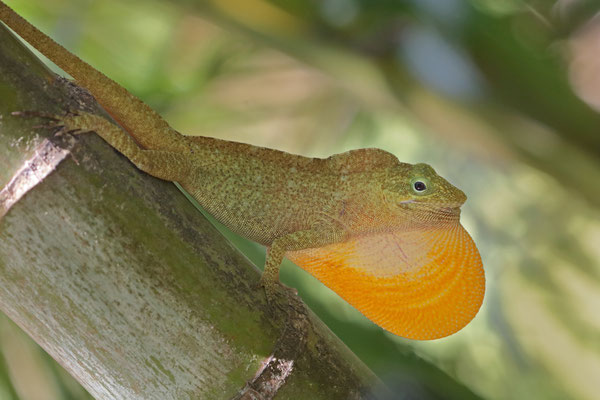
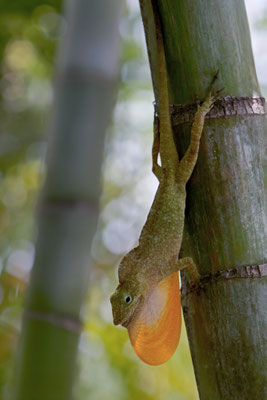
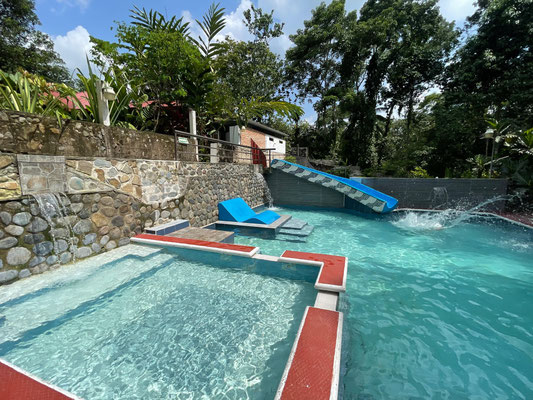
Taking a little break from the dry and hot coast, we retreated into the mountains once more. This time we went a bit further east in the mountains and again had two hotels, one at mid-elevation and one a bit higher up. At the mid-elevation we had a lovely hotel with amazing views and a great swimming pool. Here we were successful pretty quickly. At night it didn't take us long to find the first objective and saw several Oaxacan Giant Canopy Anoles (Anolis macrinii). Also during the day we had great fun observing these large anoles. When we spotted a female basking, we also saw she was looking in certain directions all the time. When we tried to find out what she was looking at, we discovered several males in her vicinity. Walking the road banks and small streams at night also yielded our other target and another species named after Emil Macrinius, the Oaxacan Mushroomtongue Salamander (Bolitoglossa macrinii). We also saw more Craugastor pygmaeus, Agalychnis moreletii, Ptychohyla leonhardschultzei, Sarcohyla pentheter and Anolis zapotecorum.
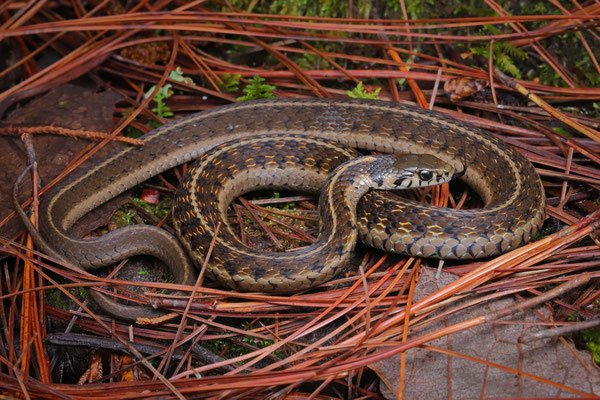
After a successful stop, we drove to the higher elevations to search for more salamanders, Abronia cuetzpali and Crotalus brunneus. We found some pretty nice habitat for all of them, but sadly found none. We did see Sceloporus grammicus, Sceloporus formosus and several Thamnophis bogerti, but this wasn't our most productive stop.
Crucecita and the Oaxacan Coast
From the 25th until the 31st of May 2026
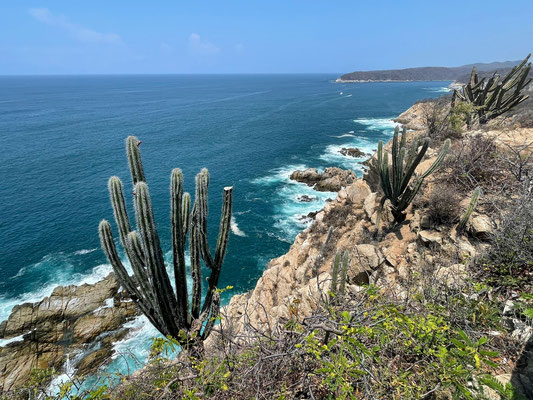
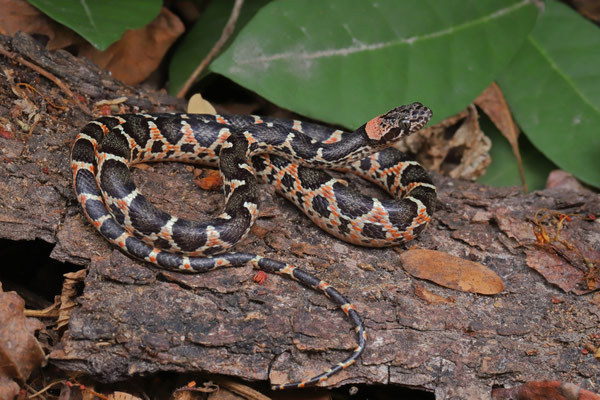
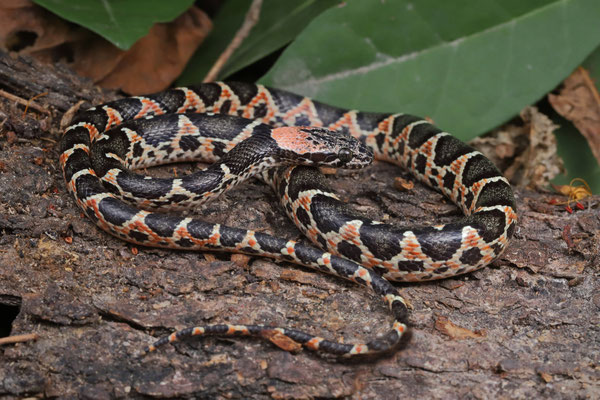
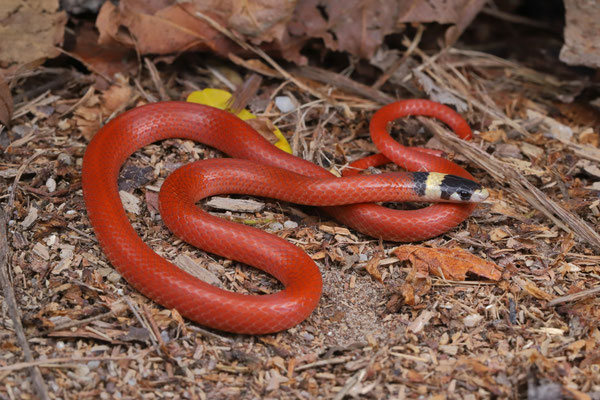
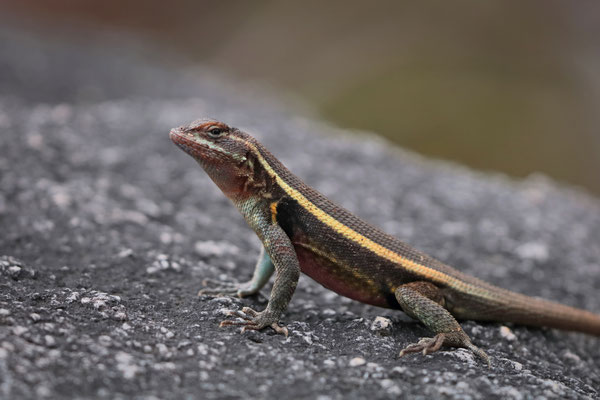
We had a score to settle with this town and its herpetofauna. The dry forests are incredibly rich in species, but are also incredibly hard to herp. Almost every single species occurs in low densities, or only emerges after heavy rain. That is why we scheduled plenty of time here. During our first week here, rain clouds had been forming all around Crucecita, but rarely made it to us. And even if they did, it was barely enough to bring out the species we were after. We saw a whole range of the more common species such as Incilius marmoreus, Rhinella horribilis, Hypopachus ustus, Smilisca baudinii, Coleonyx nemoralis, Phyllodactylus tuberculosus, Anolis immaculogularis, Anolis nebulosus, Anolis unilobatus, Ctenosaura pectinata, Iguana iguana, Aspidoscelis deppii, Aspidoscelis guttatus, Sceloporus siniferus, Leptodeira maculata, Leptodeira nigrofasciata, Trimorphodon biscutatus and Tropidodipsas fasciata. Usually we found at least one snake per night, but one night was exceptional as we not only found 6 snakes of 5 different species, but all of them were found on a stretch of not even 30 meters. Some were common species such as Enulius flavitorques, Imantodes gemmistratus and Leptodeira maculata. But finally we found the infrequently seen and beautiful Uribe's Cat-eyed Snake (Leptodeira uribei) and we were surprised to see a Red Black-headed Snake (Tantilla rubra) which was found at basically sea level. What made this night so different we will never know. Of course we visited this "magical stretch" multiple times afterwards, but we could never repeat the success of the first night. Another interesting night was during a full moon when we encountered multiple lizards still active at night. Females of Urosaurus bicarinatus, Sceloporus siniferus and Sceloporus melanorhinus were found either resting in front of what probably are egg deposition sites, or were gravid and on their way to find a suitable spot for their eggs. Very cool to witness and definitely an advantage of spending so much time in one place.
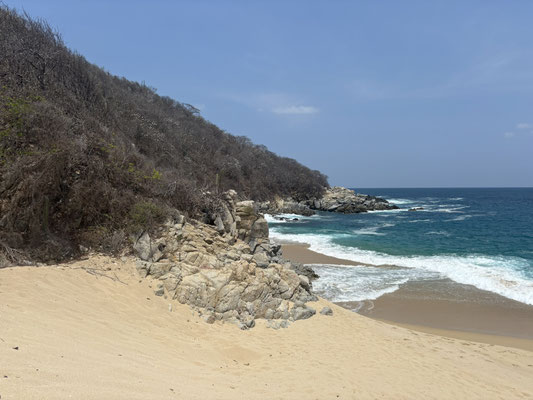
During day time it was unbearably hot inside the dry forest and the swarms of mosquitoes rival those of the Amazon rainforest. As expected, snakes are usually hard to come by during the day, but one afternoon, Laura and I both found a huge Black-tailed Cribo (Drymarchon melanurus). One was found when a Mot-mot, a Hummingbird and some other birds were going crazy. Sadly the snakes were too fast, and the undergrowth to dense to catch the snakes for some pictures, but it was a very cool observation nonetheless. Another memorable daytime snake was found when I was having a pee just behind the beach and when a lengthy Pacific Patchnose Snake (Salvadora lemniscata) came to investigate what was going on. I have had lizards checking me out while peeing, but never a snake! It appeared incredibly fast, but the moment it noticed me it was also very quick to vanish in the undergrowth of the dry forest. That pretty much sums up our first week at the Oaxacan coast, before we decided to take a break and drive into the mountains again.
From the 5th of June
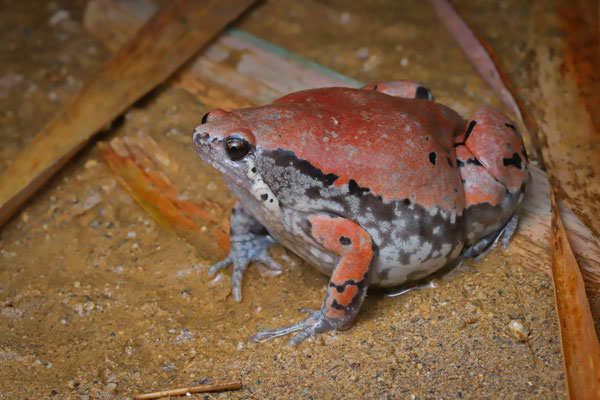
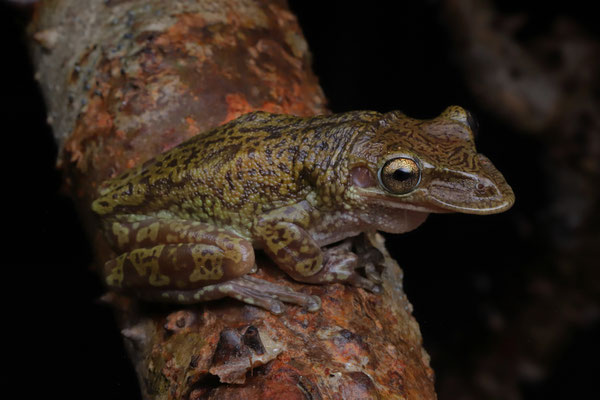
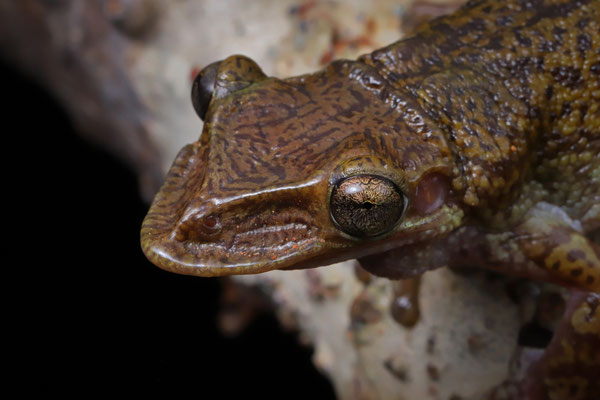
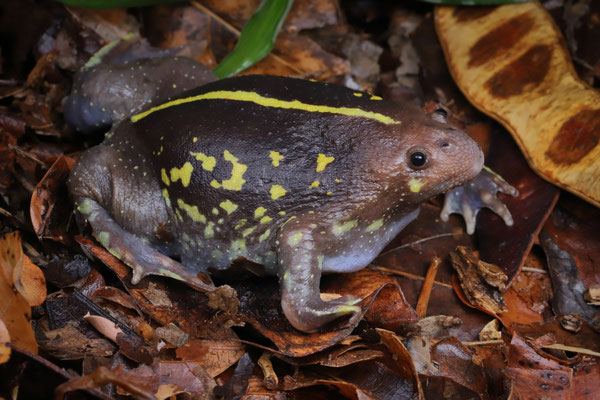
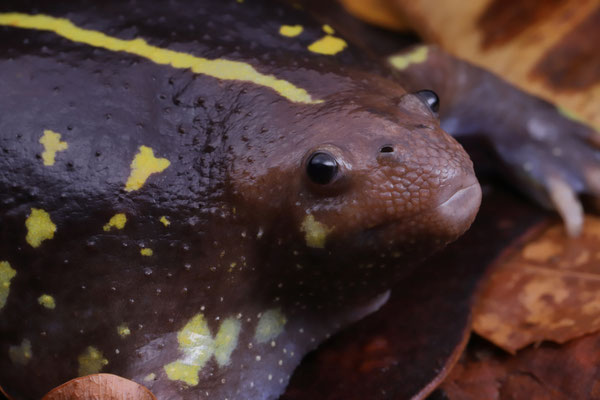
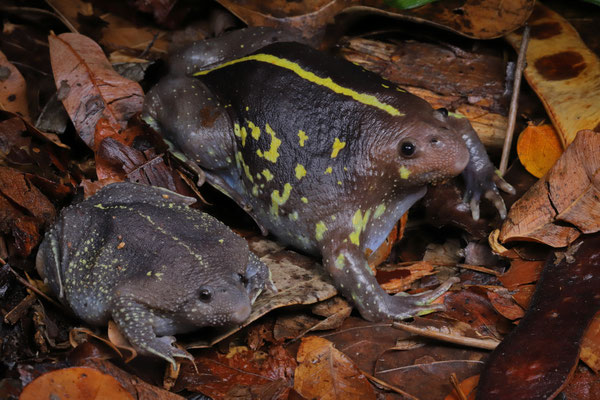
During the drive from the Sierra Madre del Sur towards Los Chimalapas we decided to spend one more night in Crucecita as we were eyeing the weather forecast nervously. Could it be true we could experience this place with some decent rain finally? It turned out this was the best decision of the trip. While exploring an awesome trail through the dry forest we felt the air pressure drop, thunder came rolling in and what started with a few tiny drops, turned into a massive downpour. Shortly before, Laura spotted a small snake making its way over the path: a Dunn's Hognosed Pitviper (Porthidium dunni)! Already ecstatic that we managed to find a viper in this place, it would get even better. The rain became too heavy to photograph so we retreated to a nearby shelter. While waiting out the worst of the storm I spotted some movement underneath some furniture. At first I thought it was probably a gecko, but the greenish tinge looked different. I grabbed and couldn't believe my eyes when I was looking at a Mexican Shovel-headed Treefrog (Triprion spatulatus). What a crazy-looking and unique frog and this species was well worth the wait and the multiple trips looking for it. But when these guys were becoming active, we also knew our other nemesis species would be... And indeed, on a good looking stretch of road we saw countless of Mexican Burrowing Toads (Rhinophrynus dorsalis). What a magical night!
From the 9th of June until the 14th of June 2026
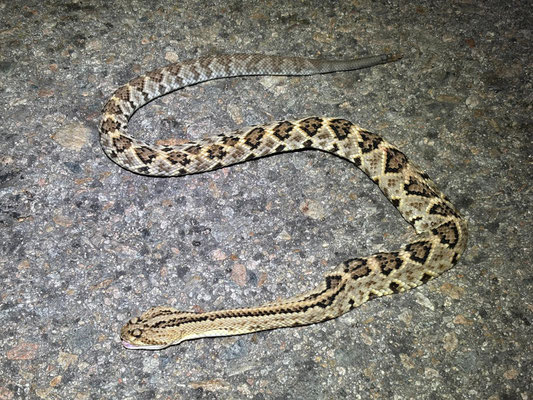
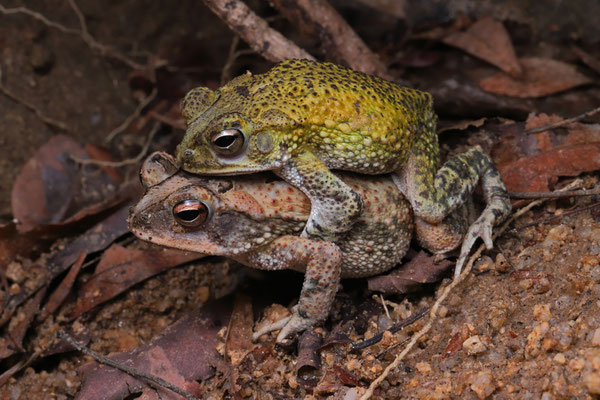
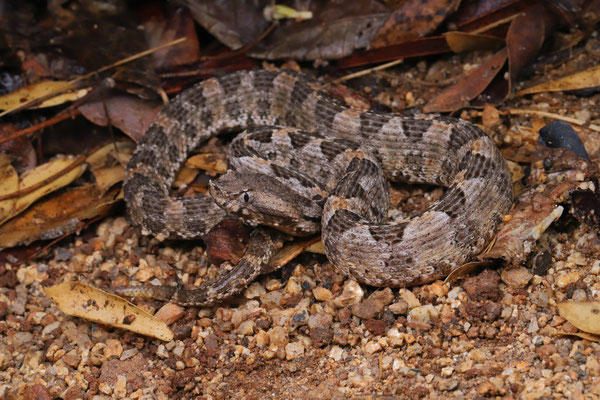
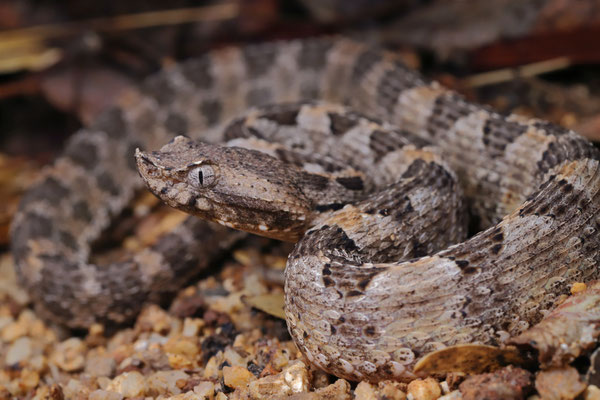
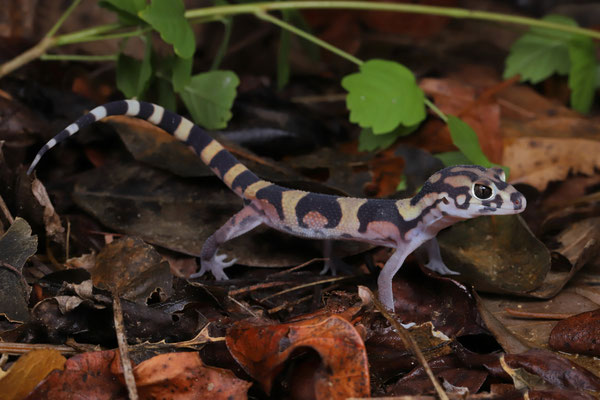
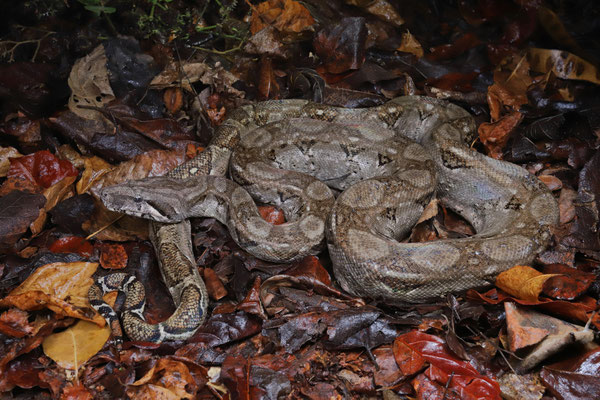
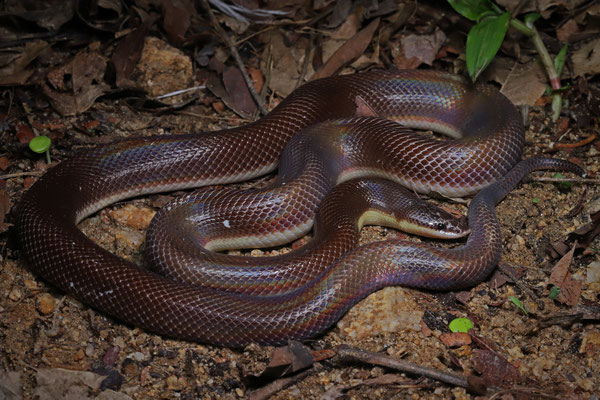
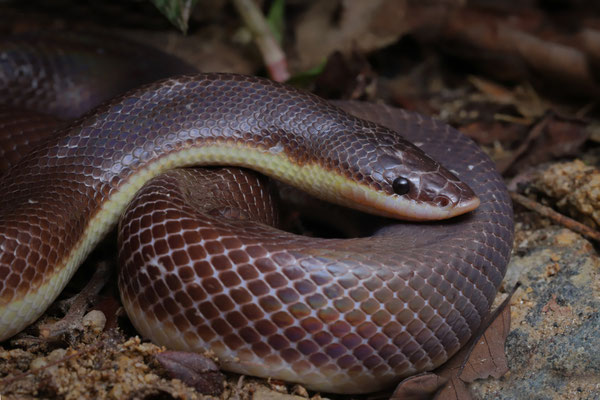
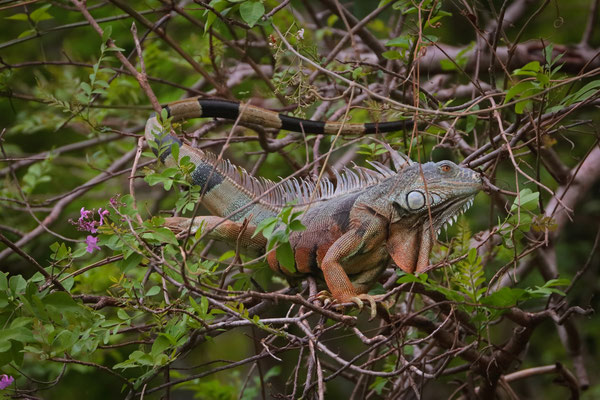
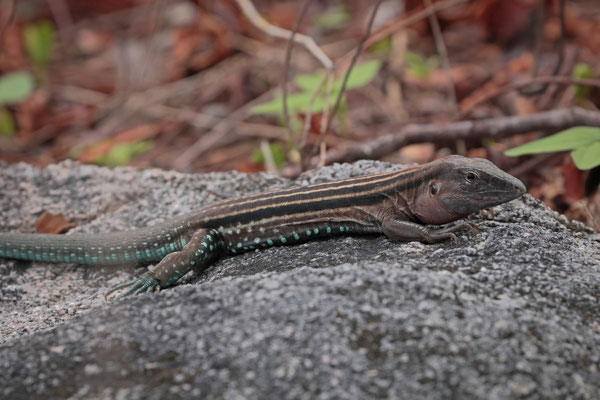
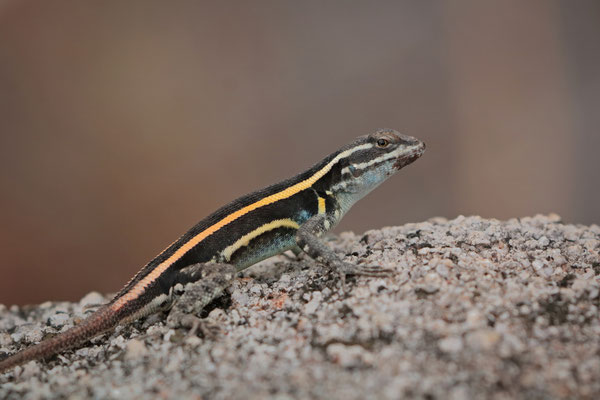
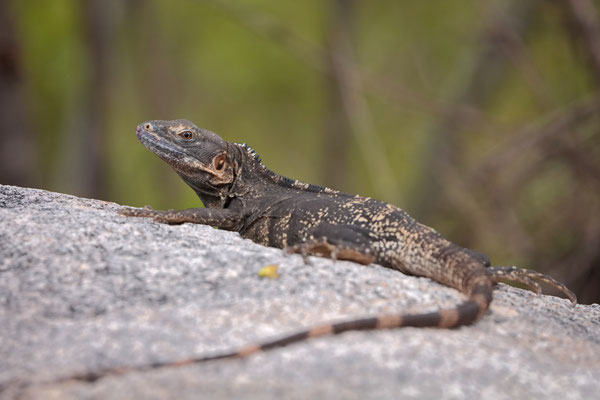
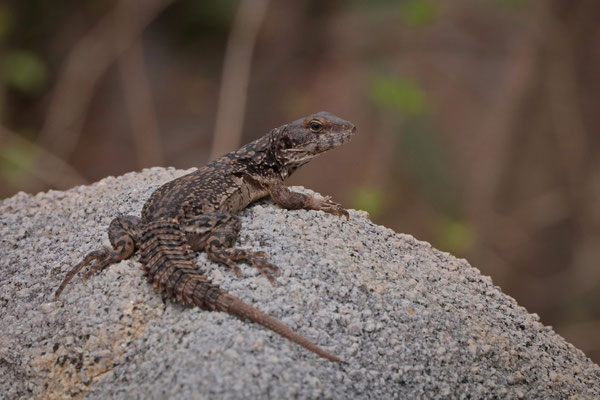
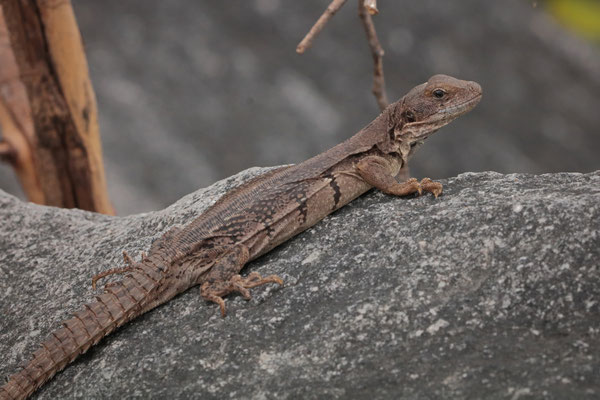
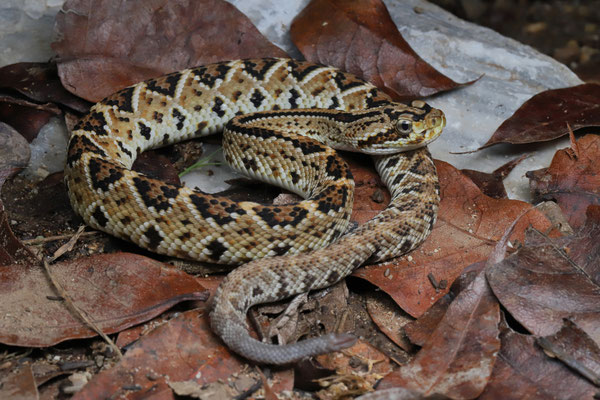
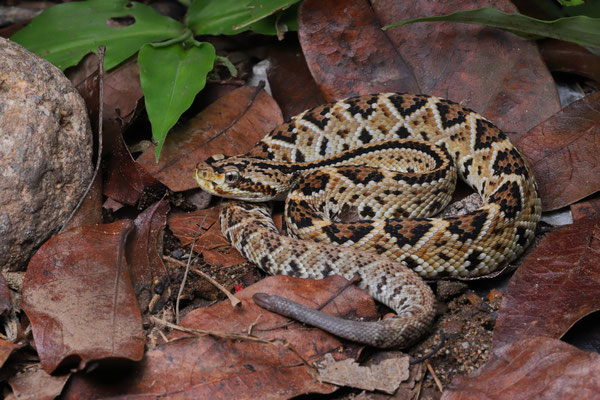
After Los Chimalapas we decided to spend some more time at the coast and hope for more rain. Even without rain, Crucecita isn't the worst place to be with beautiful empty beaches, and some great food options. Moreover, herping friends Quentin and Cécile were also in town and we had a great night of frogging together. Sadly no explosive breeding event we were all hoping for, but at least we got to see more Triprion spatulatus and Rhinophrynus dorsalis. It was great meeting you guys and hope to see you one day in South America ;-) Laura and I had a few quiet days, but we did find another Porthidium dunni and a big Mexican West Coast Boa (Boa sigma). On our last day at the coast, Laura and I drove east. Along the way we found a great looking boulder field which was lizard paradise. We saw many Aspidoscelis guttatus, Urosaurus bicarinatus, Sceloporus siniferus, Sceloporus smithi, Ctenosaura pectinata but also a small colony of the endangered Oaxacan Spiny-tailed Iguana (Ctenosaura oaxacana). We had seen this species before, but it was nice to see a whole group of these curious little iguanids. Where the day was full of lizards, the evening would be full of snakes. We went road cruising on a road where we thought it looked good, but without rain the conditions weren't great. Still, I had a little premonition that this place had a different feel to it than all the previous roads we cruised at the coast. At first we found species such as Loxocemus bicolor, Boa sigma, Coniophanes fissidens and Leptodeira maculata. But finally, on our very last night at the coast it happened and Laura and I both couldn't believe our eyes. A snake we have searched for so often and always seemed to miss. But now a Northwestern Neotropical Rattlesnake (Crotalus culminatus) was right in front of us! It was a baby, but to us it didn't matter. What a gorgeous little snake and the perfect goodbye to the coast!
Los Chimalapas
From the 6th until the 9th of June 2026
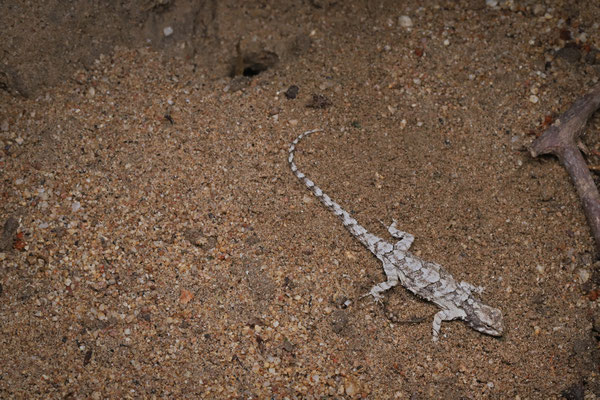
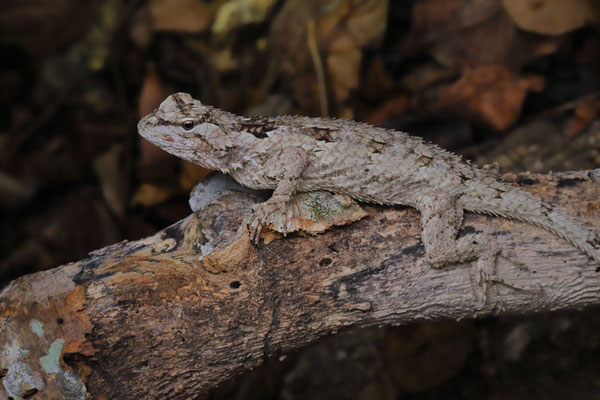
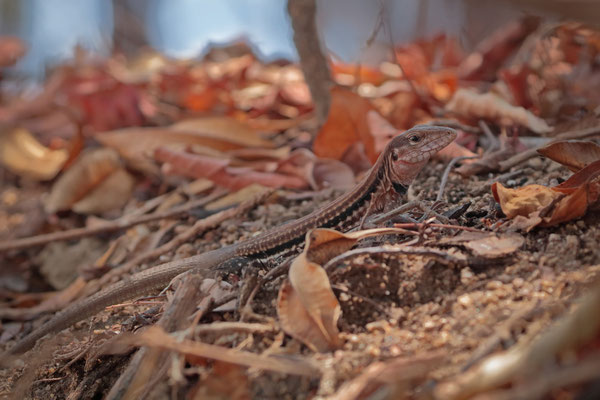
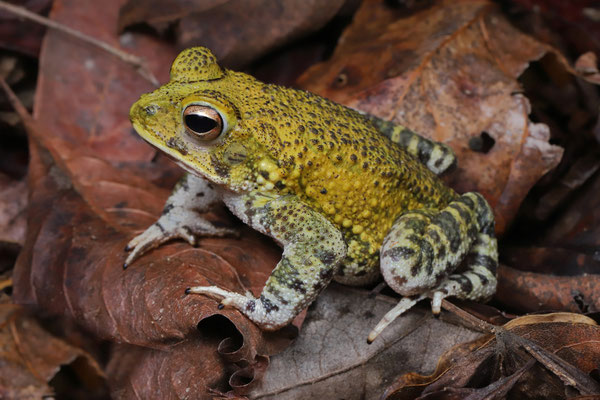
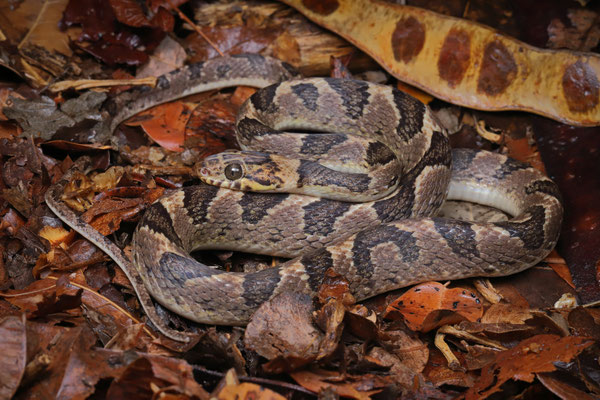
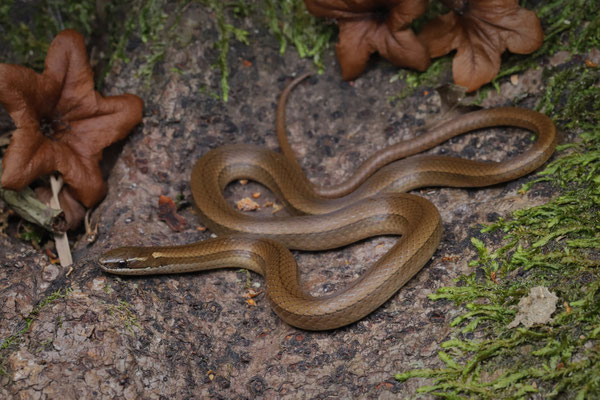
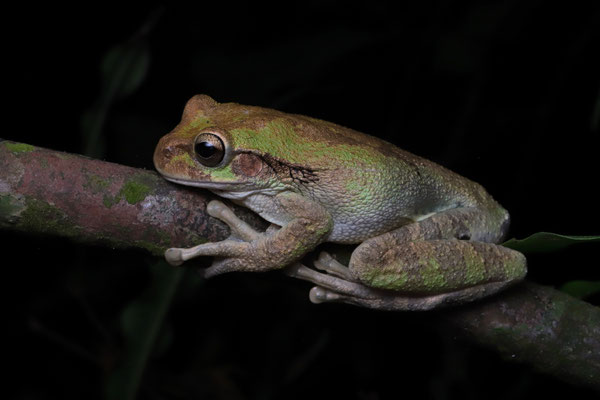
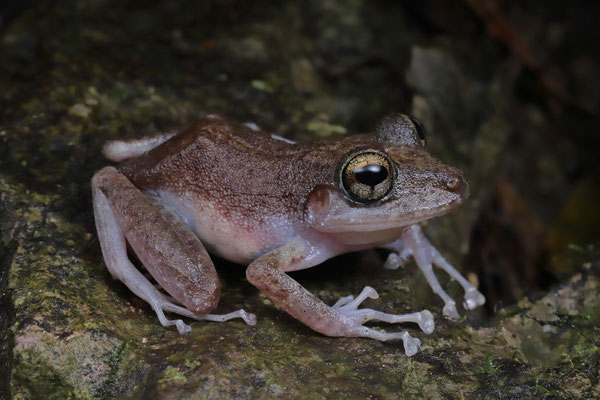
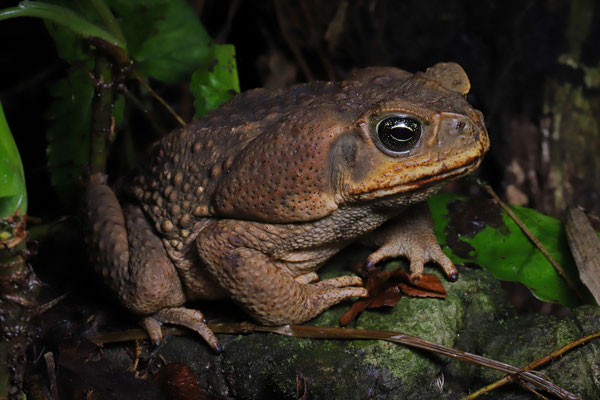
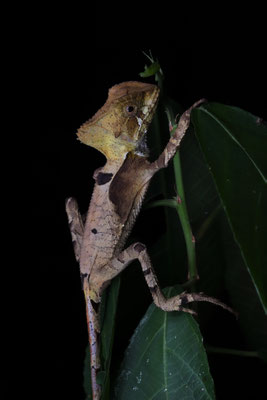
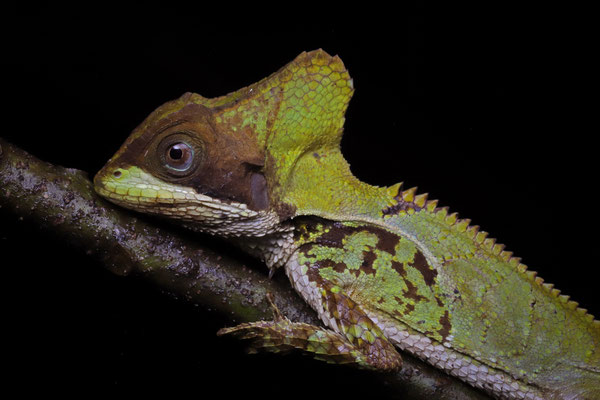
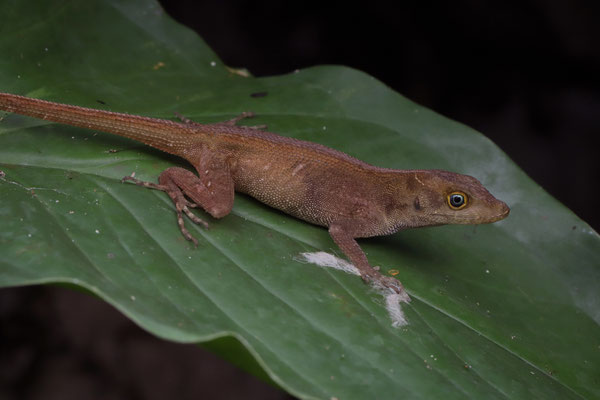
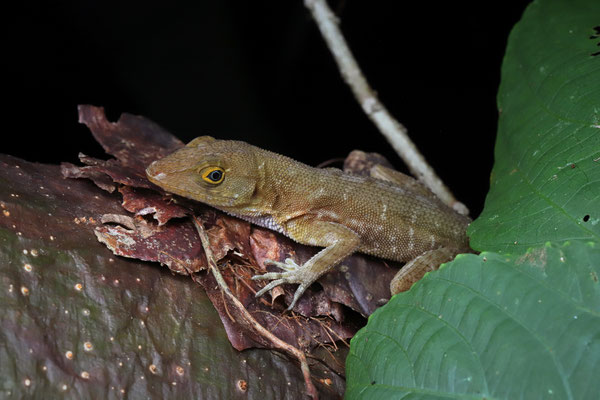
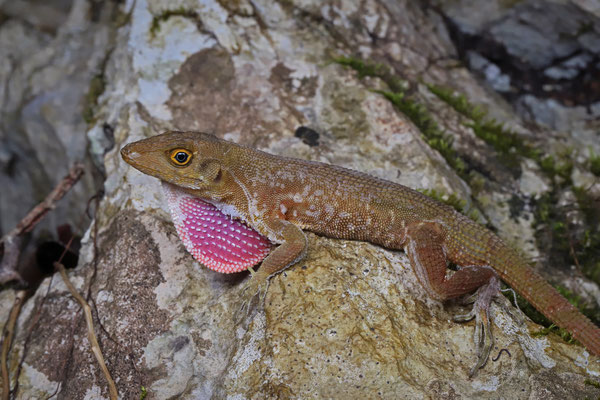
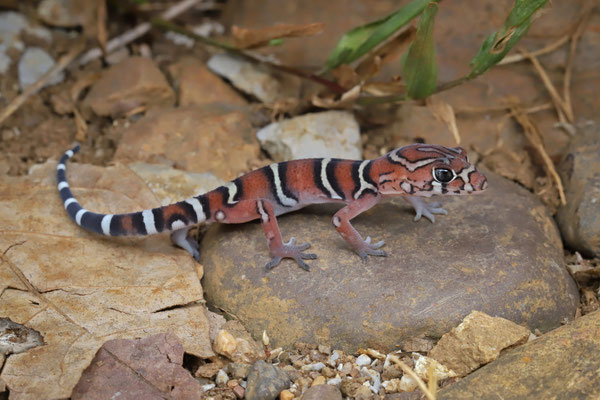
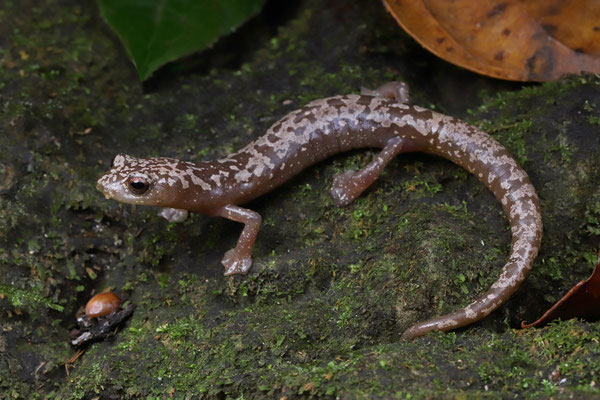
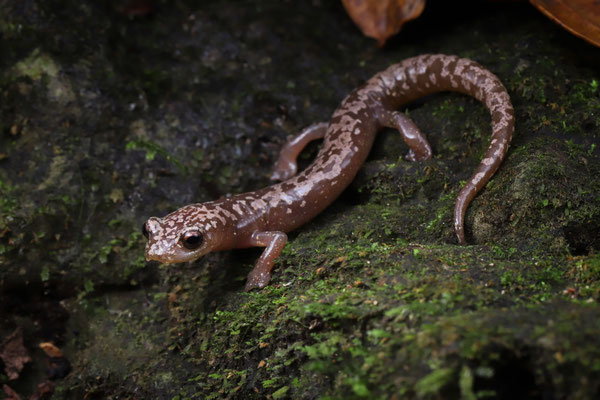
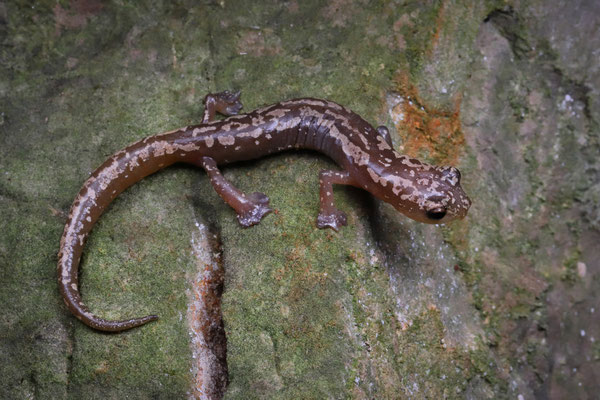
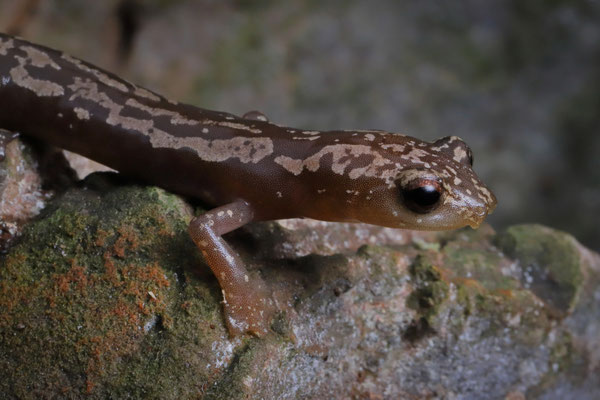
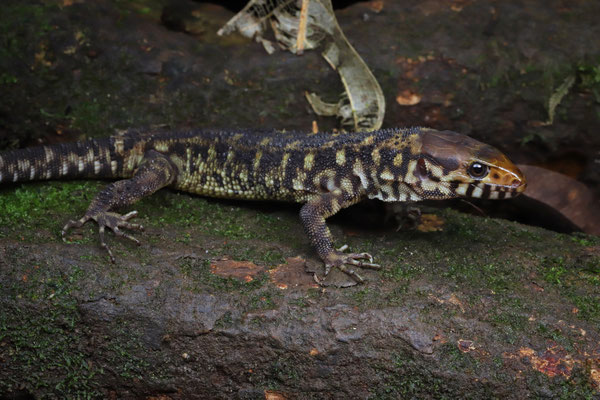
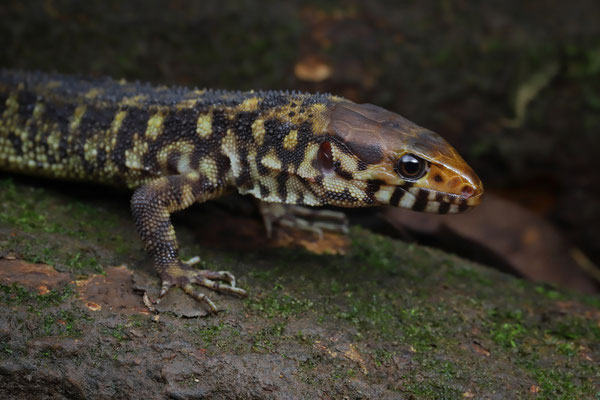
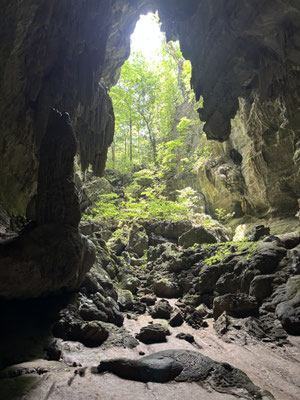
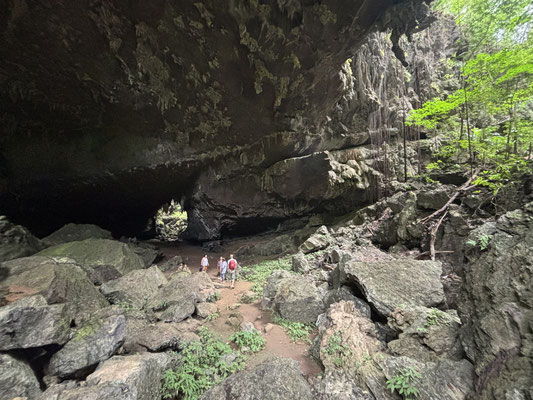
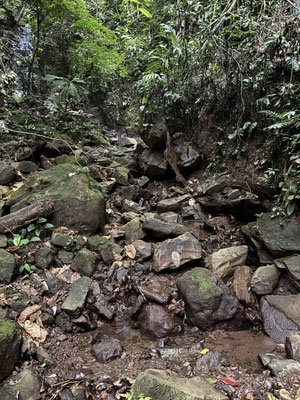
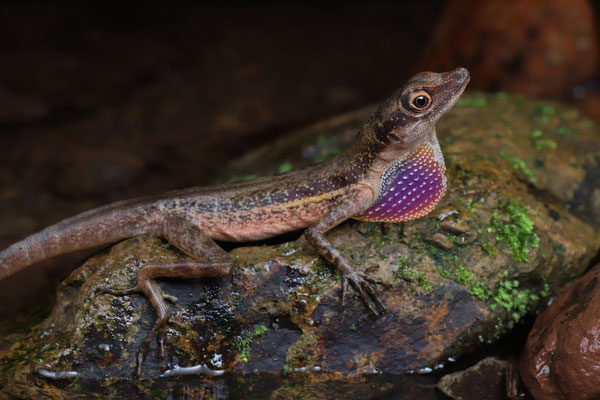
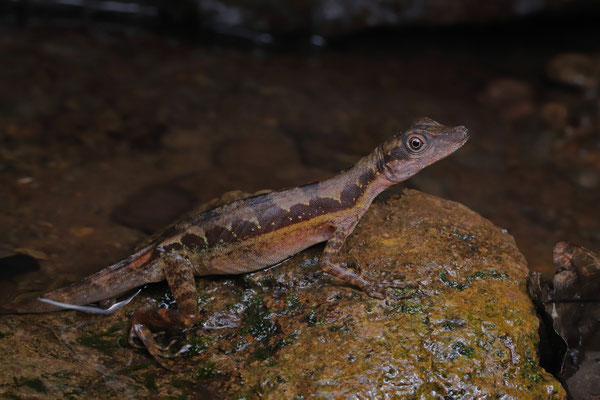
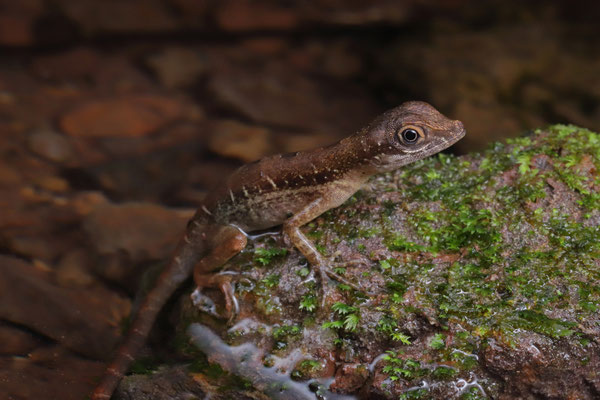
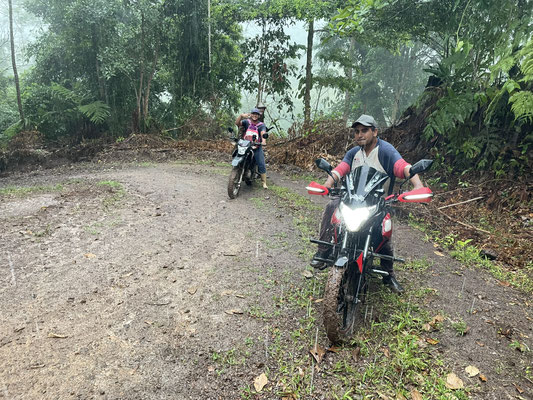
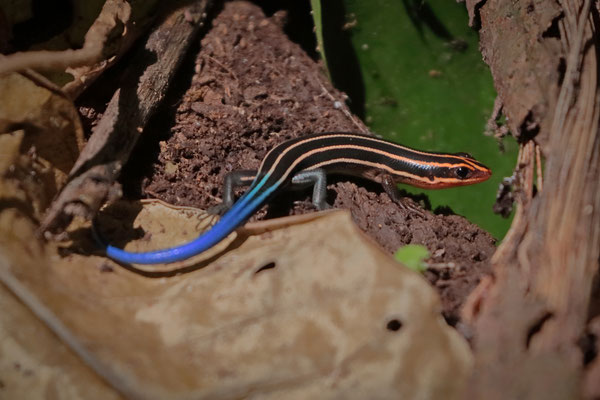
In between our stay at the coast we had a little side quest into the Chimalapas. We had hoped that this place would offer us some respite from the heat as it is situated more inland, but quite the contrary. It was even hotter, more humid and the place where we slept was like a sauna. Moreover, it didn't rain yet for the last month which wasn't too great for one of our main targets. Again salamanders and anoles are what brought us here, and some rain would be great to bring out the amphibians. During our first day and night it was bone dry, and we only saw some common species such as Incilius valliceps, Rhinella horribilis, Craugastor alfredi, Smilisca baudinii, Leptodactylus fragilis, Lithobates maculatus, Coleonyx elegans, Anolis compressicauda, Basiliscus vittatus, Corytophanes hernandesii, Sceloporus variabilis, Plestiodon sumichrasti, Lepidophyma smithii and Coniophanes fissidens. Interestingly, all of them in very good numbers. The second day we visited a beautiful place for swimming and noticed the surrounding forest was much more humid. And indeed during our return at night, there was much more amphibian life. It didn't take long before I spotted the first Veracruz Mushroomtongue Salamander (Bolitoglossa veracrucis) clinging to a steep rocky wall, but several more followed. Awesome to see this species, and they really reminded us of European Speleomantes. Not only in appearance, but also habitat choice. Our next objective was a species of anole described only 10 years ago. We drove into the mountains as far as we could trying to reach good habitat. When the muddy roads were impassable for our trusty rental, we found friendly locals Alberto and Bryan who were able to drive us further into the mountains with motorbikes. We hiked the steep slopes up to reach the forest and with the soaring temperatures and high humidity we were drenched in sweat. At some point we saw a small stretch of gallery forest along a small stream and decided to search there. Within seconds I spotted the first Purple Swimming Anole (Anolis purpuronectes) sitting in a small waterfall. Several more followed, all of them sitting in the water in heavily shaded areas. Such weird creatures and incredible to see this behaviour! Sadly the rains returned, this time in force and we had to abandon our mission. We hiked down the slippery slopes, hopped on the motorbikes and slipped and slided back to the car. Wet from sweat, rain and covered in mud we made it back, but very happy to have seen both of our target species for this area!
Yucatán
From the 14th until the 25th of June 2026
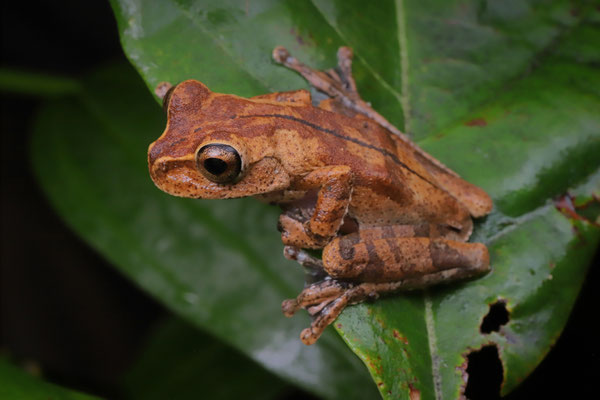
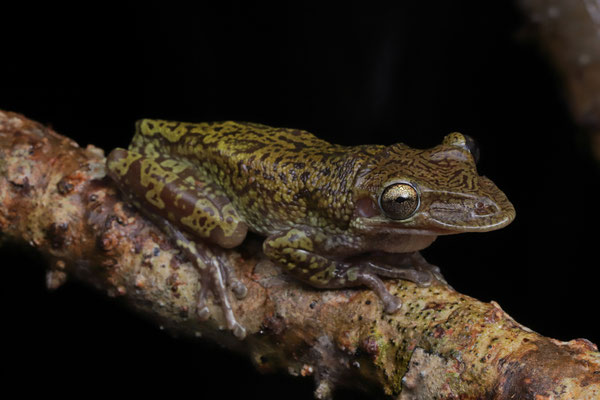
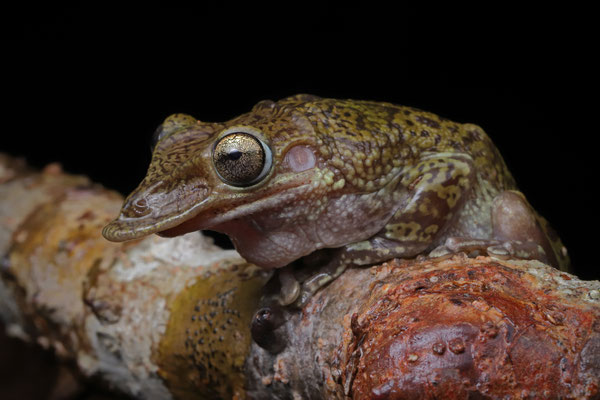
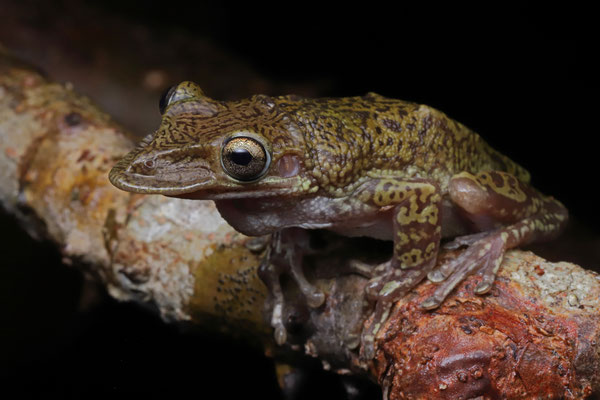
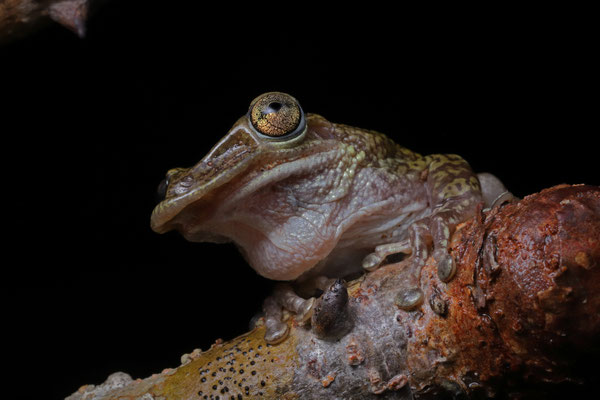
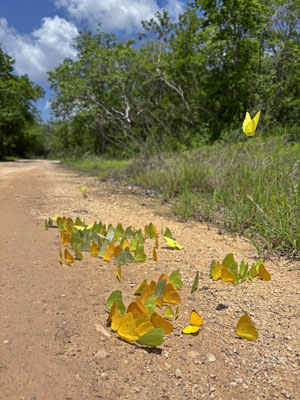
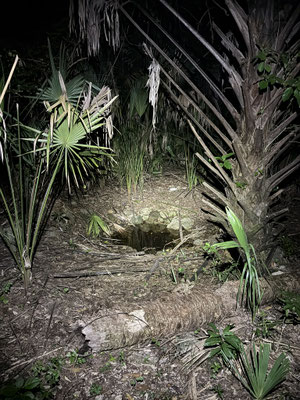
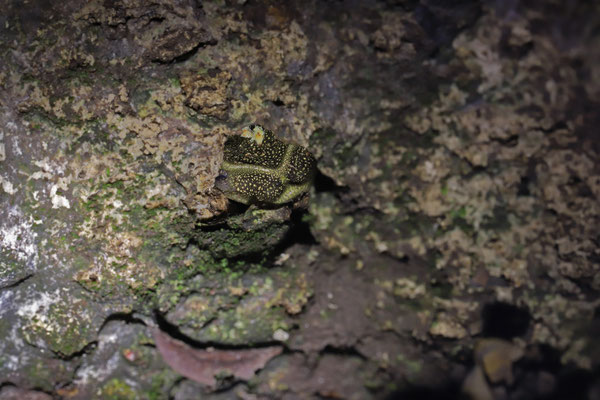
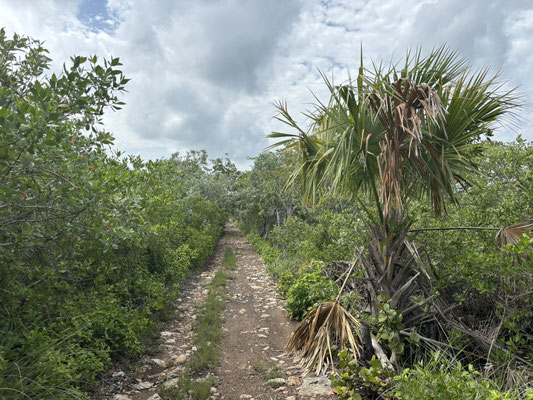
Another part of Mexico which gave us a hard time during our last visit was the Yucatán Peninsula. In 2019 we experienced a prolonged drought, which didn't result in the finds we were hoping for. Although we actually didn't think we would ever come back, the amount of cool endemics was hard to resist. So here we were for another try! We scheduled our flights to catch the first rains of the rainy season, but, as so often, they stopped the moment we arrived and also wouldn't start again until after we left. We knew it was going to be tough... The first three nights we indeed see signs of rain, but we were struggling to find our main objectives. By coincidence we met local herper Miguel who could help us and knew a place which usually retains moisture a bit longer than the surrounding area where we could try our luck. A small doline in the karstic landscape indeed held a small waterbody surrounded by Yucatán palmettos (Sabal yapa). It was exactly the spot we needed. Amphibians such as Incilius valliceps, Smilisca baudinii and Trachycephalus typhonius were hanging around the pond, Anolis rodriguezii were sleeping in the vegetation while Mayan Cat-eyed Snakes (Leptodeira frenata) were hunting all of the above. Then suddenly Miguel spotted something we thought we would never see without rain and a Yucatán Mushroomtongue Salamander (Bolitoglossa yucatana) was hanging in the low vegetation. Incredible! Already happy with that find, we made our way back to the car when Laura hit her head against a branch. A sleeping bird woke up, flew off with a lot of noise and when I checked to see which species of bird that was, I spotted something else we thought we would never find without rain. A gorgeous male Yucatán Shovel-headed Treefrog (Triprion petasatus) was high in the tree as well! All it needed was a little nudge with a long stick and it leapt right into a more suitable place for photography. What a night with suddenly two of our six main objectives found. And even the ones who usually need rain the most!
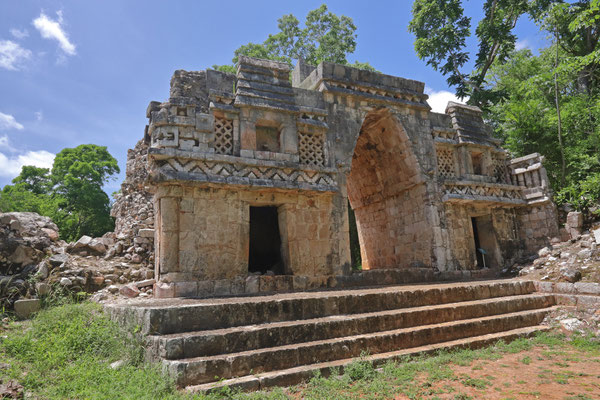
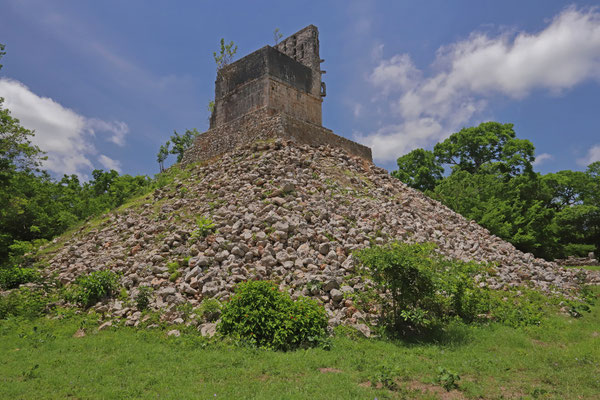
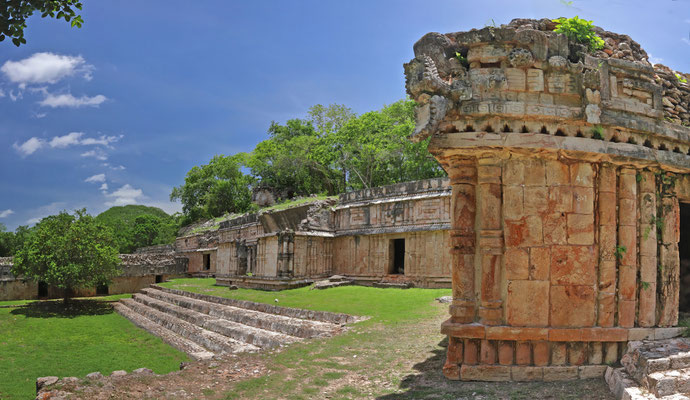
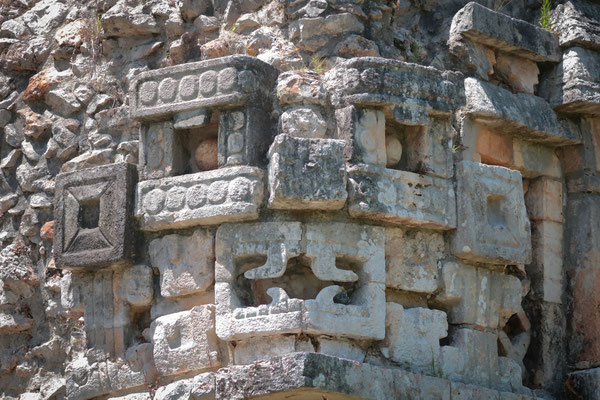
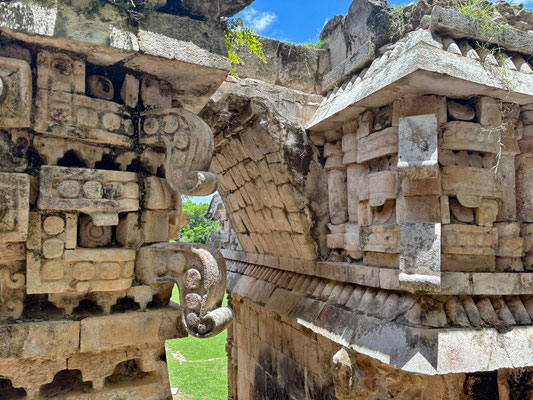
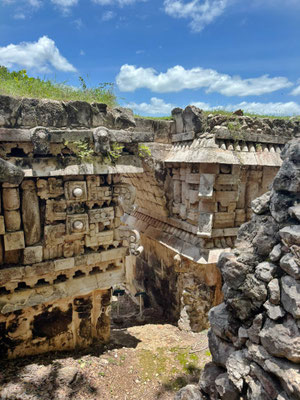
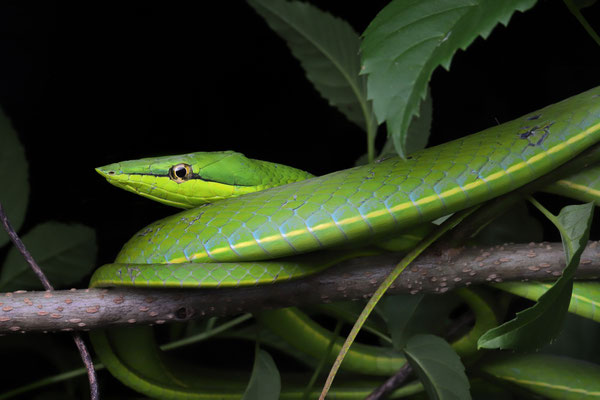
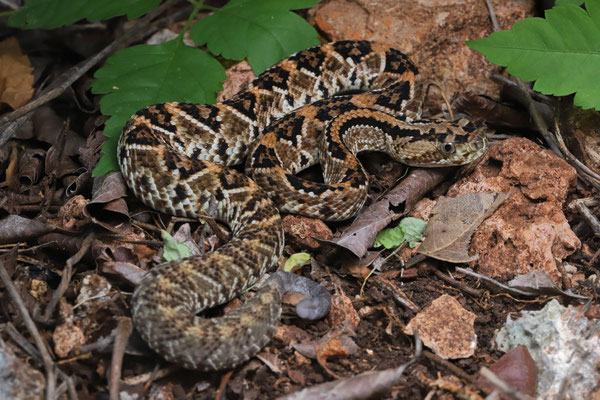
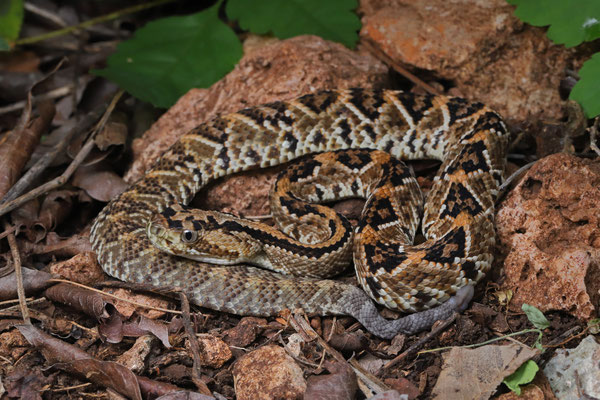
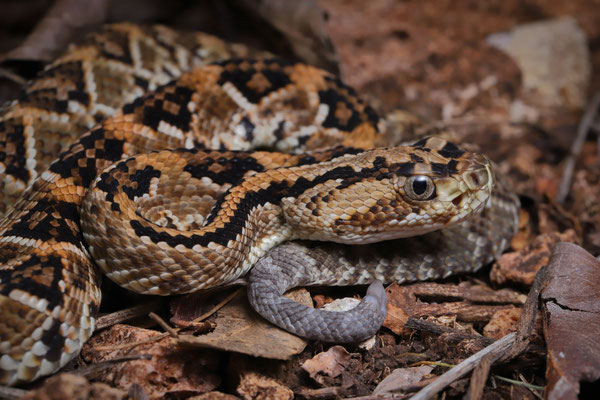
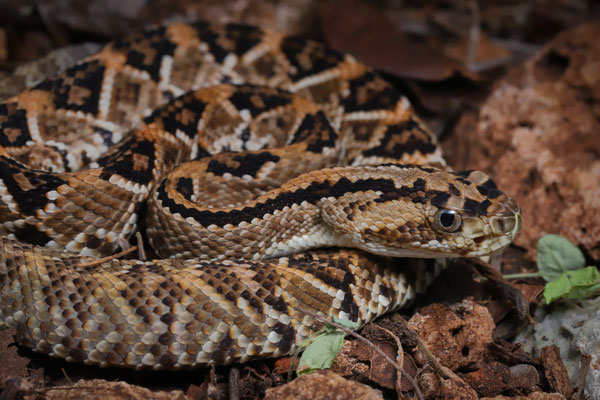
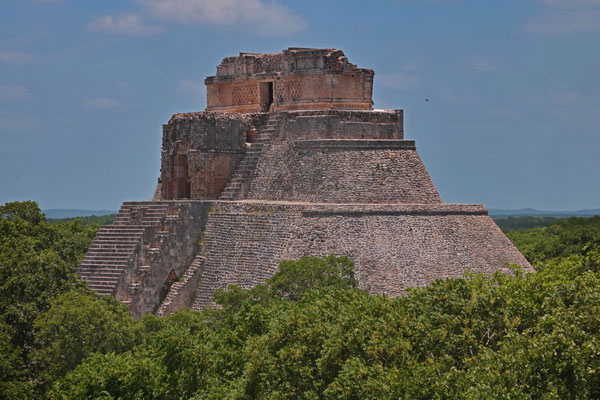
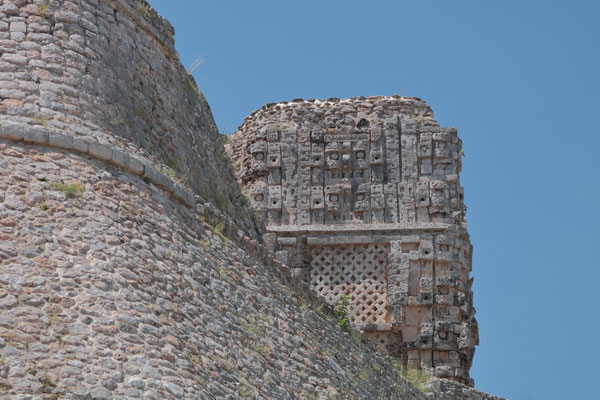
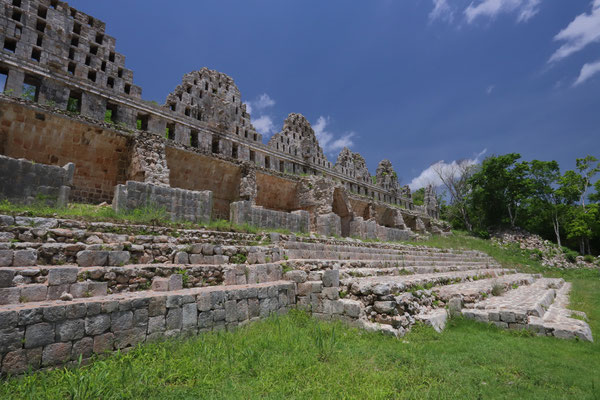
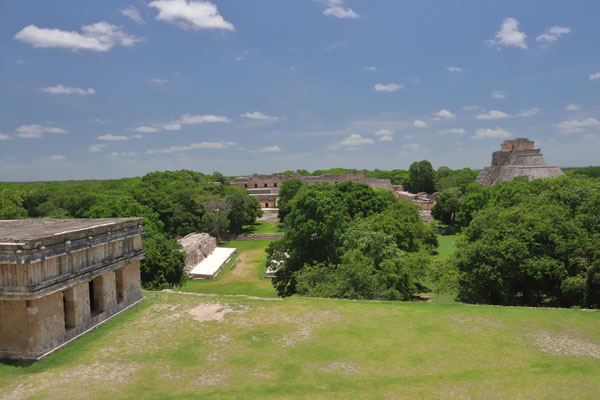
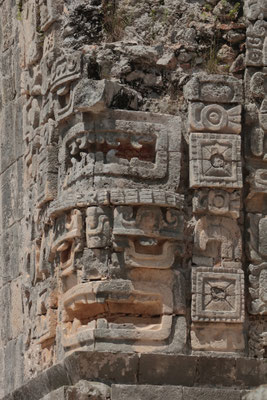
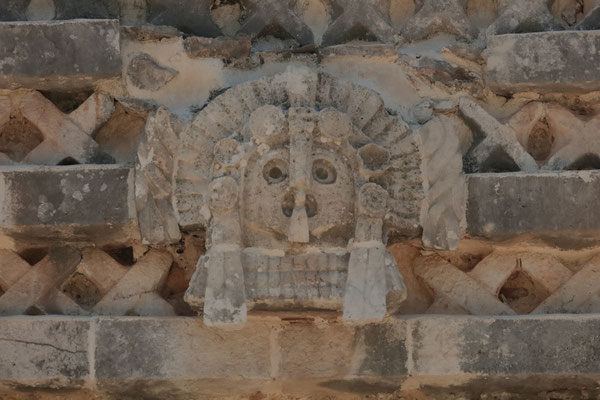
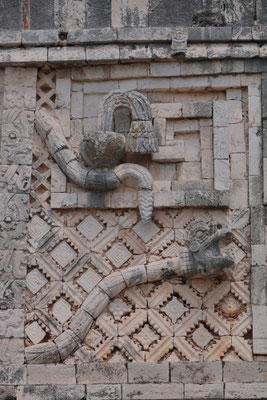
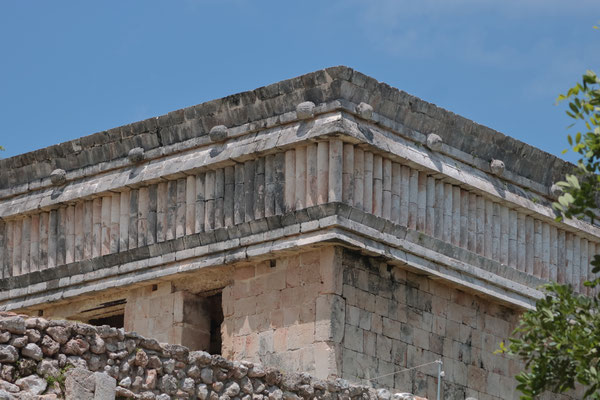
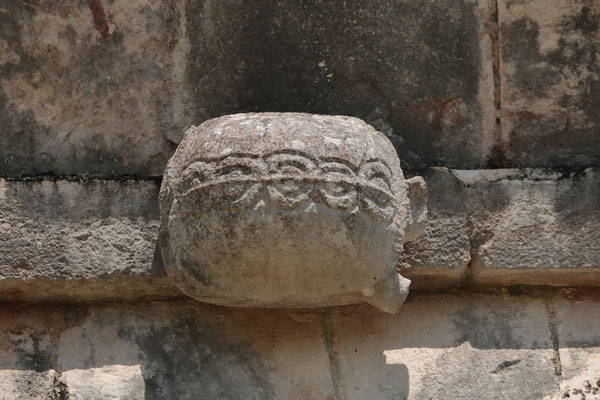
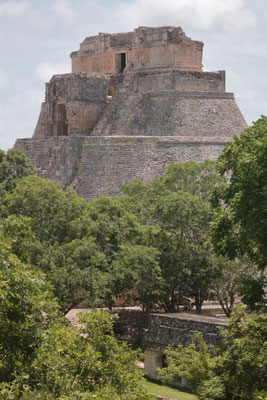
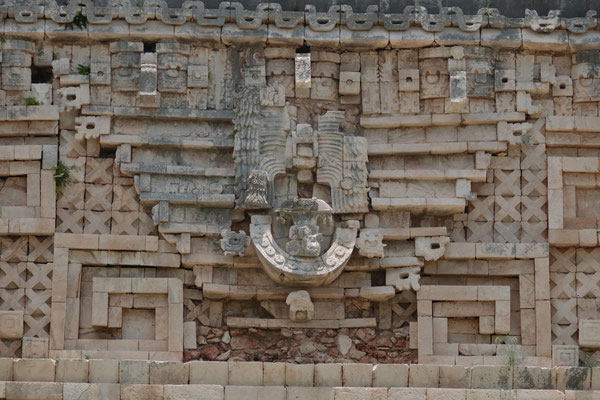
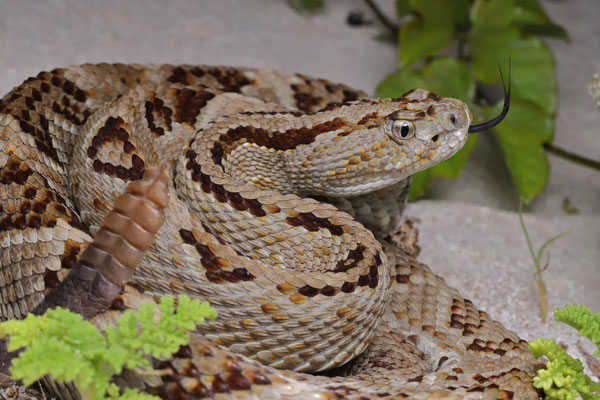
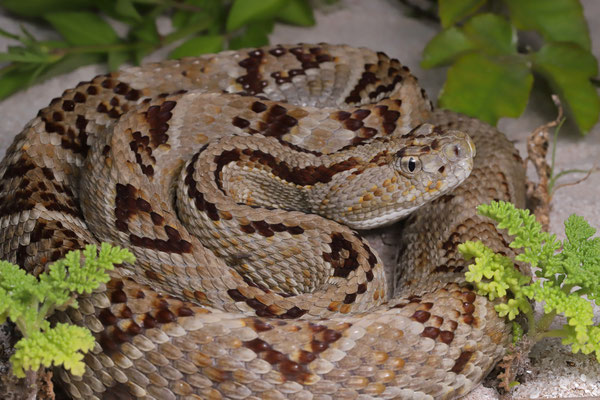
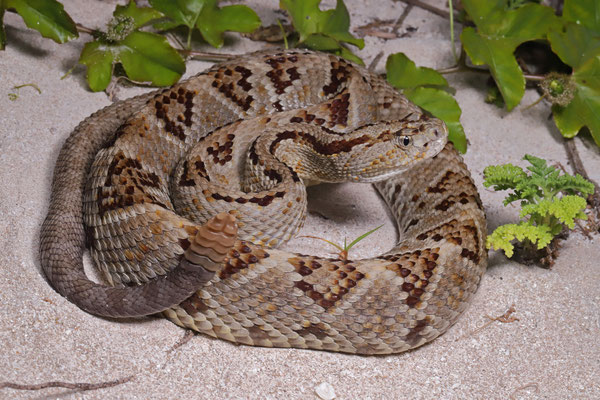
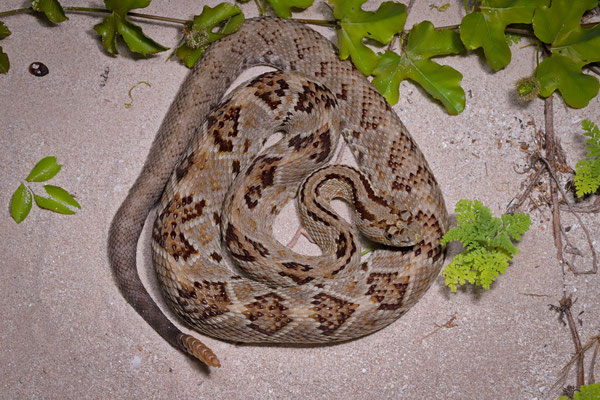
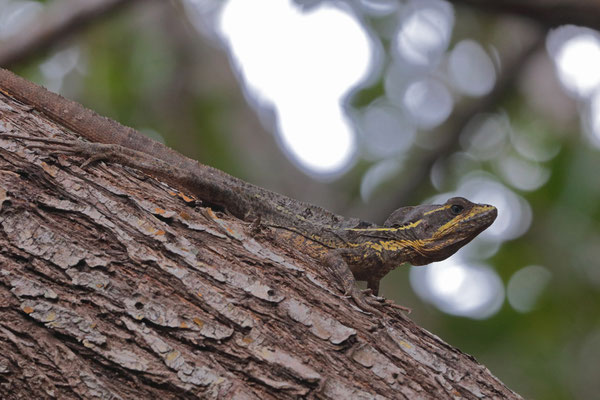
The day after we explored the ancient ruined city of Labná which was incredible. We could enjoy the place all to ourselves which was magical. Then after an afternoon at the swimming pool and some dinner in town we headed into the forest to search for a special arboreal lizard. At first I spotted another big Oxybelis fulgidus sleeping in the vegetation, but then right below it Laura spotted something even more exciting. At approximately 1.5 meters high a small Yucatán Neotropical Rattlesnake (Crotalus tzabcan). We simply couldn't believe it! We knew these snakes are hard to find, but we had no clue they also climb in the vegetation. Below it was even a third snake and a small Ninia sebae was crawling around. After ample admiration we searched on and after several Basiliscus vittatus and Ctenosaura similis, I spotted a Serrated Casquehead Iguana (Laemanctus serratus) high up in a tree. This evening was again simply phenomenal! As rattlesnakes were revered by the Mayans and symbolized divine powers, we were keen to see this with our own eyes as well. Especially after having seen the endemic rattlesnake ourselves now! So we went to the ancient ruined city of Uxmal where some fine examples can be found including some impressive frescos. Eventually the heat and the mosquito army drove us out of the forest once more and we relaxed at the swimming pool again.
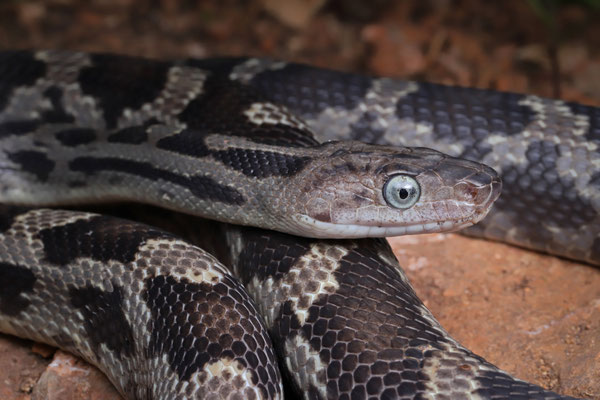
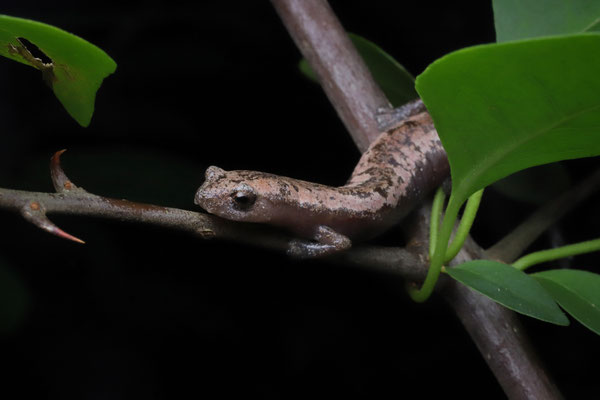
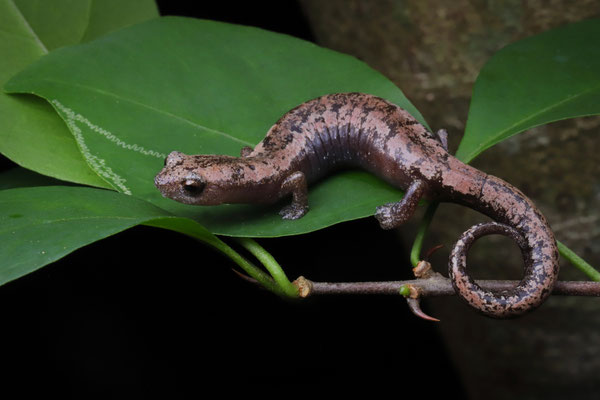
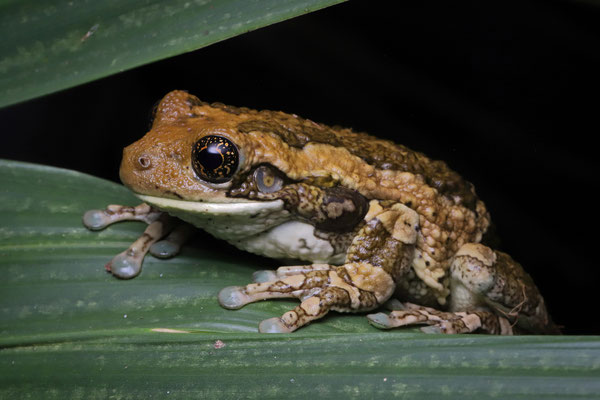
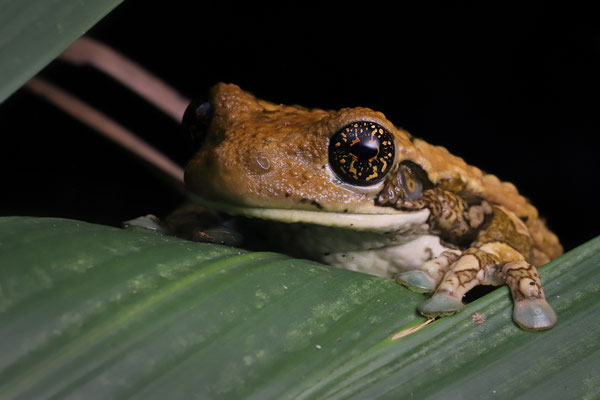
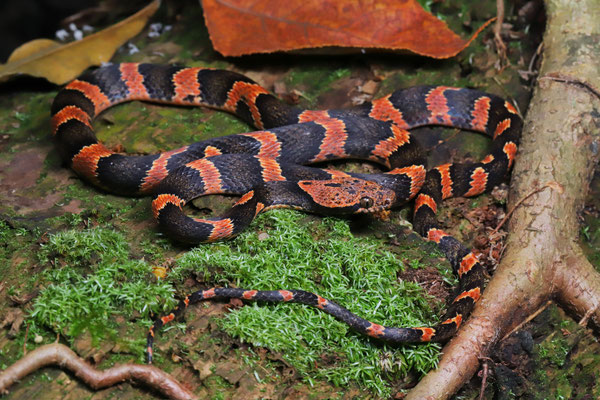
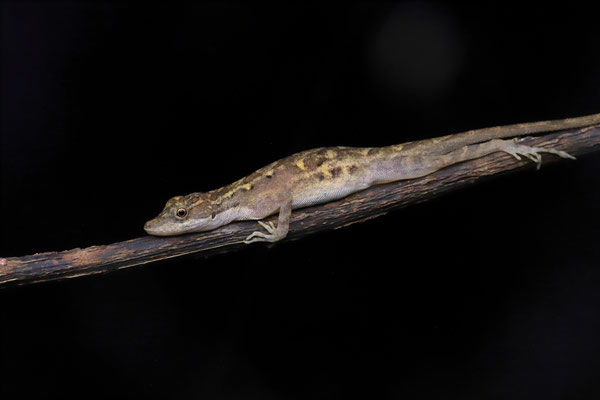
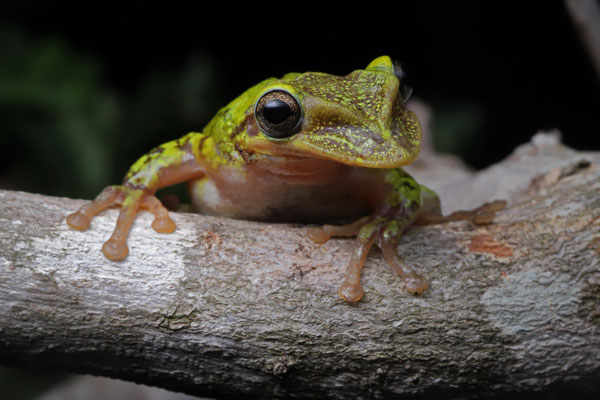
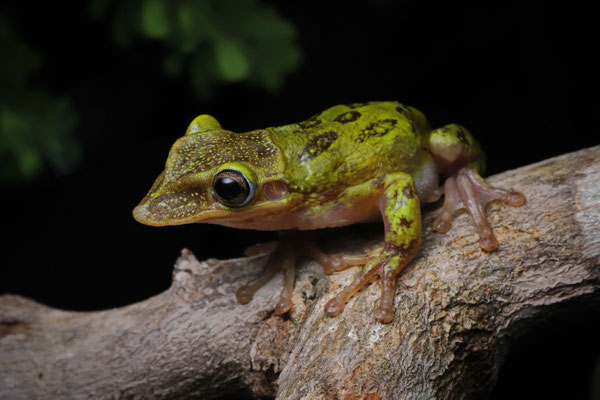
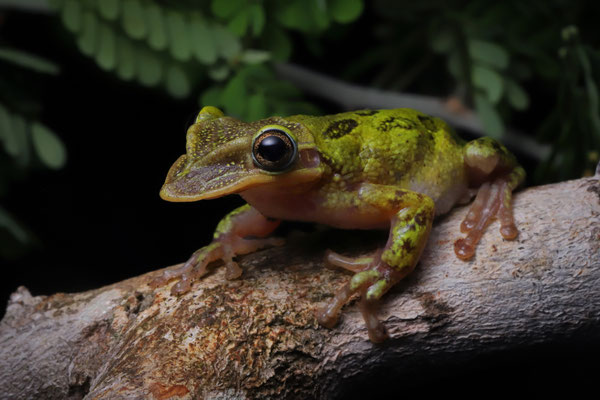
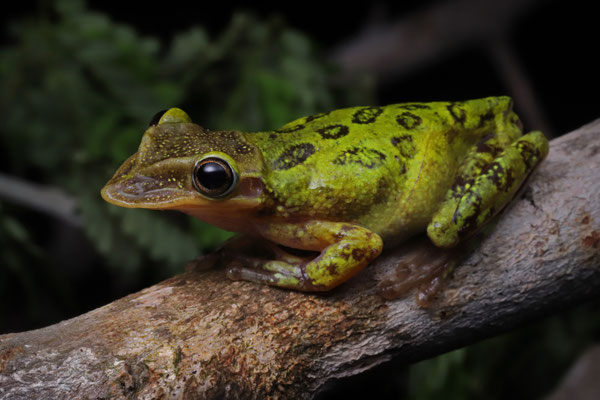
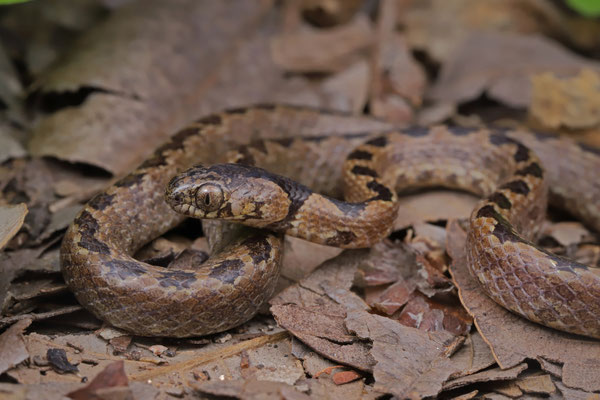
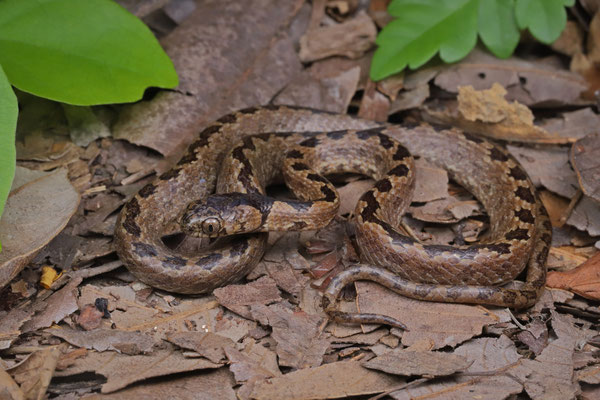
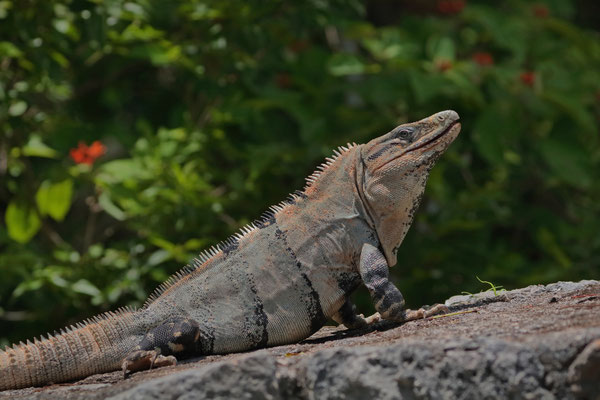
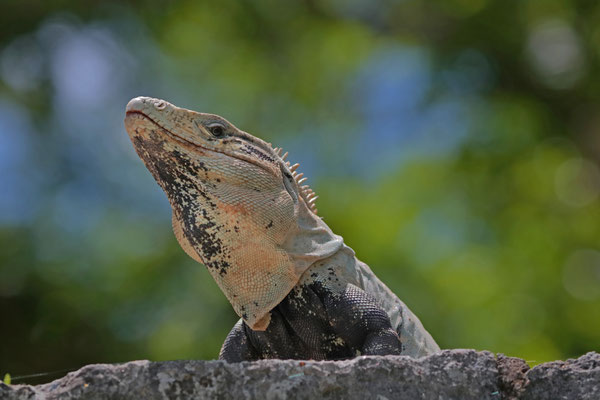
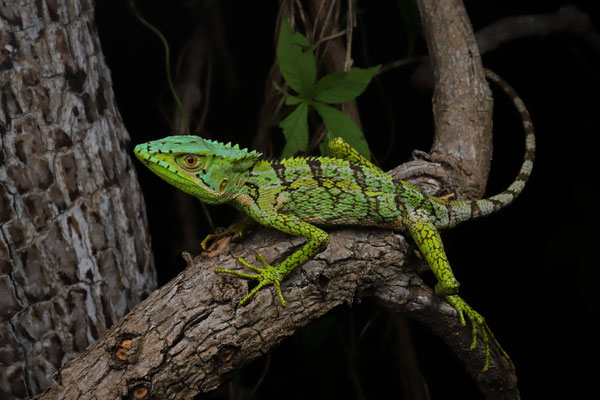
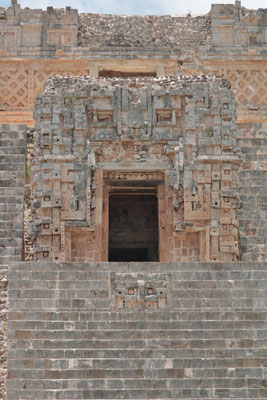
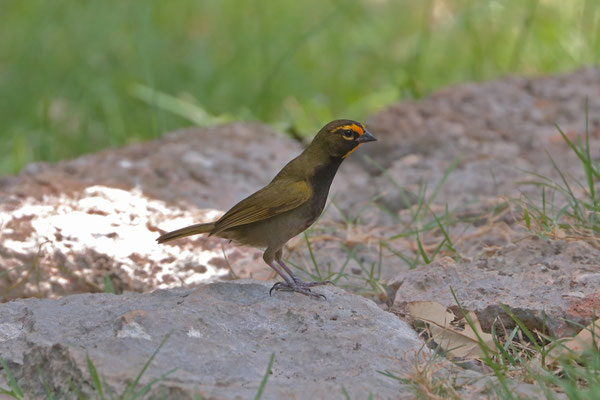
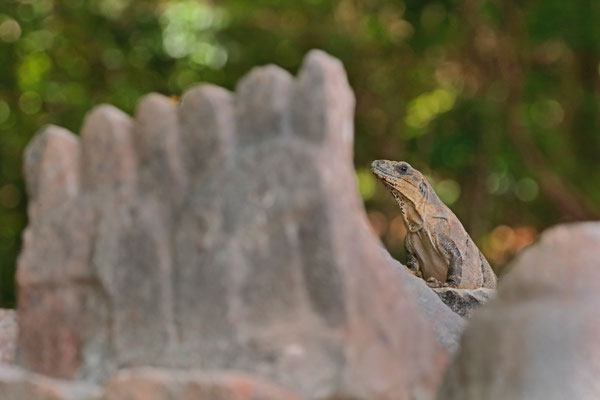
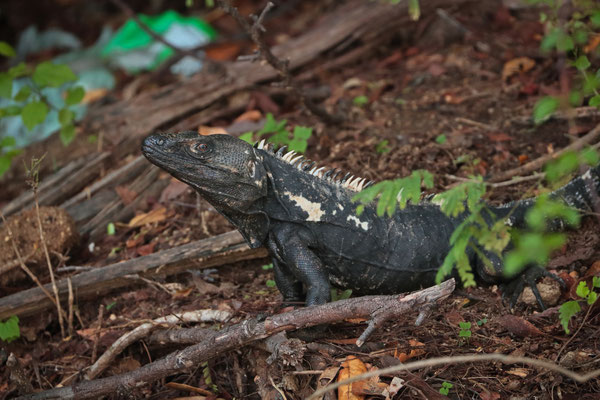
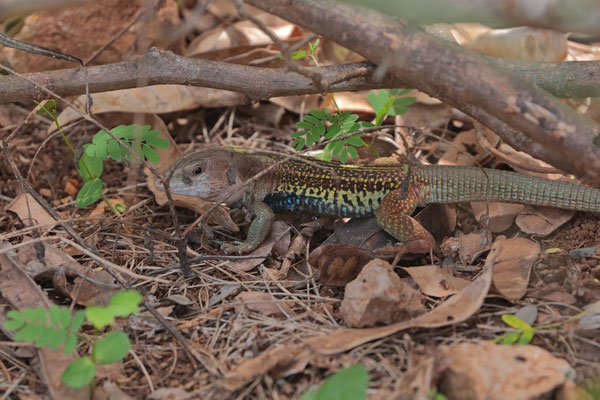
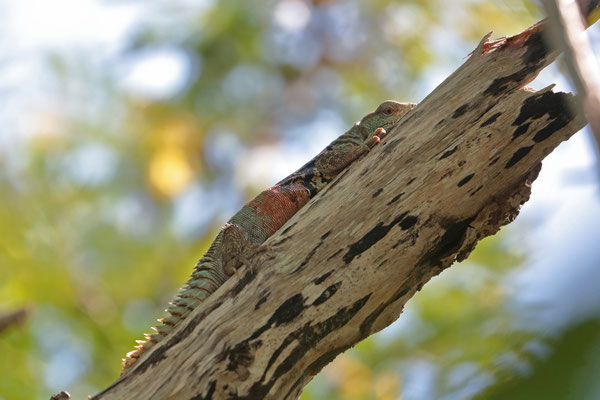
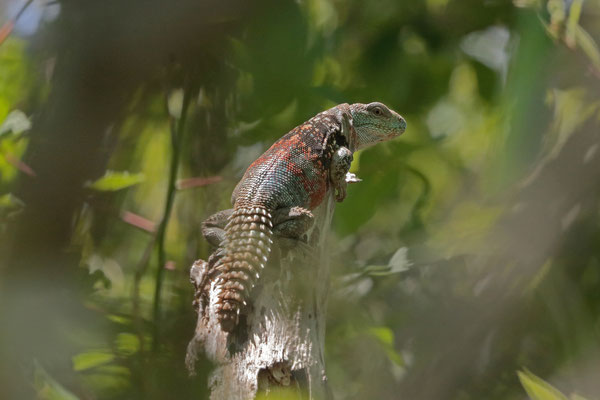
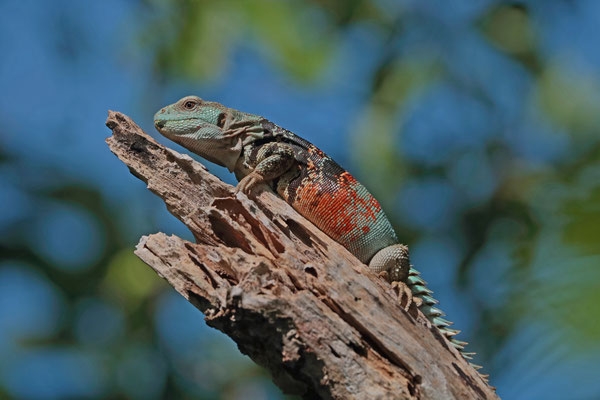
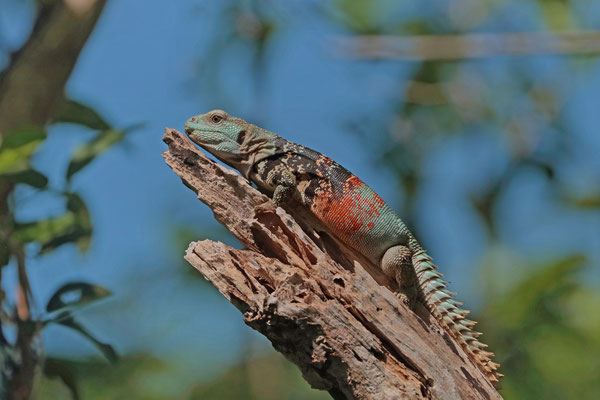
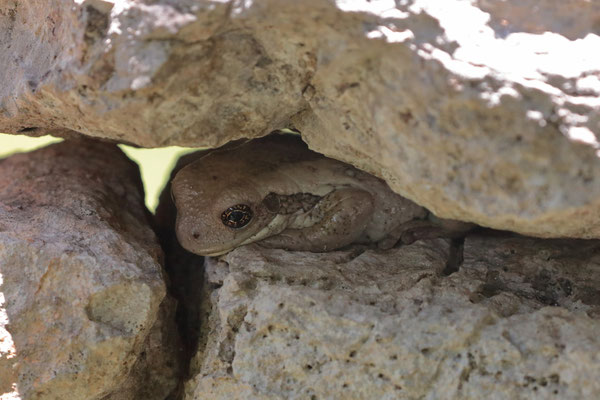
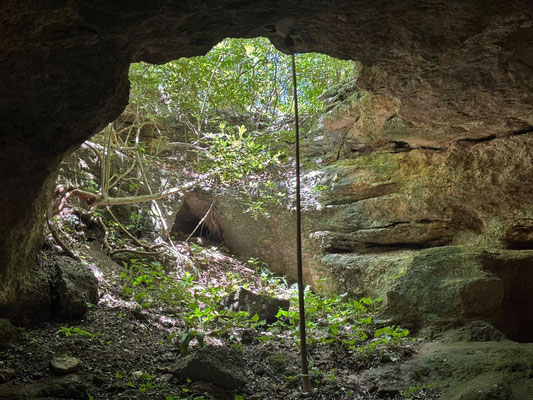
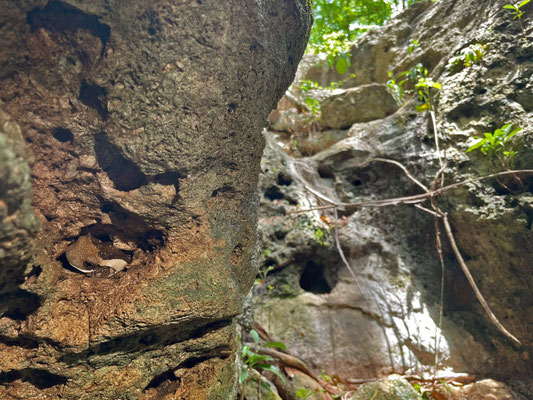
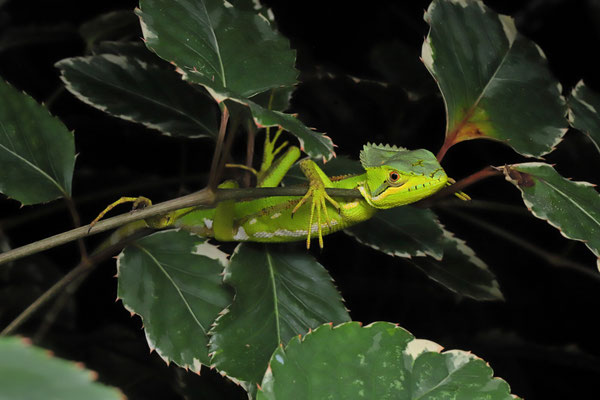
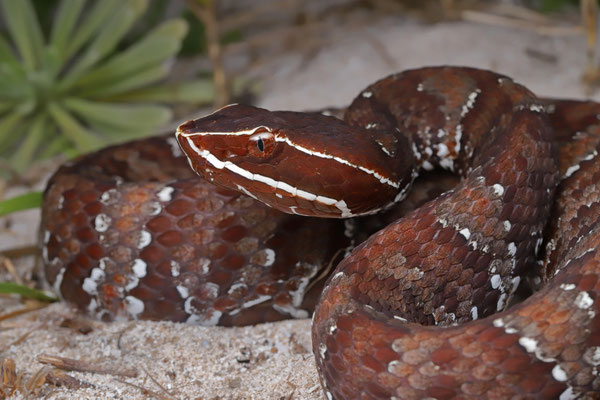
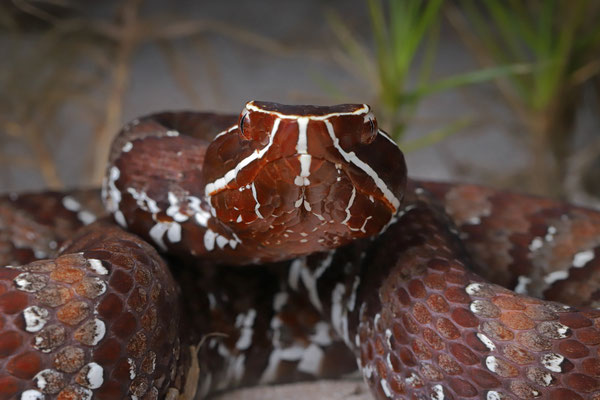
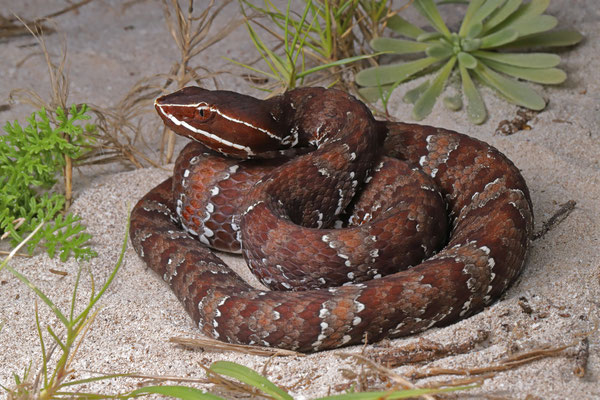
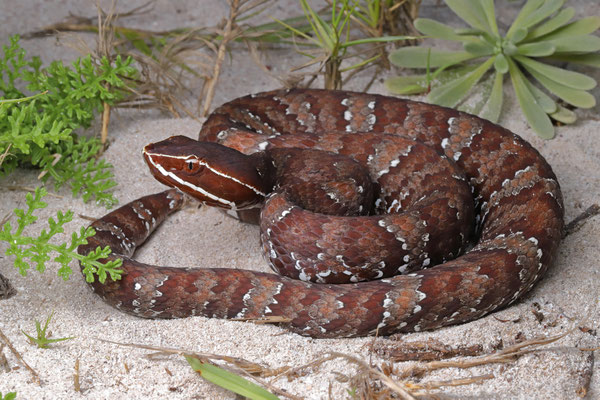
Having seen Bolitoglossa, Triprion, Laemanctus and Crotalus, we were missing only two species of our "Big Six" for Yucatán. For these two we enlisted the help of herping legends Pedro and Jonathan. They were very confident we would see our two targets, and they were not wrong! We had only just started our search when there was already a gorgeous Yucatán Spiny-tailed Iguana (Cachryx defensor) sunning itself on a branch. What a wonderful little iguana and they really looked a bit like arboreal Uromastyx. Locally known as Chop, they are usually very shy, but this individual allowed us to get quite close and take loads of pictures. The mosquito army was also happy that I spent so much time photographing, but it didn't matter to me. It was magical to see the only endemic reptile genus of the Yucatán in the flesh and observe it without bothering the animal. Other findings of our morning session were Anolis rodriguezii, Hemidactylus frenatus, Ctenosaura similis, Sceloporus chrysostictus, Sceloporus serrifer, Aspidoscelis angusticeps, Coleonyx elegans, Marisora lineola, Rhinella horribilis, Trachycephalus typhonius and a big Conophis lineatus which escaped sadly. Inside a cave we even found multiple Triprion petasatus wedged into little holes in the cave wall. After leaving some liters of blood and sweat in the forest it was time for a break in the afternoon. Tonight we would try for a very special viper. Directly after sunset we made sure to be in some awesome coastal habitat. We first found some lizards, the usual suspects, but also more Laemanctus serratus which was great to see in the coastal shrublands. Conveniently, Pedro left the trail, just in time for Laura to have the honour of finding a Yucatecan Cantil (Agkistrodon russeolus). A new genus unlocked and one we have looked for in Central America too many times. What an absolutely breathtaking snake and such a calm creature as well! We felt super happy to have seen our entire "Big Six" this time and explored some mangrove swamps for other, more cryptic species. Sadly they didn't want to be found and we only saw some Crocodylus moreletii. But what a night!
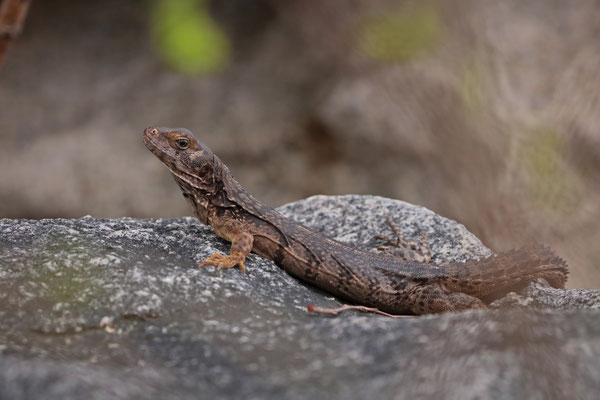
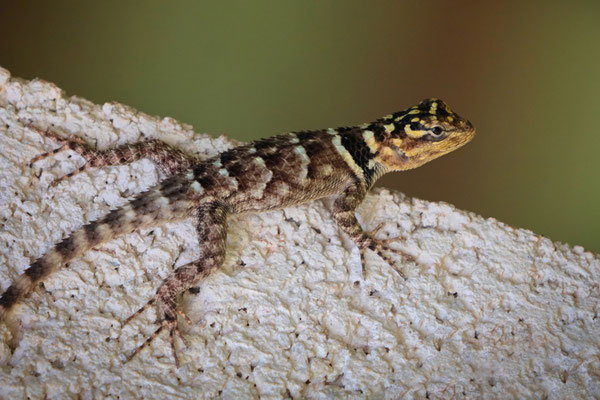
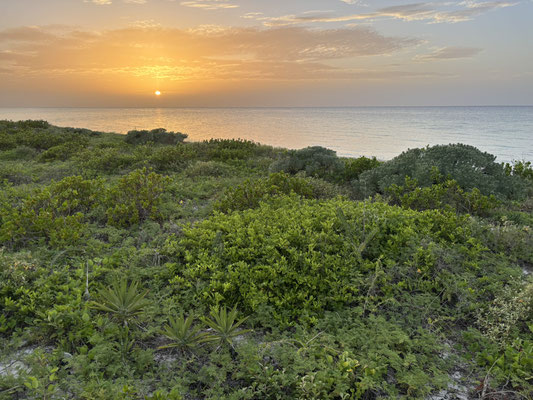
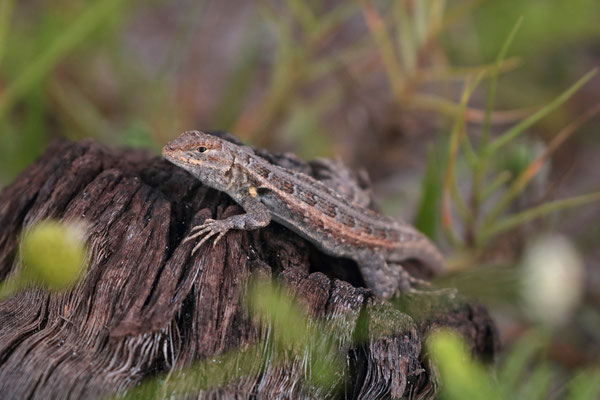
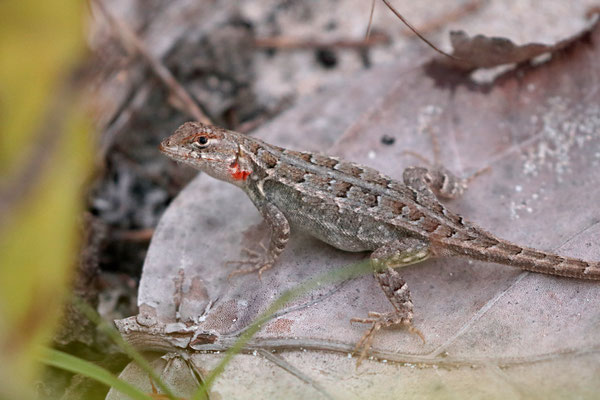
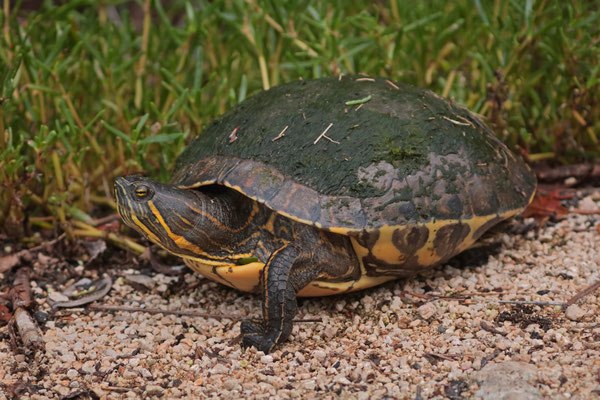
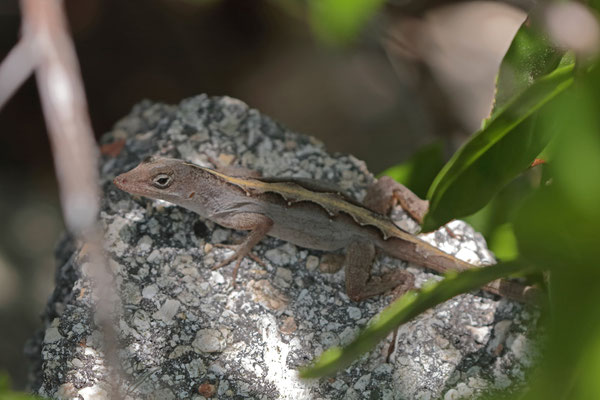
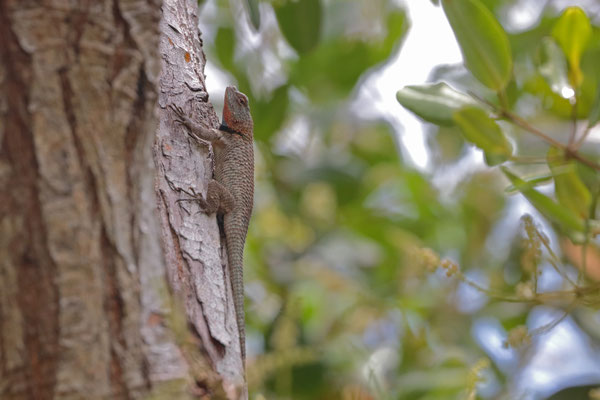
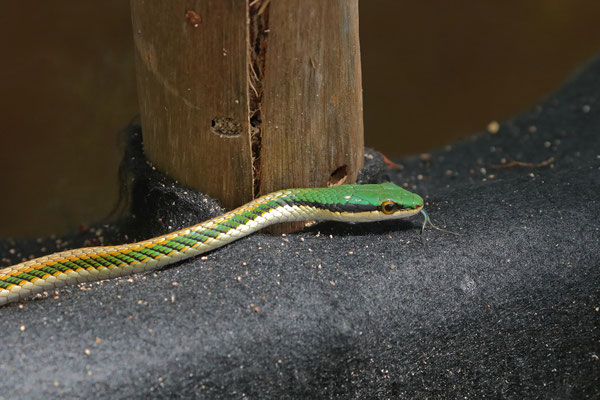
The remaining two days I roamed the mangroves to try and add some more diurnal species to the list such as garter snakes, some rare freshwater turtles and spiny lizards. It was tough going in the mosquito infested swamps and the unbearable heat, and it didn't really yield the result I was hoping for. Moreover I ran into some police officers who claimed I was in a forbidden area, because apparantly "stop" signs mean "forbidden" here. Sure... After a lengthy discussion we could luckily settle the issue on the spot. Interesting how that works here. I could add the arboreal, secretive and range restricted Lundell's Spiny Lizard (Sceloporus lundelli) to the list, and it was great to see how swiftly these lizards move through the canopy of the mangroves. One evening we explored a more humid forest with a lot of waterbodies and there we could even find another Bolitoglossa active without rain. Other species which haven't been mentioned in the text, but which we saw during our time in Yucatán include Hypopachus variolosus, Leptodactylus fragilis, Lithobates brownorum, Kinosternon cruentatum, Kinosternon cruentatum, Trachemys venusta, Sceloporus cozumelae, Anolis sagrei, Holcosus undulatus, Boa imperator, Pseudelaphe phaescens, Coniophanes schmidti, Leptophis mexicanus and Sibon sanniolus.
Chiapas - El Soconusco
From the 25th of June until the 7th of July 2026
When we returned to Chiapas we only had one big target to find. More individuals of our favorite salamander species! Our first stop was the quite charming town of Acacoyagua. Here, the first organized Japanese immigrants to Chiapas settled in the early 20th Century, and today, the Japanese-Mexican community is still going strong. This certainly gives the place a very special vibe - people look more Japanese than Mexican, the central park is decorated with Japanese-style pagodas and Torii gates and we enjoyed the best sushi of the trip! Of course we also visited the memorial of the famous botanist Eizi Matuda who loved and worked close to the town and collected many animals for scientific collections. From here we did excursions into the mountains and into the mangroves, but didn't find our target salamanders or any exciting vipers we were hoping to see.
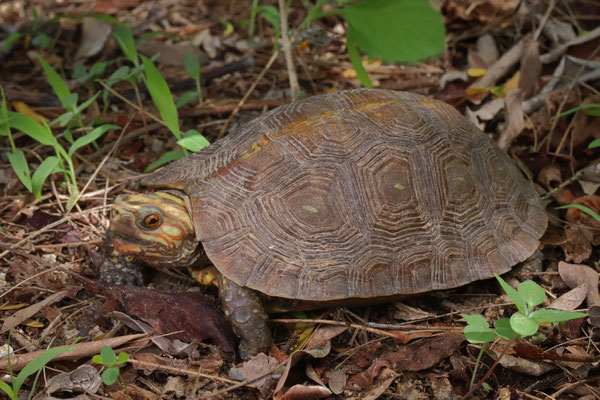
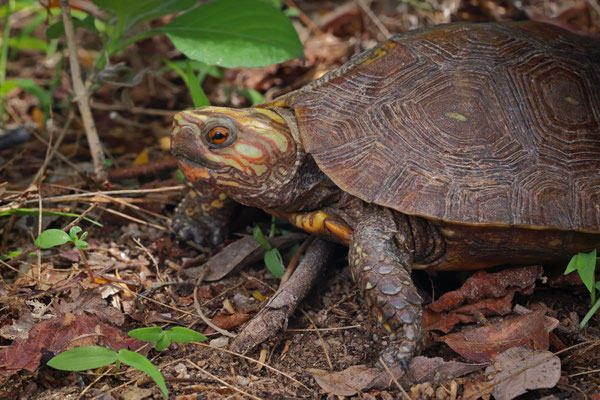
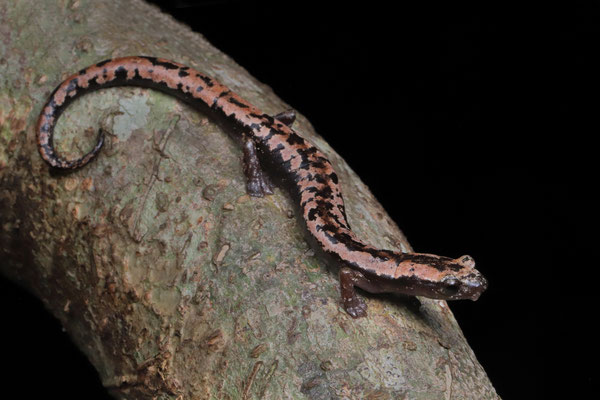
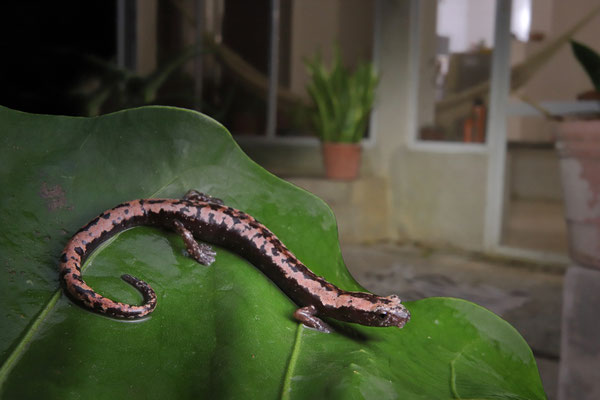
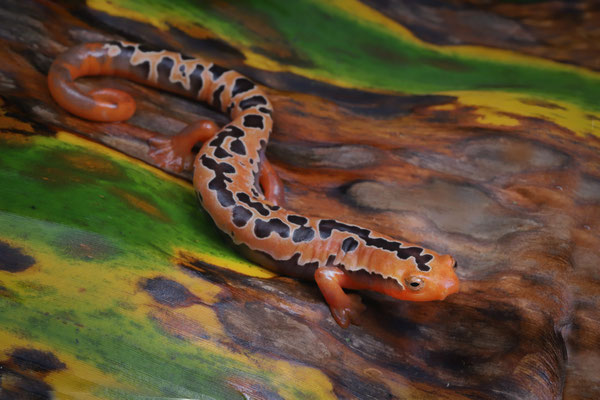
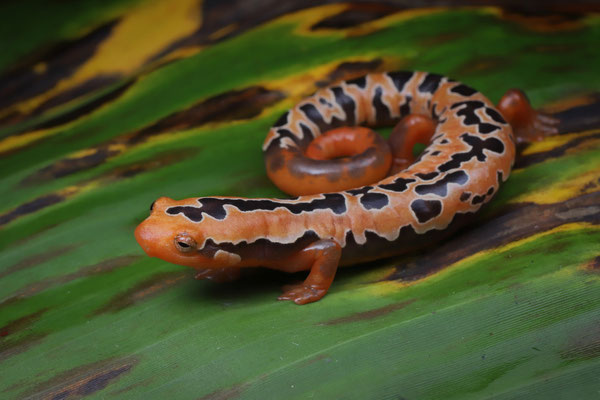
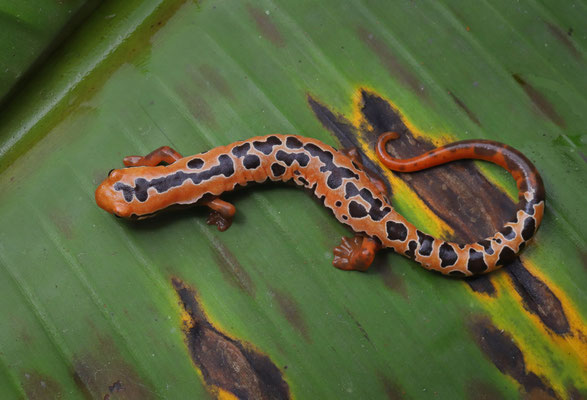
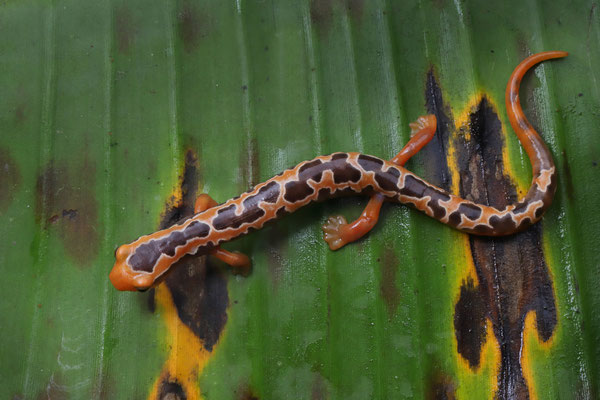
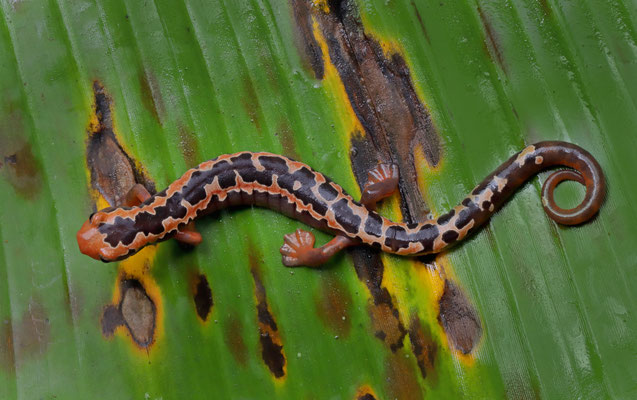
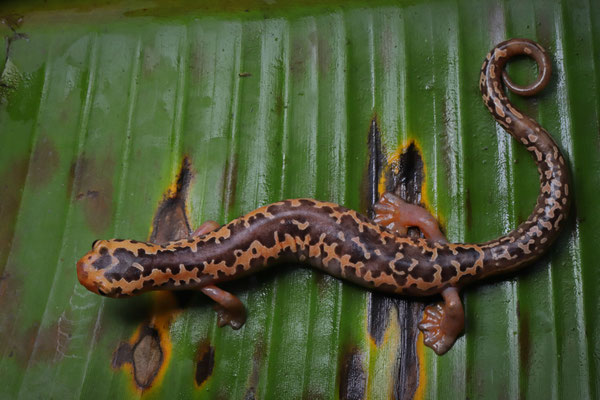
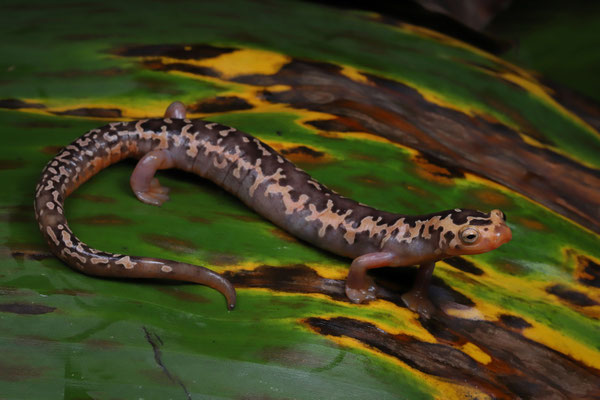
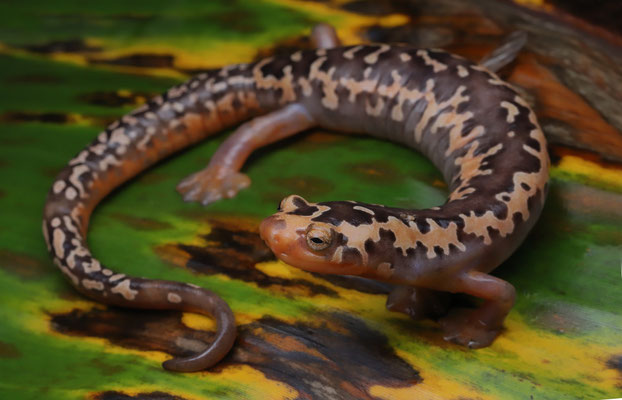
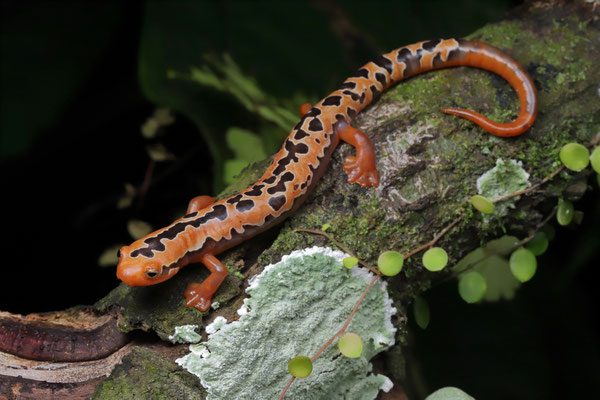
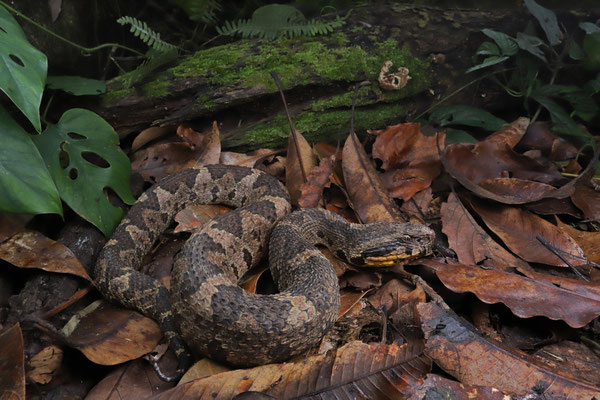
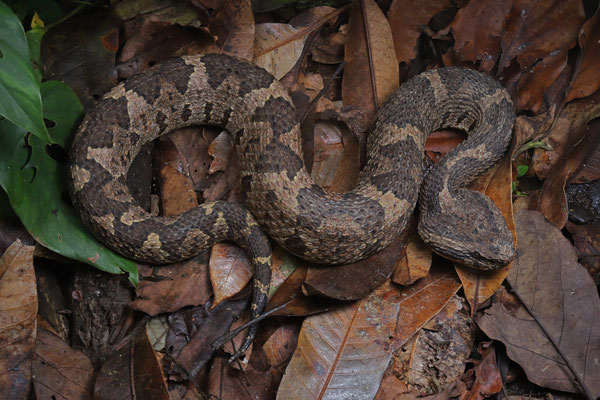
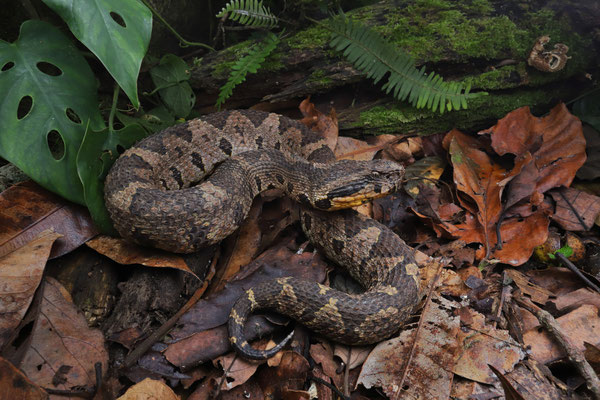
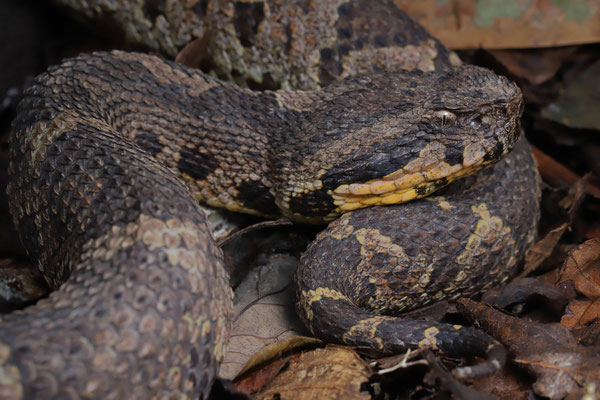
The next location was the only location where we have been successful with our salamander objectives in the past and also now it was again the perfect place. We had the accommodation with restaurant, swimming pools and river access all to ourselves and the weather also played along. Daily thunderstorms and rain showers also caused power outages, but more importantly, they provided the perfect conditions for salamanders to come out. On the first night we already discovered 4 beautiful and all very different Yellowbelly Mushroomtongue Salamanders (Bolitoglossa flaviventris) in the dense vegetation. Having so much time in this location we could also really explore the entire area, and see where these gorgeous animals occur. Strangely enough, we only found them at 2 different core areas, and seemingly similar habitat in between them was devoid of any salamanders. It was also great to see how faithful these salamanders are to their perches, and despite photographing them, we saw several individuals every night on the same branch or leaf. Some even as high as 4 meters! In total we saw 8 individuals, the largest of which measured an impressive 20.5 cm. Other animals also appeared in the same habitat and we saw plenty of Bolitoglossa occidentalis, Incilius valliceps, Rhinella horribilis, Craugastor mexicanus, Scinax staufferi, Smilisca baudinii, Tlalocohyla smithii, Rhinoclemmys pulcherrima, Hemidactylus frenatus, Anolis unilobatus, Anolis serranoi, Basiliscus vittatus, Ctenosaura similis, Iguana iguana, Lepidophyma smithii, Imantodes cenchoa, Leptodeira maculata, Leptodeira septentrionalis and Oxybelis microphthalmus. Higher in the mountains we did an excursion for some awesome scenery and some slightly different species. Besides some of the more common species, we also saw a beautiful male Anolis petersii and several Sceloporus acanthinus. As so often in the small mountain villages, there is no police presence, but we were greeted everywhere with smiles and waves. Every village appoints their own judge in case there are troubles, and in one of the villages we also met "The Judge". Thanks to him word spread that we were looking to photograph a short and chubby viper and everybody in the area was aware to not kill the snakes as they usually do, but alert us. And this time this technique even worked and as a final species to our list we could add a stunning Guatemalan Jumping Pitviper (Metlapilcoatlus occiduus). Absolutely wonderful to see this tranquil and gorgeous snake as a final parting gift!
Epilogue
Once more we found out that herping in Southern Mexico is not for the faint of heart. Some common species do exist, but most of the species are incredibly difficult to find, have low densities or only come out during certain weather circumstances. The climate is brutal in most places and the heat and humidity are incredible. Even when the sun is down, we were sweating while sitting and sometimes got completely drenched from sweat while doing a little herping round. Rain will certainly cool things down a notch and will also make the animals become active, but unfortunately that also includes all sorts of animals which are after your blood. In some places we got eaten alive by mosquitoes and biting midges and left with our bodies covered in scratchy bites. The famous Mexican food is hard to come by in this region and in most areas we had to settle for some tasteless meals. Hotel standards are also rarely enjoyable in the remote regions and we could enjoy quite some cold bucket showers, worn-out mattresses, mold and power outages. That being said, even in the most remote corners of the country we visited, we always found a roof over our heads and some food. And that is all due to the incredible hospitality of the Mexican people. They greeted us with so much warmth and kindness and always asked if we needed help. They assisting us to reach remote forests on motorbikes or opened up their homes, although we arrived unannounced and this is truly unique. Naturally, we weren't naive to the danger that always looms in the background and there are troubles with narco-trafficking and rivaling gangs in these regions. We kept our eyes open and always inquired with local people how the safety situation is. For those who are willing to deal with some discomfort, Mexico is a treasure-trove where there are still so many exciting things waiting to be discovered. It won't be our last time here!
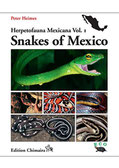
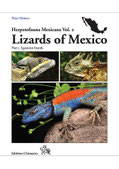
Further reading

Species
Yellowbelly Mushroomtongue Salamander (Bolitoglossa flaviventris)
Oaxacan Mushroomtongue Salamander (Bolitoglossa macrinii)
Southern Banana Salamander (Bolitoglossa occidentalis)
Northern Banana Salamander (Bolitoglossa rufescens)
Veracruz Mushroomtongue Salamander (Bolitoglossa veracrucis)
Yucatán Mushroomtongue Salamander (Bolitoglossa yucatana)
Fire-tail Pinewood Salamander (Pseudoeurycea conanti)
Mexican Caecilian (Dermophis mexicanus)
Dwarf Toad (Incilius canaliferus)
Marbled Toad (Incilius marmoreus)
Pine Toad (Incilius occidentalis)
Chimalapas Toad (Incilius tutelarius)
Gulf Coast Toad (Incilius valliceps)
Western Cane Toad (Rhinella horribilis)
Two-spaed Narrow-mouthed Toad (Hypopachus ustus)
Mexican Narrow-mouthed Toad (Hypopachus variolosus)
Alfred's Rainfrog (Craugastor alfredi)
Common Leaf-litter Frog (Craugastor loki)
Mexican Robber Frog (Craugastor mexicanus)
Pygmy Robber Frog (Craugastor pygmaeus)
Polymorphic Robber Frog (Craugastor rhodopis)
Rugulose Rainfrog (Craugastor rugulosus)
Xucaneb Robber Frog (Craugastor xucanebi)
Whistling Chirping Frog (Eleutherodactylus pipilans)
Black-eyed Leaf Frog (Agalychnis moreletii)
Yellowbelly Voiceless Treefrog (Charadrahyla altipotens)
Juanita's Earless Treefrog (Charadrahyla juanitae)
Merten's Yellow Treefrog (Dendropsophus robertmertensi)
Chimalapa Treefrog (Exerodonta chimalapa)
Sumichrast's Treefrog (Exerodonta sumichrasti)
Matuda's Spikethumb Frog (Plectrohyla matudai)
Cloud Forest Stream Frog (Ptychohyla euthysanota)
Schultze's Mountain Stream Frog (Ptychohyla leonhardschultzei)
Mourning Treefrog (Sarcohyla pentheter)
Stauffer's Long-nosed Treefrog (Scinax staufferi)
Common Mexican Treefrog (Smilisca baudinii)
Blue-spotted Mexican Treefrog (Smilisca cyanosticta)
Dwarf Mexican Treefrog (Tlalocohyla smithii)
Central American Milk Frog (Trachycephalus typhonius)
Yucatán Shovel-headed Treefrog (Triprion petasatus)
Mexican Shovel-headed Treefrog (Triprion spatulatus)
Mexican Burrowing Toad (Rhinophrynus dorsalis)
Mexican White-lipped Frog (Leptodactylus fragilis)
Brown's Leopard Frog (Lithobates brownorum)
Forrer's Grass Frog (Lithobates forreri)
Highland Leopard Frog (Lithobates maculatus)
Sierra Madre Leopard Frog (Lithobates sierramadrensis)
Central Chiapas Mud Turtle (Kinosternon abaxillare)
Red-cheeked Mud Turtle (Kinosternon cruentatum)
Painted Wood Turtle (Rhinoclemmys pulcherrima)
Mexican Spotted Wood Turtle (Rhinoclemmys rubida)
Meso-American Slider (Trachemys venusta)
American Crocodile (Crocodylus acutus)
Mexican Crocodile (Crocodylus moreletii)
Yucatán Banded Gecko (Coleonyx elegans)
Colima Banded Gecko (Coleonyx nemoralis)
Common House Gecko (Hemidactylus frenatus)
Yellowbelly Leaf-toed Gecko (Phyllodactylus tuberculosus)
Mexican Cave Anole (Anolis alvarezdeltoroi)
Giant Green Anole (Anolis biporcatus)
Malposo Scaly Anole (Anolis compressicauda)
Puerto Escondido Anole (Anolis immaculogularis)
White Anole (Anolis laeviventris)
Oaxacan Giant Canopy Anole (Anolis macrinii)
Clouded Anole (Anolis nebulosus)
Berriozabal Anole (Anolis parvicirculatus)
Peter's Anole (Anolis petersii)
Purple Swimming Anole (Anolis purpuronectes)
Rodriguez's Anole (Anolis rodriguezii)
Brown Anole (Anolis sagrei)
Serrano's Anole (Anolis serranoi)
Mixtepec Anole (Anolis stevepoei)
Blue-spotted Fan Anole (Anolis unilobatus)
Zapotec Anole (Anolis zapotecorum)
Brown Basilisk (Basiliscus vittatus)
Hernandez's Helmeted Basilisk (Corytophanes hernandesii)
Eastern Casquehead Iguana (Laemanctus longipes)
Serrated Casquehead Iguana (Laemanctus serratus)
Yucatán Spiny-tailed Iguana (Cachryx defensor)
Oaxacan Spiny-tailed Iguana (Ctenosaura oaxacana)
Western Spiny-tailed Iguana (Ctenosaura pectinata)
Black Spiny-tailed Iguana (Ctenosaura similis)
Green Iguana (Iguana iguana)
Bocourt's Emerald Spiny Lizard (Sceloporus acanthinus)
Yellow-spotted Spiny Lizard (Sceloporus chrysostictus)
Cozumel Spiny Lizard (Sceloporus cozumelae)
Mexican Emerald Spiny Lizard (Sceloporus formosus)
Graphic Spiny Lizard (Sceloporus grammicus)
Mail-snouted Spiny Lizard (Sceloporus internasalis)
Lundell's Spiny Lizard (Sceloporus lundelli)
Black-nosed Spiny Lizard (Sceloporus melanorhinus)
Yucatecan Rough-scaled Lizard (Sceloporus serrifer)
Longtail Spiny Lizard (Sceloporus siniferus)
Smith's Rosebelly Lizard (Sceloporus smithi)
Tanner's Emerald Spiny Lizard (Sceloporus tanneri)
Rosebelly Spiny Lizard (Sceloporus variabilis)
Tropical Tree Lizard (Urosaurus bicarinatus)
Mayan Skink (Marisora lineola)
Shortnose Skink (Plestiodon brevirostris)
Sumichrast's Skink (Plestiodon sumichrasti)
Brown Forest Skink (Scincella cherriei)
Montane Forest Skink (Scincella montana)
Yucatán Racerunner (Aspidoscelis angusticeps)
Blackbelly Racerunner (Aspidoscelis deppii)
Mexican Racerunner (Aspidoscelis guttatus)
Guatemalan Rainbow Ameiva (Holcosus parvus)
Rainbow Ameiva (Holcosus undulatus)
Mexican Beaded Lizard (Heloderma horridum)
Smith's Tropical Night Lizard (Lepidophyma smithii)
Mountain Knob-scaled Lizard (Xenosaurus agrenon)
Central American Boa (Boa imperator)
Mexican West Coast Boa (Boa sigma)
Mexican Burrowing Python (Loxocemus bicolor)
Yellow-bellied Snake (Coniophanes fissidens)
Faded Black-striped Snake (Coniophanes schmidti)
Road Guarder (Conophis lineatus)
Blacktail Cribo (Drymarchon melanurus)
Pacific Coast Parrot Snake (Leptophis diplotropis)
Mexican Parrot Snake (Leptophis mexicanus)
Green Vine Snake (Oxybelis fulgidus)
Thornscrub Vine Snake (Oxybelis microphthalmus)
Yucatán Rat Snake (Pseudelaphe phaescens)
Pacific Patchnose Snake (Salvadora lemniscata)
Red Black-headed Snake (Tantilla rubra)
Western Lyre Snake (Trimorphodon biscutatus)
Pacific Longtail Snake (Enulius flavitorques)
(Common Blunt-headed Tree Snake Imantodes cenchoa)
Central American Blunt-headed Tree Snake (Imantodes gemmistratus)
Mayan Cat-eyed Snake (Leptodeira frenata)
Southwestern Cat-eyed Snake (Leptodeira maculata)
Black-banded Cat-eyed Snake (Leptodeira nigrofasciata)
Northern Cat-eyed Snake (Leptodeira septentrionalis)
Uribe's Cat-eyed Snake (Leptodeira uribei)
Redback Coffee Snake (Ninia sebae)
Slender Snail Sucker (Sibon dimidiatus)
Pygmy Snail Sucker (Sibon sanniolus)
Banded Snail Sucker (Tropidodipsas fasciata)
Terrestrial Snail-sucker (Tropidodipsas sartorii)
Bogert's Garter Snake (Thamnophis bogerti)
Golden-headed Garter Snake (Thamnophis chrysocephalus)
Yucatecan Cantil (Agkistrodon russeolus)
Nortwestern Neotropical Rattlesnake (Crotalus culminatus)
Yucatán Neotropical Rattlesnake (Crotalus tzabcan)
Guatemalan Jumping Pitviper (Metlapilcoatlus occiduus)
Dunn's Hognosed Pitviper (Porthidium dunni)
Observed as DOR only: Stenorrhina freminvillei, Lampropeltis abnorma, Triaspis senticollis, Thamnophis proximus and Drymobius margaritifera.
Many thanks to Wouter Beukema, Jonathan Cruz, Arístides García Vinalay, Emmanuel Javier Vázquez, Miguel Manzanillo, Pedro Nahuat, Gilbert Perez, Ivan Rueda & Honesimo Velasco