 Amphibians and Reptiles
of Europe
Amphibians and Reptiles
of Europe
South Africa
From the 6th of November 2025 until the 5th of January 2026
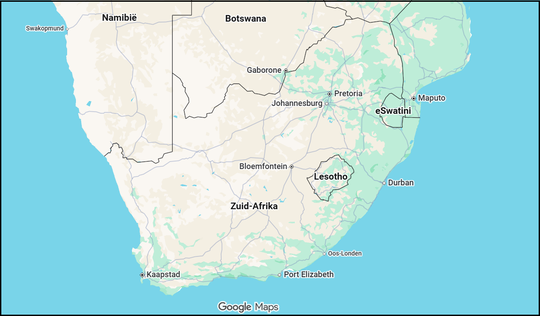
After an amazing three months in Central America we flew over the Atlantic Ocean to the African continent. We started the African part of our Little Big Year in South Africa. For Laura a new country, but I could already get a little taste of the amazing biodiversity here back in 2019. There was much more to see though, so we decided to spend quite some time exploring this highly diverse and beautiful country. During our stay we focused on seeing all the twenty currently described species of dwarf chameleon and basically followed all the distributional ranges from east to west. We also had several amphibian species we badly wanted to see (most of them in the eastern half of the country), and for those we needed to time our arrival in South Africa with the onset of the first rains. We knew that meant having a harder time finding animals in the western half, but we decided to try our luck regardless. Rarely have we had such luck with weather on a trip and most of the time when we needed some rain, we got some rain. And with it came the animals...
The 6th of November 2025
Getting from Guatemala to South Africa was a three day journey with a stopover in New York. Luckily we encountered no delays, no traffic jams or lost luggage this time. When we got the almost 15h long flight behind us, we drove into the direction of Graskop and found an excellent place to catch up on some sleep in the Ledumo Guesthouse in Witbank.


Graskop
From the 7th until the 9th of November 2025
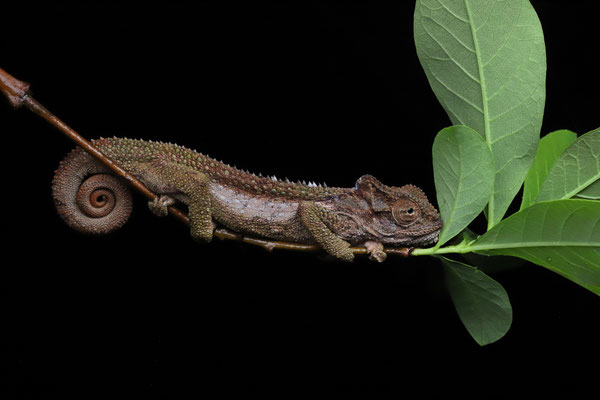
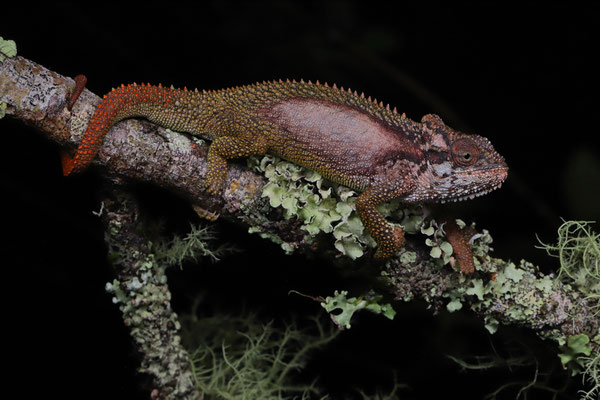
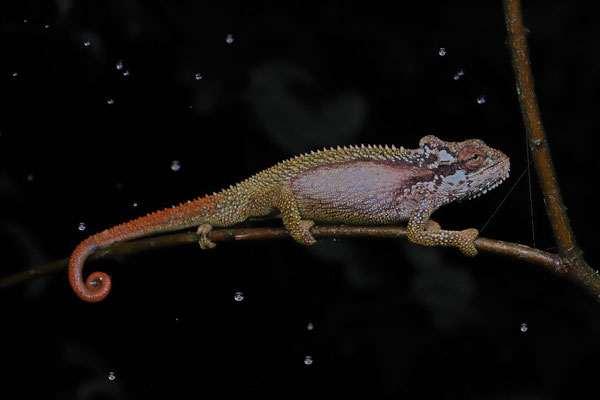
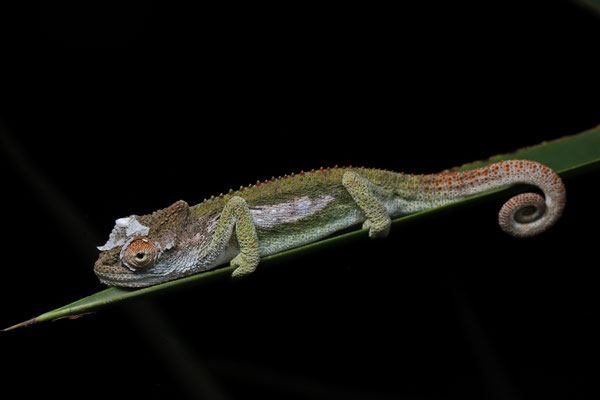
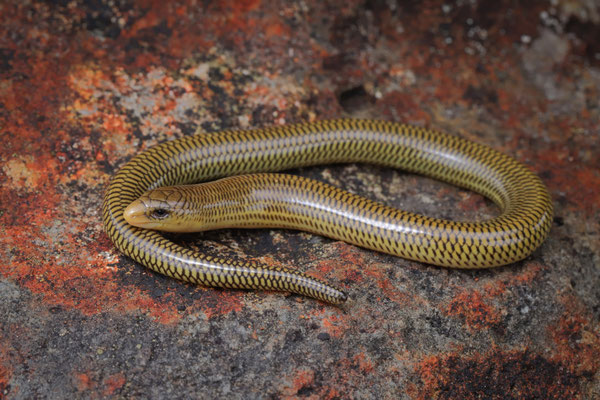
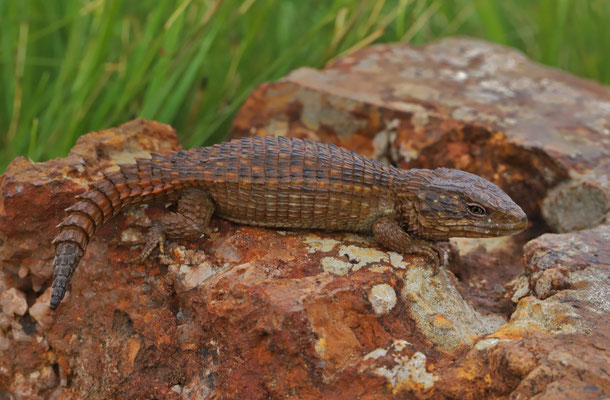
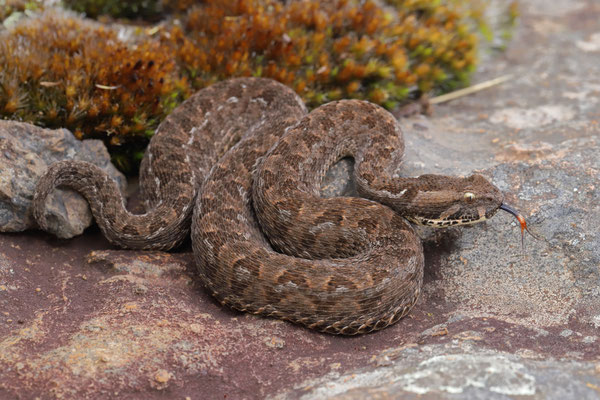
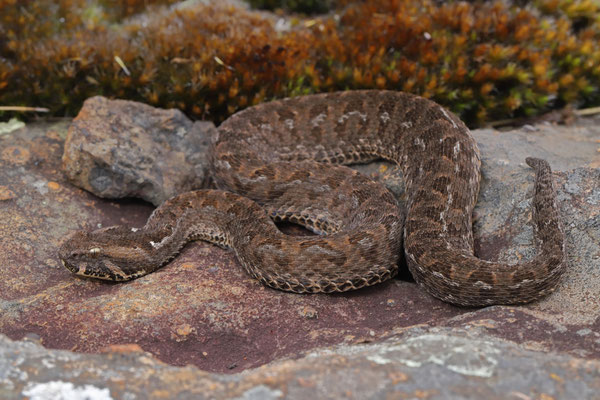
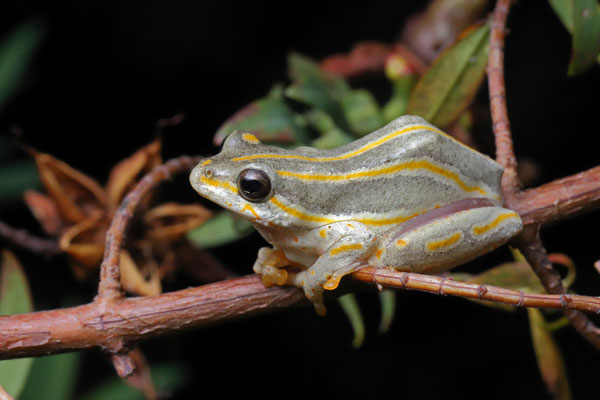
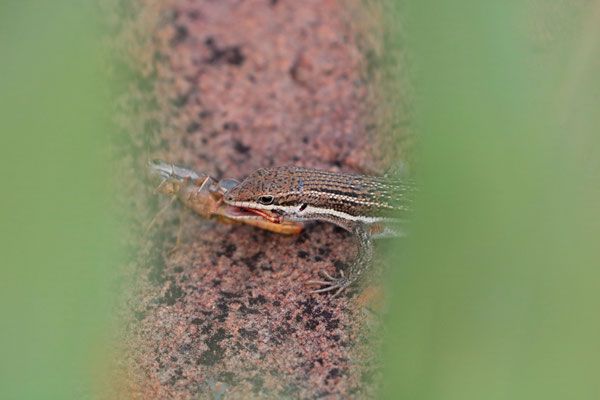
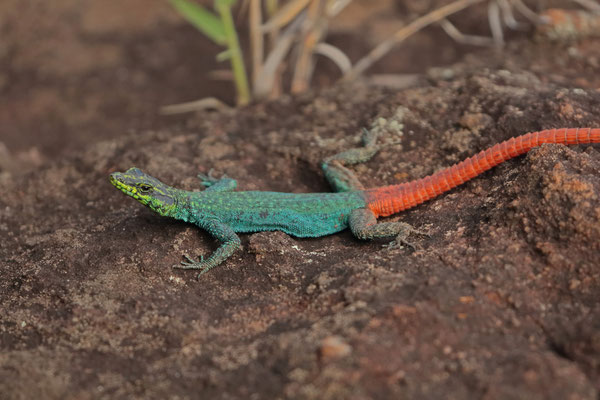
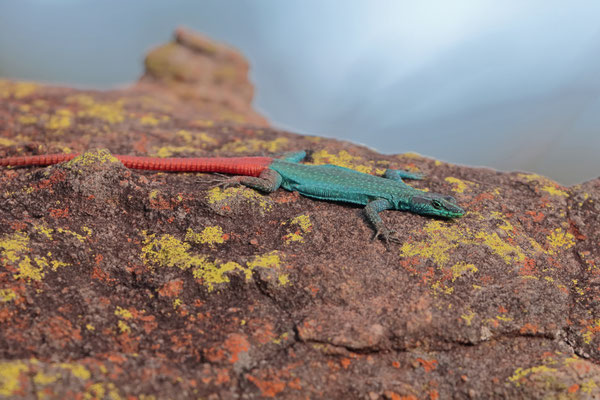
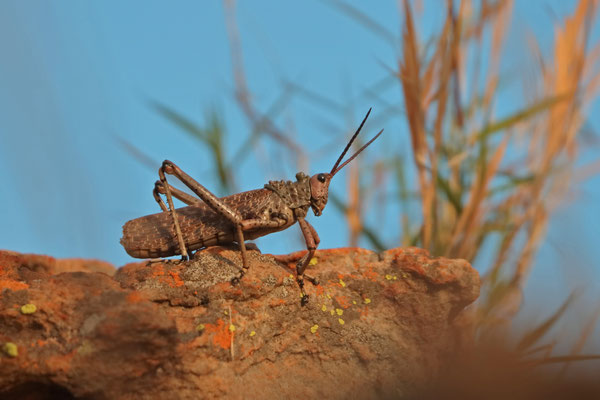
We got the long drive behind us and were looking forward to spending an afternoon in the field. The weather had other plans though. We had dense fog, a continuous drizzle coming down and temperatures in the single digits. We had a small stroll through some highveld habitat, but didn't see much. We installed ourselves in the comfortable private guesthouse and waited for night to come. We didn't have to go far for our main target and we found exactly what I had hoped to find in this garden: several Transvaal Dwarf Chameleons (Bradypodion transvaalense). Some even right in front of our door! Very happy to have found the main target we had dinner in town (ostrich steak) and found several more chameleons in town. The next day the weather was pretty much the same. Dense fog and low temperatures. We still decided to drive to a high altitude site for some special reptiles to try our luck. We immediately found species such as Acontias albigularis, Trachylepis capensis, Trachylepis punctatissima and Cordylus vittifer. At one of the highest points we were just thinking of turning around back to the car when I heard a little hiss coming from the grass. A pretty female Berg Adder (Bitis atropos) was just crawling around in the grass, despite the horrible weather. What an amazing first snake of the trip! During photography the sun came out and we could finally see in what a beautiful place we have been herping. In the late afternoon we drove to a rocky outcrops near a river for some colourful lizards. Sekhukune Flat Lizard (Platysaurus orientalis) was quickly found and even a beautiful male basking next to a Eastern Rock Sengi (Elephantulus myurus). We also spotted some Trachylepis varia and Trachylepis margaritifer. Back in town we ate some delicious pizza at Canto's Trattoria and decided to have a look at an interesting pond we spotted along the road. We quickly saw Hyperolius marmoratus, Strongylopus grayii, Xenopus laevis and many Rattling Frogs (Semnodactylus wealii). Incredible to see these little frogs climb nimbly through the grass with their tiny grasping feet.








Mpumalanga
From the 9th until the 11th of November 2025
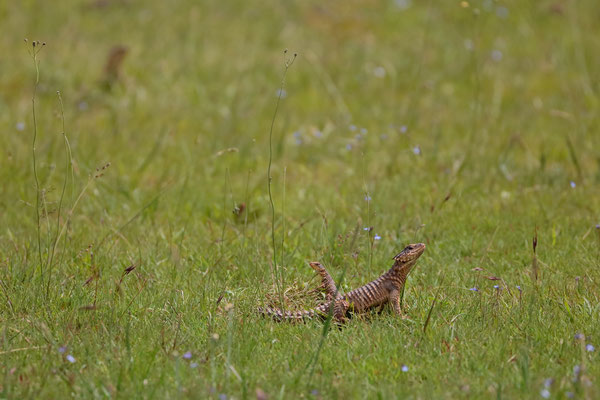
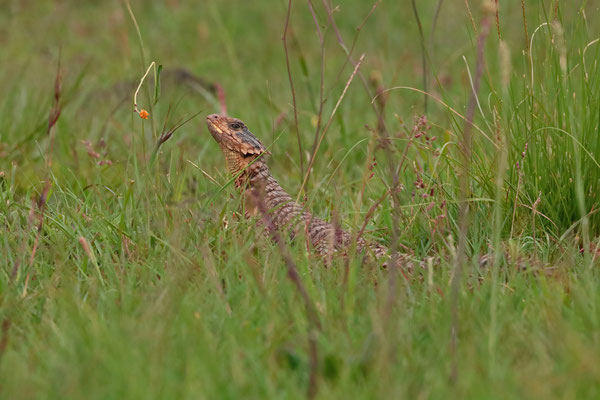
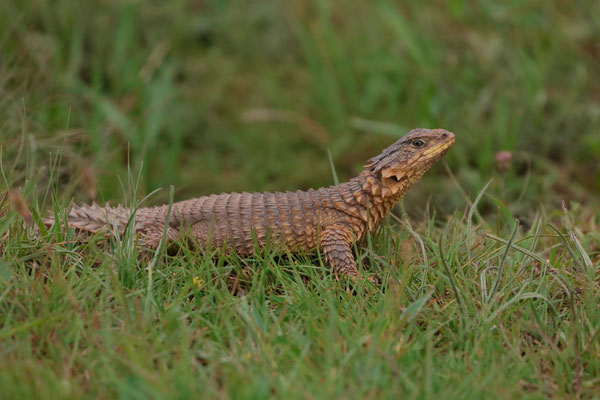
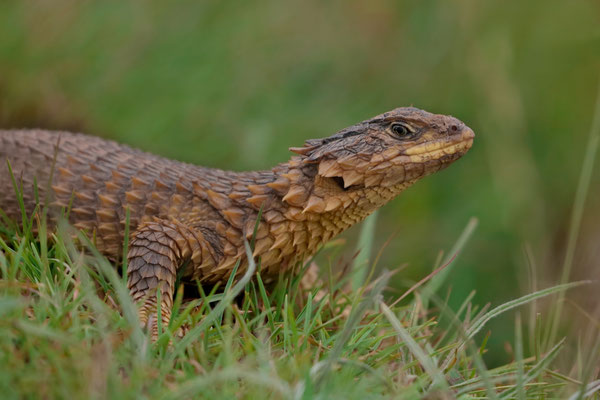
One of the main reasons for me to go back to South Africa is a a very special lizard that can only be found here in high altitude grasslands with fixed loamy soil. It really likes it warm, so we were already keeping an eye on the weather forecast for days. We saw things were not looking great though, with more rain coming in. We had a small time window with some sun, but we needed to drive early from Graskop in the direction of the highveld grasslands that are home to these lizards. Herping buddy Richard put us in contact with landowner Andre. On his land a rare thriving population of Giant Girdled Lizards (Smaug giganteus) can be found. One of the biggest threats to these lizards is the plowing of soil. All throughout its range the soils are being plowed to turn the grasslands into cornfields or cow pastures. Andre just lets his land be and that is all what the lizards need. When we arrived Andre picked us up in his bakkie and barely 10 meters onto his land we saw the first head sticking out of a burrow. Many more would follow and in total we saw around 30 of these majestic dragons basking in front of their burrows. It was such an amazing experience to see to be on these grasslands with so many of these iconic lizards around. Our timing was also perfect because the sungazers - as they are also called - were keen to get some sun in before the rains returned. And late in the afternoon they did come back in all its intensity and in our comfortable guesthouse we could look back to a very special afternoon. Thanks so much again Richard and Andre for making this happen!
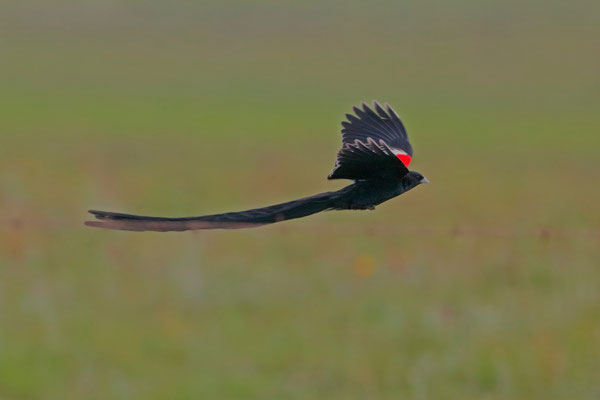
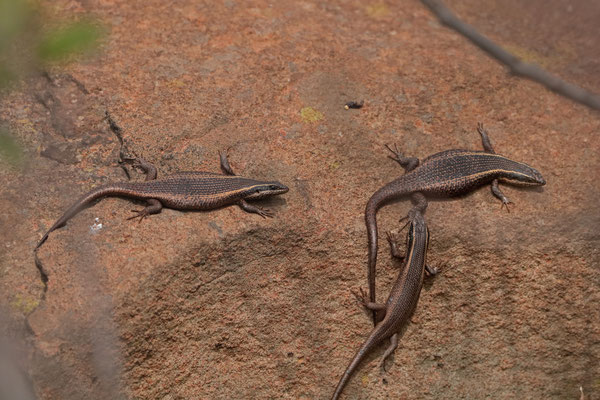
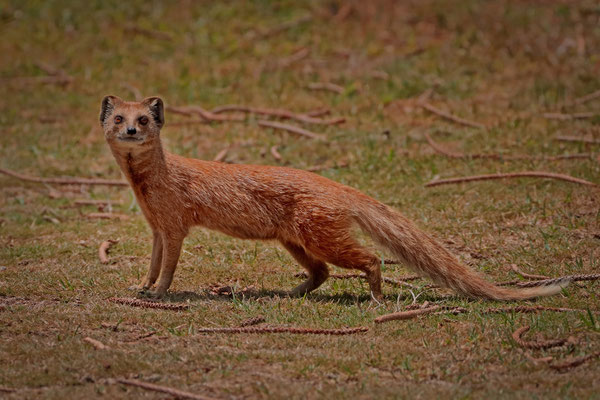
The next morning we returned, but with the sun not really out we only saw a few more sungazers and they were quite skittish now. In the afternoon we visited a rocky outcrops on another private land we could visit thanks to Richard. Here we found Sclerophrys capensis, Trachylepis punctatissima, Leptotyphlops conjunctus and an incredibly striking Highveld Crag Lizard (Pseudocordylus melanotus). Before the afternoon rains returned we drove over some country roads and marveled at the biodiversity of this amazing place. We saw a family of Blue Cranes (Grus paradisea) raising their family of chicks between the grazing Blesbok (Damaliscus pygragus) while Long-tailed Widowbirds (Euplectes progne) are hovering above the tall grass like little Nazguls. In the high grass Southern Bald Ibis (Geronticus calvus), Yellow Mongoose (Cynictis penicillata) and Meerkats (Suricata suricatta) were foraging while a Marsh Owl (Asio capensis) is taking in the scenery. What a dream to see this wildlife bonanza and in hindsight I would have loved to spend some more time here!











Kwazulu-Natal
From the 11th until the 13th of December 2025
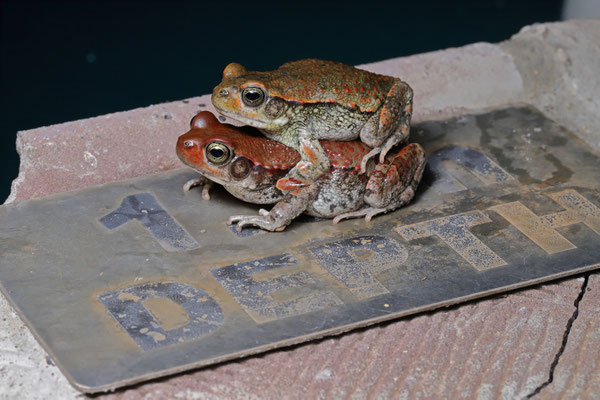
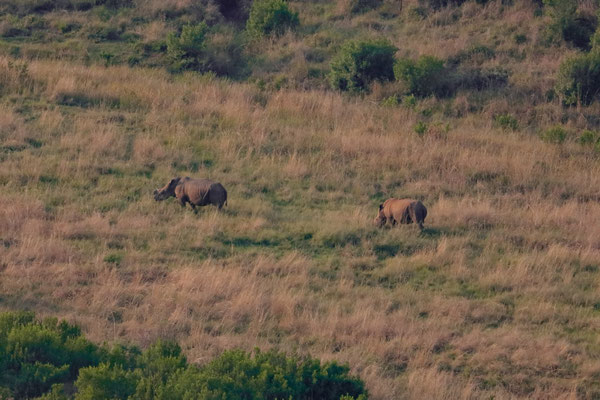
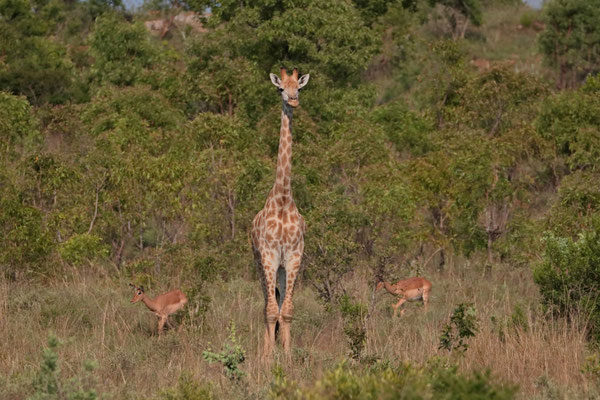
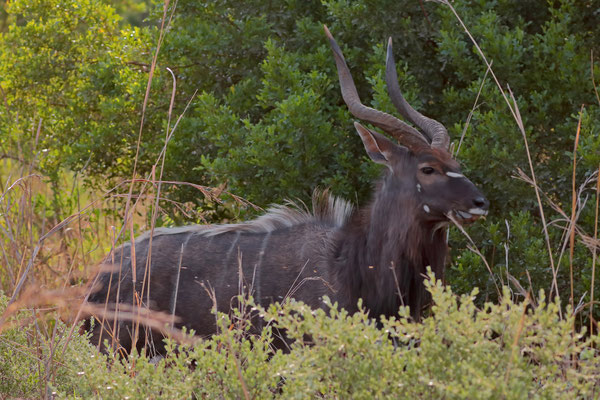
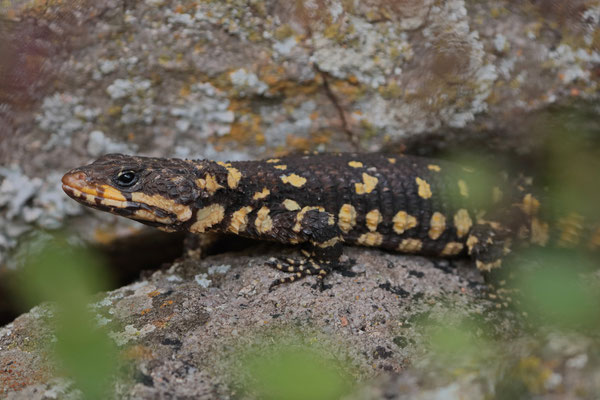
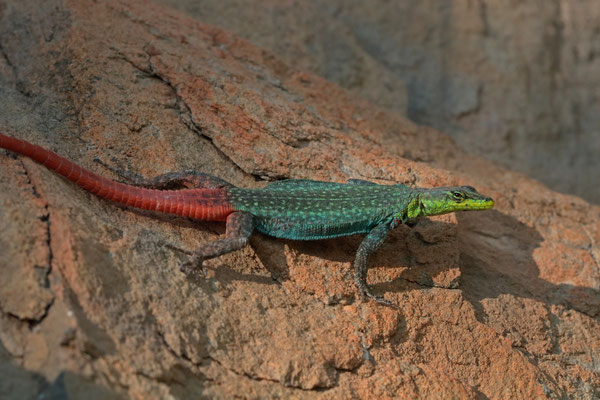
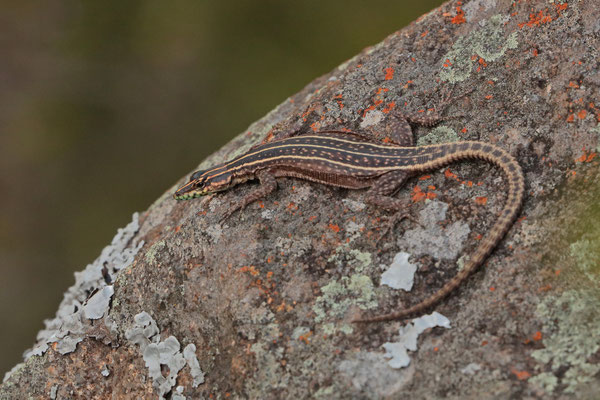
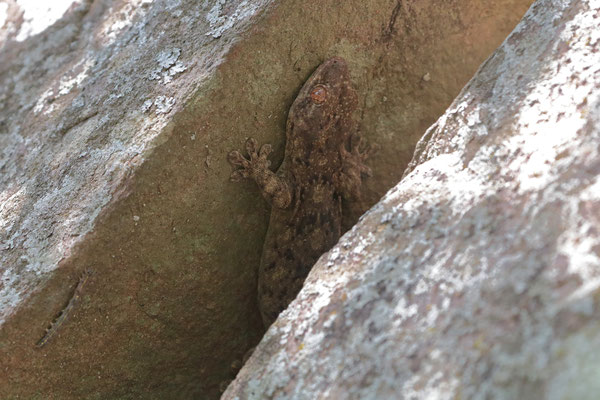
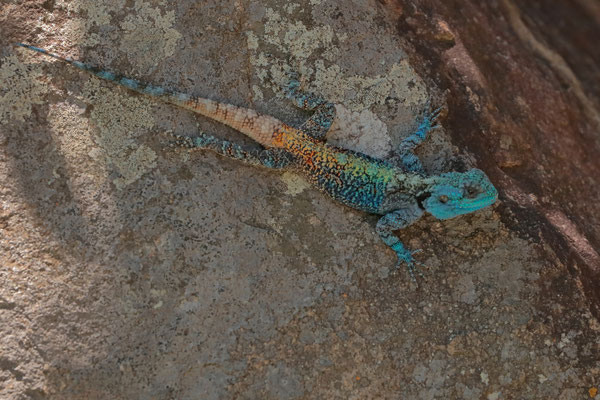
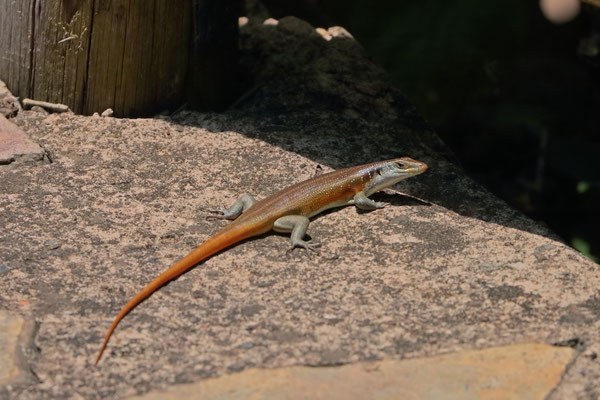
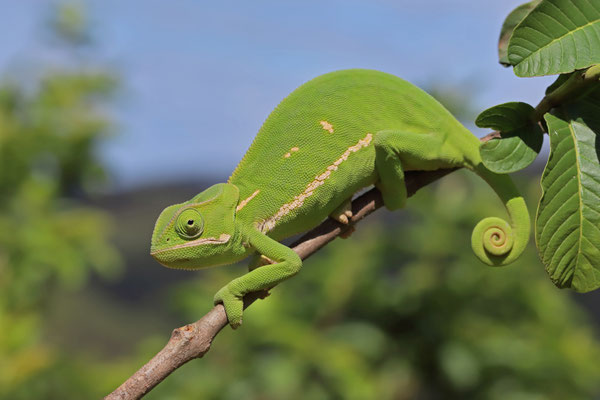
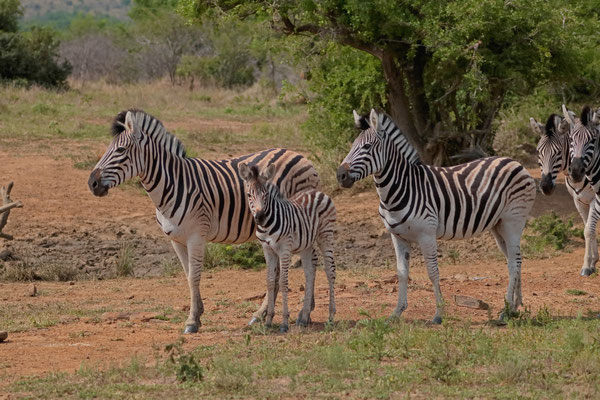
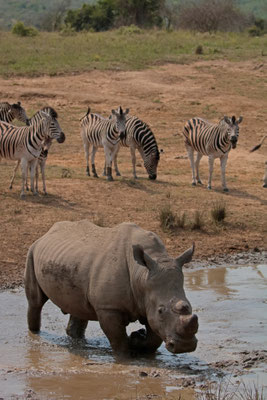
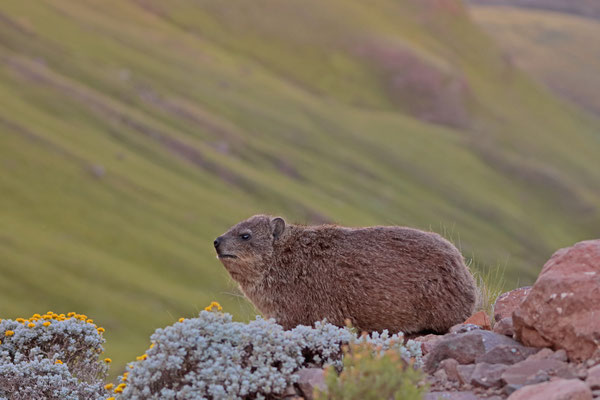
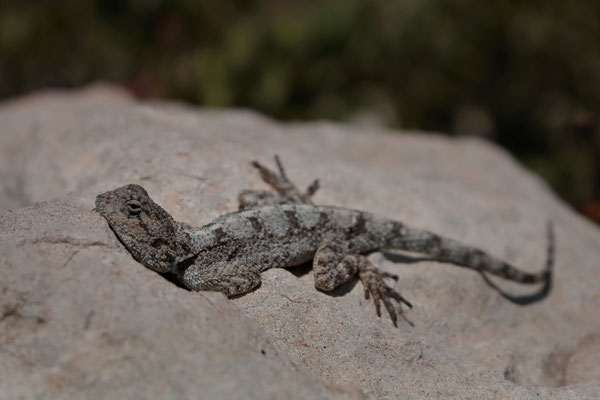
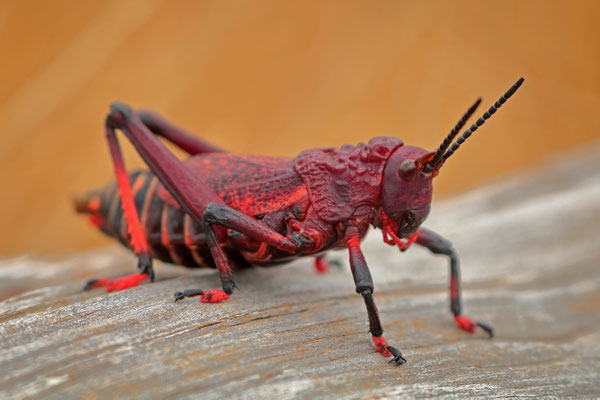
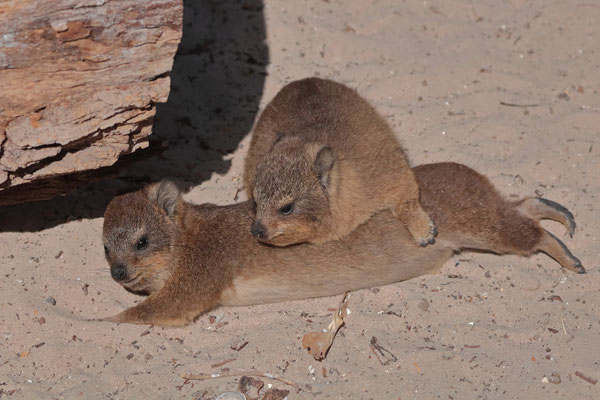
From the highveld into the lowveld. A bit later than scheduled we arrived in a beautiful game reserve, once built for many guests, but nowadays of the beaten track and not often visited. Of the 70 bungalows only a few are open to receive visitors, but all the other facilities are open. During the time of our visit there were some other guests, but in this large facility we felt alone and could enjoy peace, tranquility and many stunning lizards! In the late afternoon of our arrival we could already find the first Swazi Dragon Lizard (Smaug swazicus) at a beautiful viewpoint. Fantastic! The big fields of boulders around the camp proved to be a paradise for these lizards and we saw them in all the big cracks. But also several other colourful lizards are to be found here. The biggest boulders were home to the striking Southern Tree Agamas (Acanthocercus atricollis) whereas the steep cliffs are the domain of Common Flat Lizards (Platysaurus intermedius). Also lizards such as Trachylepis margaritifer, Trachylepis varia, Lygodactylus capensis and Homopholis wahlbergii feel right at home between the rocks and snakes such as Philothamnus semivariegatus are hunting for them. A fantastic ecosystem to explore! In the surrounding ponds (and swimming pool!) a great many amphibians are thriving and species such as Sclerophrys gutturalis, but especially Phrynobatrachus natalensis and Schismaderma carens are incredibly common. We also looked at the larger wildlife and during a morning gamedrive we had great sightings of Giraffes (Giraffa giraffa), Greater Kudu (Tragelaphus strepsiceros), Nyala (Tragelaphus angasii), White Rhino (Ceratotherium simus) and my first Secretary Bird (Sagittarius serpentarius). The Dassies (Procavia capensis) stole our hearts and so did this place! Sadly we had to leave and on the way out Laura spotted a Flap-necked Chameleon (Chamaeleo dilepis) crossing the road as a last farewell.












Ngome Forest
From the 13th until the 14th of November 2025
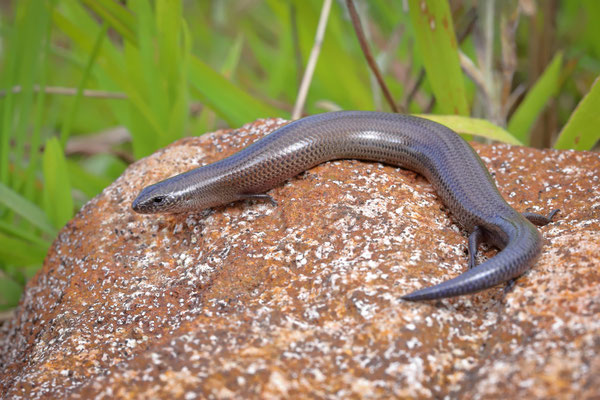
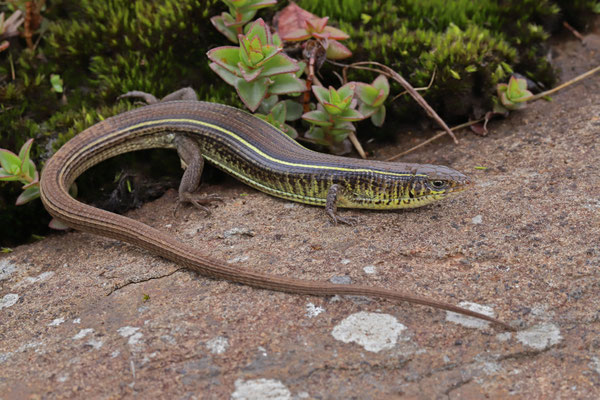
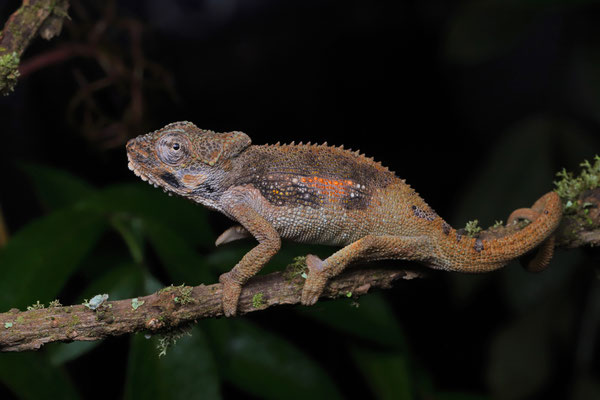
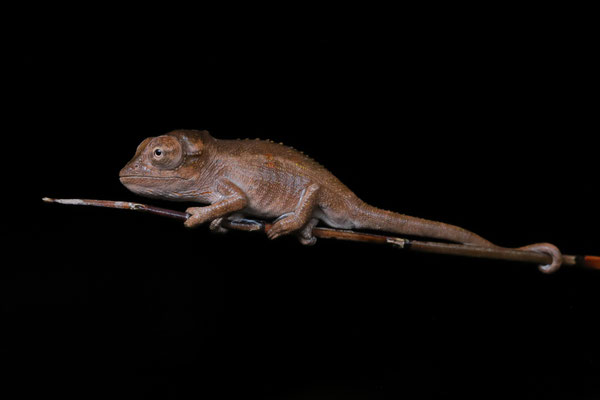
Home to an endemic chameleon, of course this forest could not be left out of our itinerary. The weather here was again grim. Very windy, cold and rainy, but during the afternoon of our arrival we could already found some animals such as Leptotyphlops incognitus, Afrotyphlops bibronii, Psammophylax rhombeatus and Scelotes mirus. When we arrived at our accommodation, we found ourselves in a small village, staring at the dump that was supposed to be our home for the night. However, the gate was closed and there was nobody there to open the door for us. Despite shouting, honking and calling for half an hour, the gate remained closed and we drove back into the forest. During our daytime exploration we spotted a sign for another lodge along the road, and luckily they did not only have space for us, the place turned out to be much more spacious, clean, friendly and cheaper, it also offered a warm meal. To top it all, the friendly owners were familiar with chameleons and said our main targets could simply be found in their garden. So in the pouring rain we set out and not for long until the first Ngome Dwarf Chameleons (Bradypodion ngomeense) started showing themselves. What a wonderful species!






St. Lucia
From the 14th until the 19th of November 2025
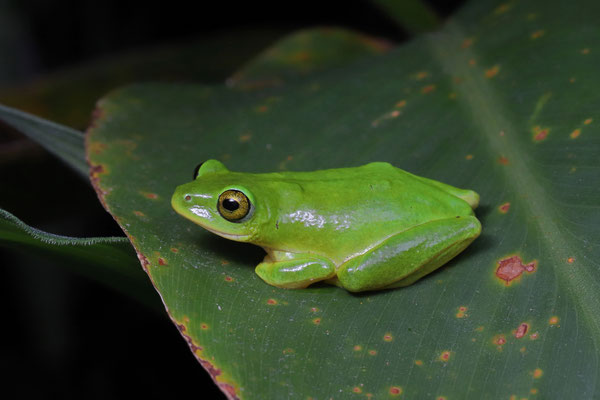
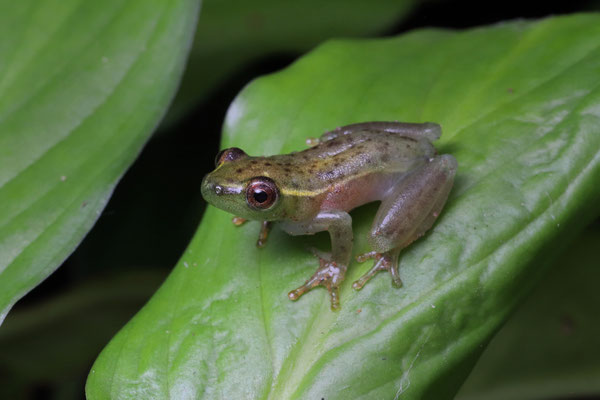
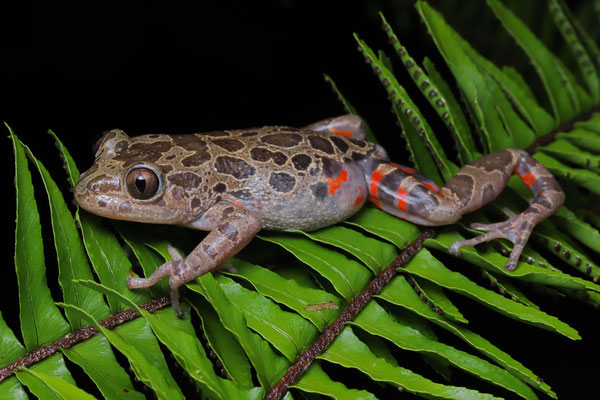
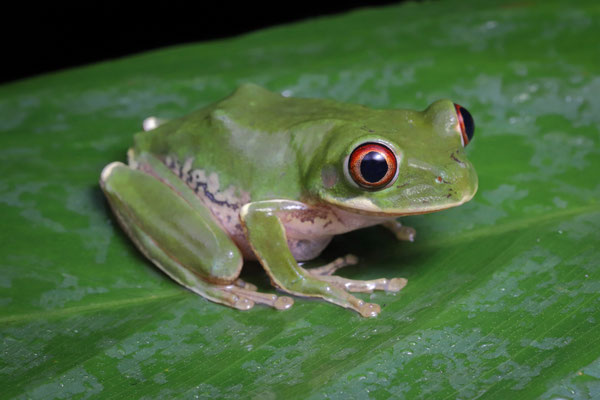
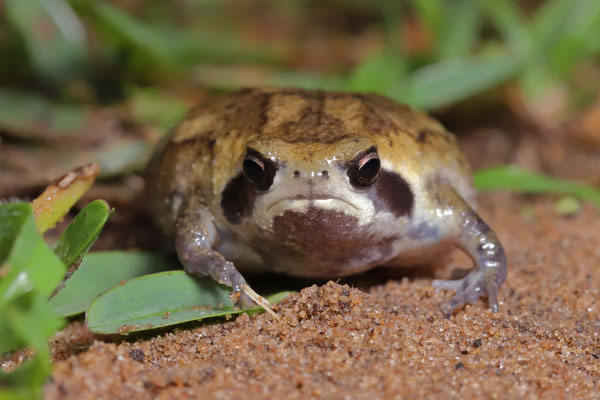
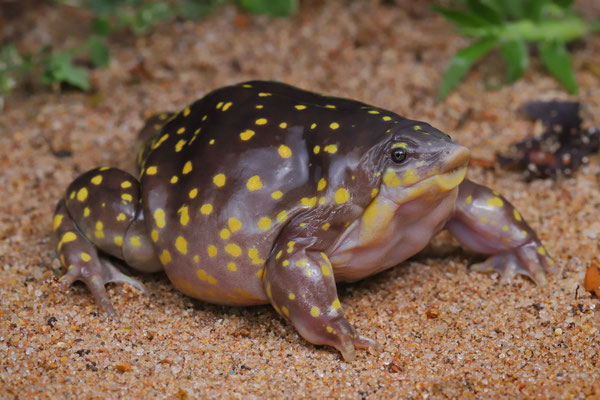
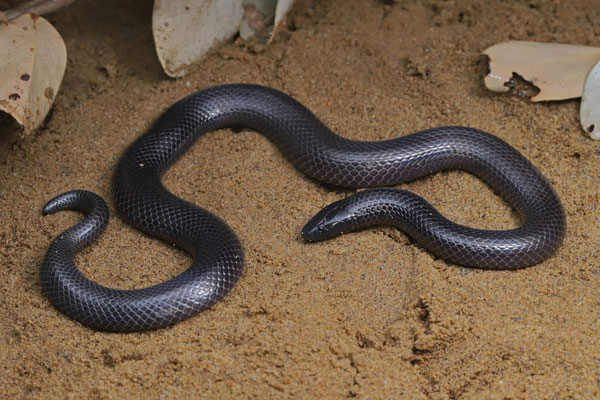
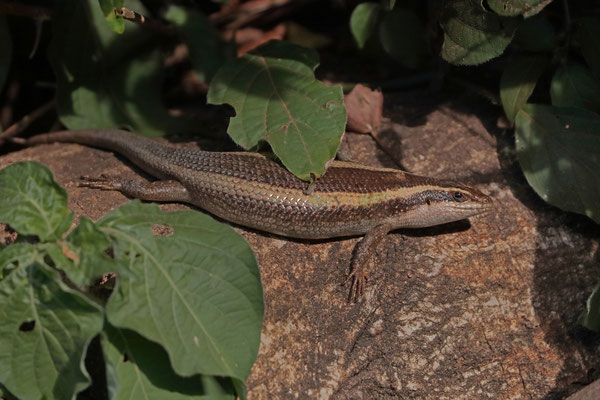
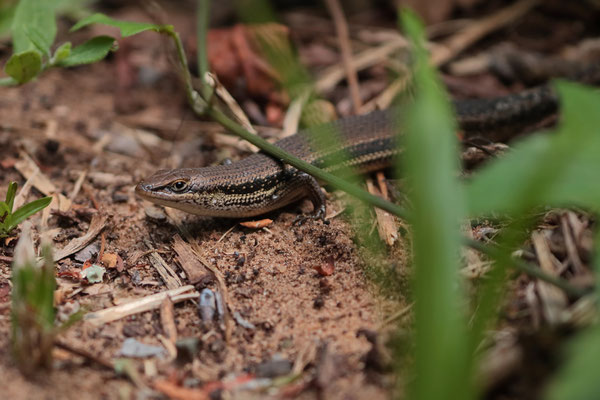
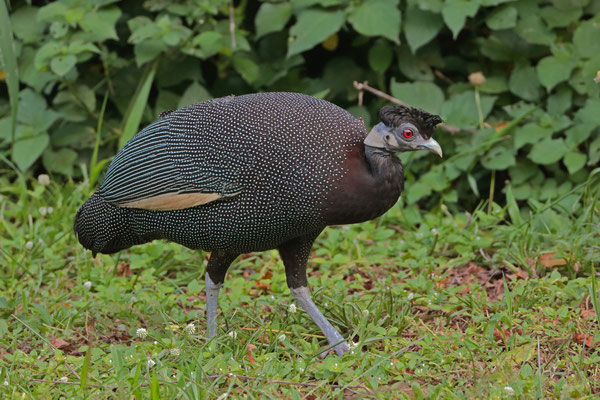
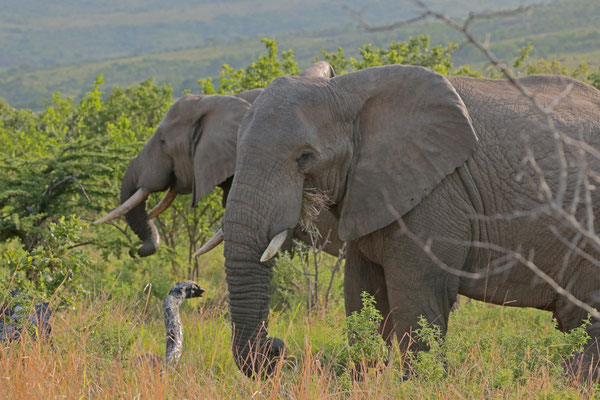
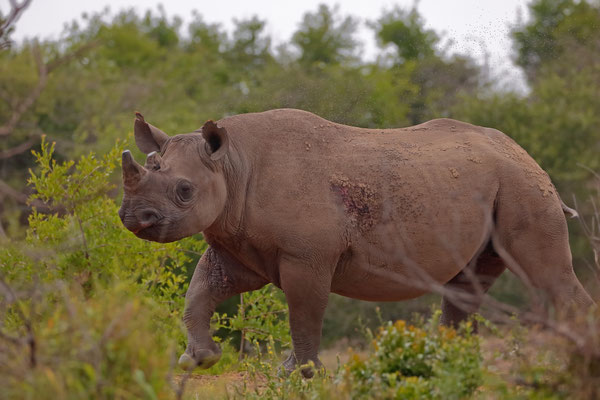
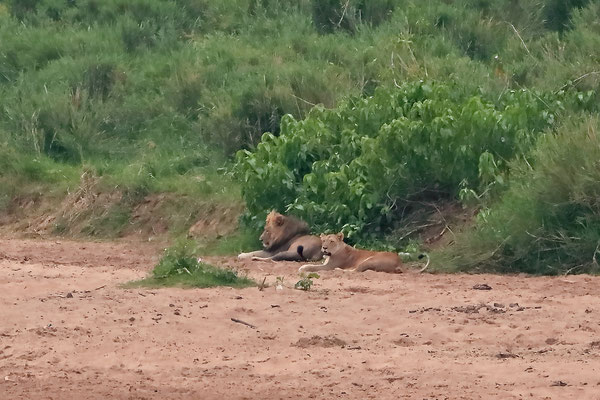
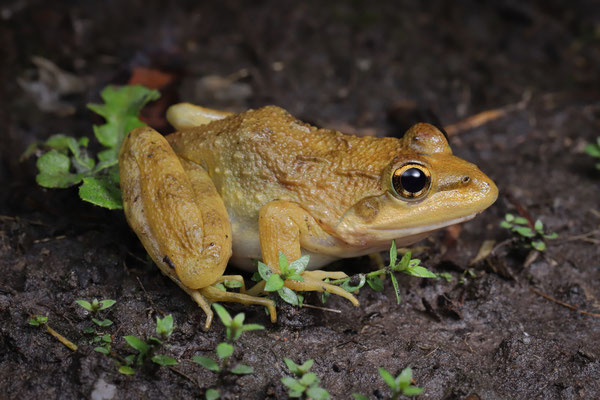
Situated on top of a sandy ridge where several rivers drain into the Indian ocean, and being surrounded by lush grasslands, tropical forests and vast wetlands, it was clear we needed to spend ample time here. The biodiversity here is just insane! Where we had hoped for some more sun to bring out the reptiles, we again had very clouded and unusually cool conditions for this time of year. On our first night we already admired the first frogs in the garden of our comfortable hotel, but didn't make it so late as the next day we had to get up early. For my birthday I had a whole day planned out. Shortly before sunrise we were collected by Pindi and we spent the whole day in Hluhluwe-Imfolozi Game Reserve, the oldest proclaimed nature reserve in Africa. We had excellent views of Elephants (Loxodonta africana), Giraffes (Giraffa giraffa), Greater Kudu (Tragelaphus strepsiceros), Nyala (Tragelaphus angasii), White Rhino (Ceratotherium simus), Black Rhino (Diceros bicornis), Lions (Panthera leo) and much more. In the late afternoon we got back in town for a birthday pizza and heavy rain started falling down. The rain triggered a massive explosion in frog activity and the roads were full of them! Exactly what we were hoping for! This sort of weather gives the only realistic chance to find our main target for this area so we set out to drive multiple roads around town. Species such as Hyperolius marmoratus, Hyperolius argus, Hyperolius tuberilinguis, Hyperolius pusillus, Afrixalus fornasini, Leptopelis natalensis, Leptopelis mossambicus, Sclerophrys gutturalis, Schismaderma carens, Arthroleptis stenodactylus, Pyxicephalus edulis, Ptychadena nilotica, Phrynobatrachus natalensis and even the aquatic Xenopus laevis were found in big numbers on the roads and heard calling from newly formed breeding waters. Not for long until I spotted a frog that was walking instead of hopping and I got my hopes up. In the pouring rain I got out and was looking at what I had long hoped to see one day. A Spotted Snout-burrower (Hemisus guttatus). Unbelievable! This fossorial species can only be found during heavy rains and this was the best birthday present I could have hoped for! Later we even found a second one, a slightly larger female. Already excited we searched on of course and also found other beautiful frogs such as Whistling Rain Frog (Breviceps sopranus), Banded Rubber Frog (Phrynomantis bifasciatus) and Red-legged Wot-wot (Hylambates maculatus). Naturally it got quite late, but this was a night to remember and must be one of the best nights of frogging we have ever experienced!
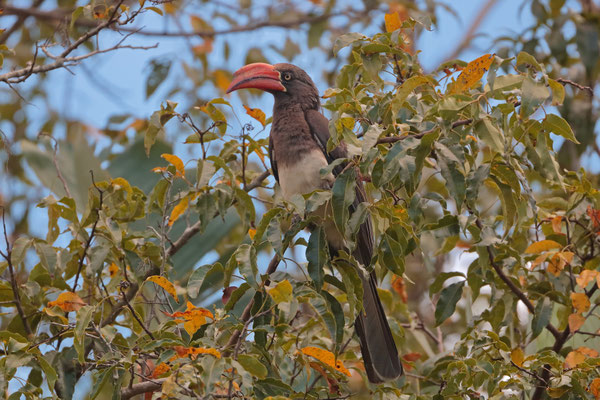
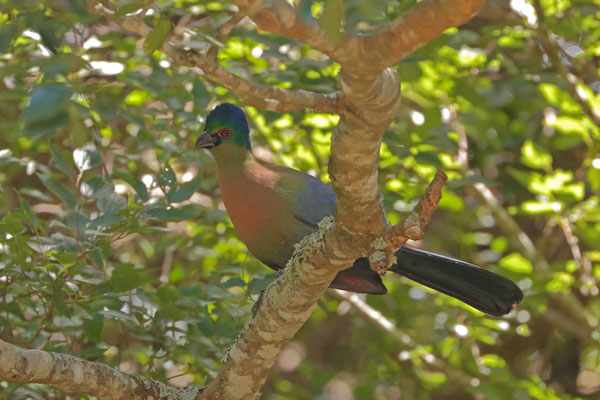
The other days in St. Lucia we explored the iSimangaliso wetlands, swam in the Indian Ocean and had quite some succes in finding fossorial species such as Scelotes bidigittatus, Zygaspis arenicola and Amblyodipsas polylepis. The local chameleons played hard to get, but finally we also got to see several Setaro's Dwarf Chameleons (Bradypodion setaroi). The following nights it was sometimes also a bit drizzling, but the frogs were never out in the same numbers as on my birthday and the low temperatures also made sure snakes weren't particularly active. Luckily mammals provided some relief from the snake-less roads and we had great sightings of Honey Badger (Mellivora capensis), Rusty-spotted Genet (Genetta fieldiana), Brown Greater Galago (Otolemur crassicaudatus) and a classic of St. Lucia, also Hippos (Hippopotamus amphibius) roaming the streets at night.






















Eshowe
From the 19th until the 22nd of November 2025
In close proximity of Eshowe are several small Coastal Scarp Forests remnants. Where they used to be connected in some recent past, now they are surrounded by sugarcane plantations, pine and eucalyptus plantations, roads and towns. Where the bigger wildlife has disappeared, these forests are still home to some exciting endemic reptiles including two species of dwarf chameleon. On our first evening here we tried our luck for the first species which can be found in three separate forest patches. We arrived shortly before sunset to check the habitat and get a feel of the place. We didn't notice anything out of the ordinary (a car crash caused by some drunk people as an exception) and felt like we good search here on foot. Just when it got dark, we parked the car a bit of the main road and as we stepped out a car raced past. We heard five loud bangs, saw light flashes coming from the passing vehicle and someone was actually shooting at us! Sadly this wasn't the first time someone fired a gun at Laura and me while herping, but we can't say we have ever experienced a drive-by shooting. We didn't feel exactly safe anymore, but as we hadn't seen the endemic chameleon, we couldn't leave already. So we decided to search from the car and hopefully spot a chameleon. That technique worked well luckily, we found two Qudeni Dwarf Chameleons (Bradypodion nemorale), did a quick photo session and got the hell out of there.
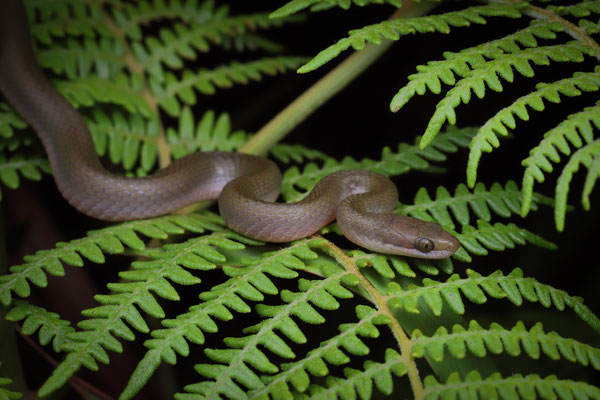
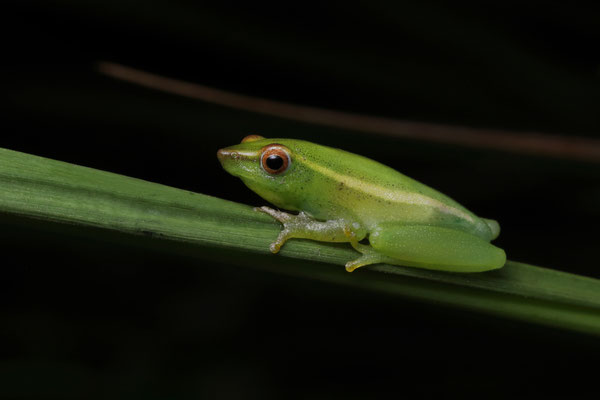
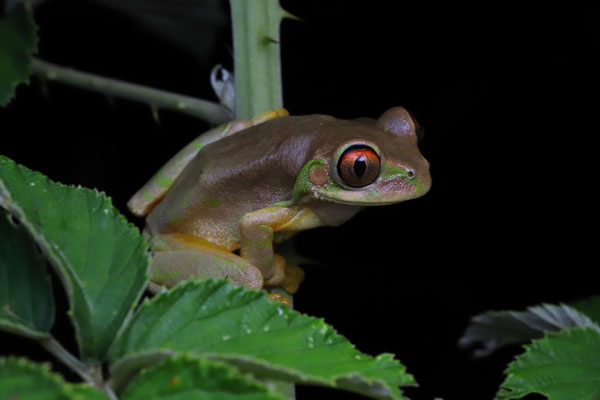
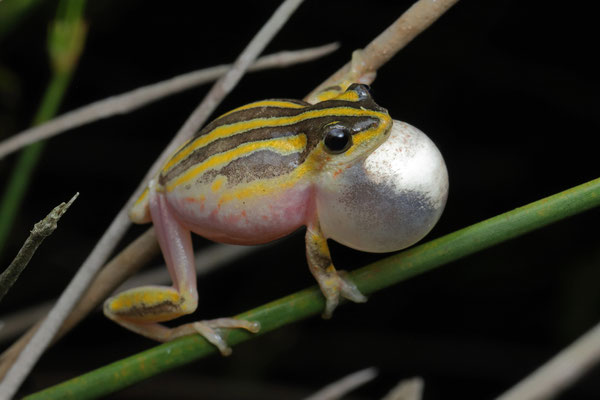
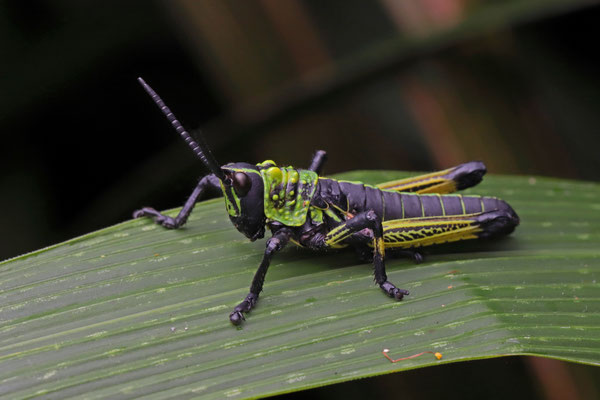
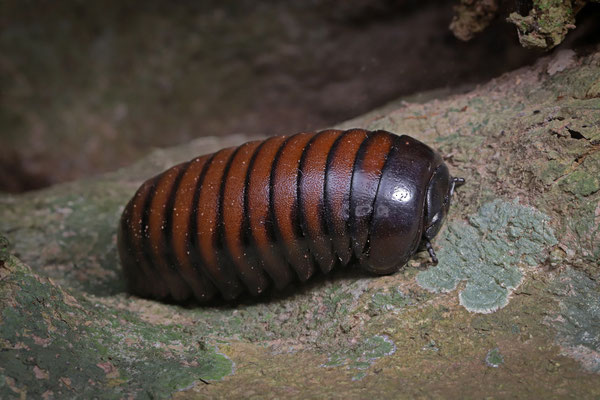
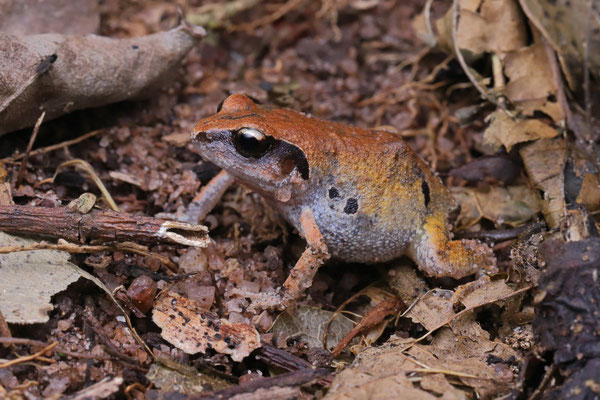
The next day we explored the forest behind our accommodation which is home to another species of dwarf chameleon. During daytime we explored this beautiful forest patch and found already some snakes such as Philothamnus natalensis and Lycodonomorphus rufulus. No chameleon or vine snake yet... After a lovely dinner at the Bowling Club we explored a swamp nearby. The frogs were in full breeding mode and I have never had to wear earplugs while frogging. The sounds was delightful, but also deafening! We mostly saw Leptopelis natelensis and Hyperolius marmoratus, but after a while Laura and I both spotted a Power's Reed Frog (Hyperolius poweri). Beautiful little frogs with their sharp, upturned snouts. We also saw several more Lycodonomorphus rufulus, even one eating a reed frog. Afterwards we herped inside the forest reserve where we had a hard time finding chameleons strangely. We saw several Leptopelis natalensis, Arthroleptis wahlbergii, but finally also what we came for when I spotted an Eshowe Dwarf Chameleon (Bradypodion caeruleogula). The next day I did a little stroll at the forest edge and also spotted a Southern Vine Snake (Thelotornis capensis) hanging in the vegetation. It was in shed and a bit high, but still fantastic to see this camouflage specialist!









Durban
From the 22nd until the 25th of November 2025
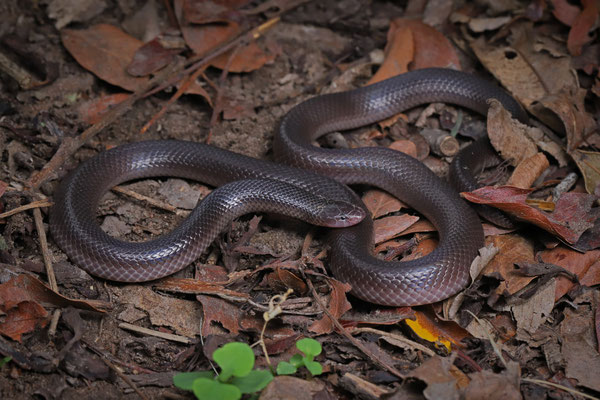
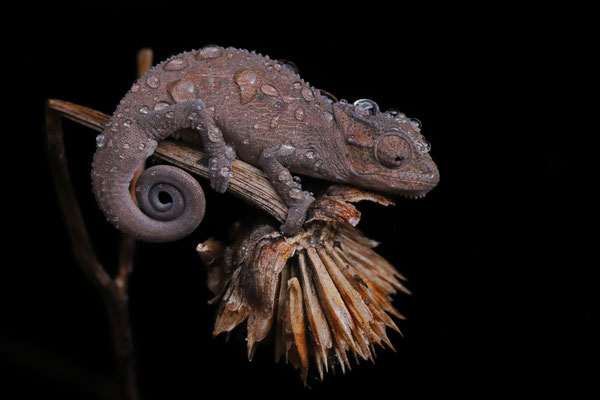
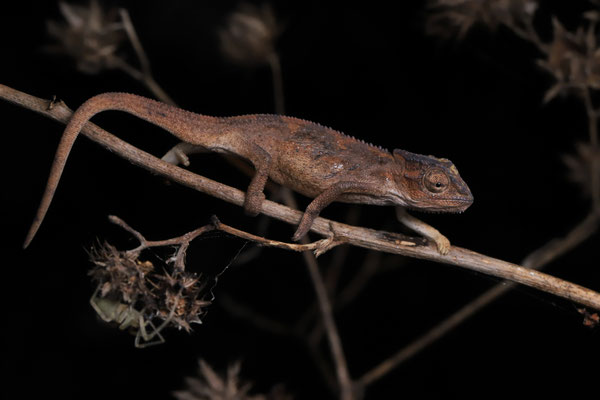
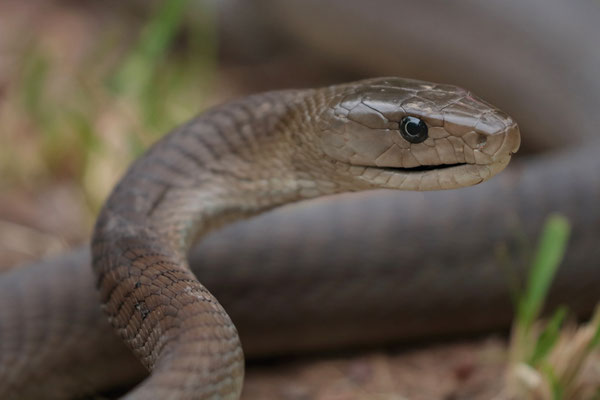
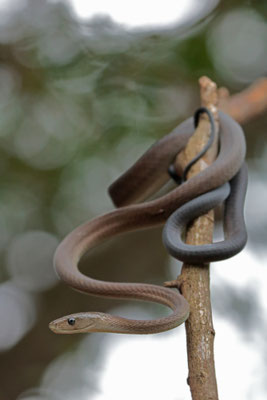
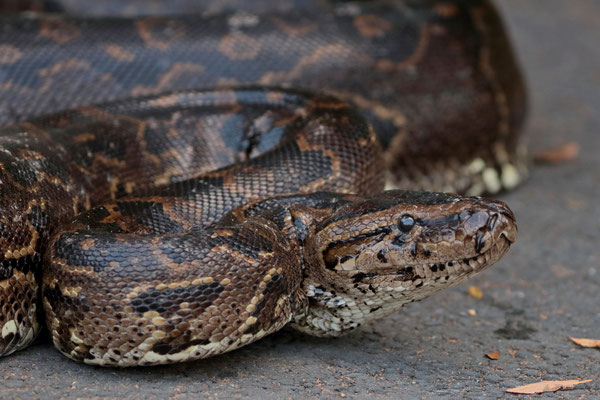
This sprawling metropole is full of urban wildlife. From turacos to monkeys, from crocodiles to monitor lizards and from mambas to pythons. And not only wildlife, Laura and I had a pretty busy program here, as Durban is full of friends we could finally meet for the first time. We first met up with Nick and Carla. They are reptile rescuers and if anybody finds some unwanted guest slithering around in their house, Nick and Carla are the ones coming to the rescue. Rarely do you meet people with such a big passion for wildlife and who go through such extreme measures to save animals. We were fortunate enough to be able to join them for two days. In those two days we could participate in the rescue of a Black Mamba (Dendroaspis polylepis) and a particularly large Southern Rock Python (Python natalensis). At night Nick and Carla showed us their local chameleon patch where we saw several Durban Dwarf Chameleons (Bradypodion melanocephalum) and Flap-necked Chameleons (Chamaeleo dilepis).
We also got some herping done with another power-couple and went frogging for two nights with Richard and Candy. The first night we had a fabulous meal at the Butcher Boys and though the rains had stopped. Once we arrived in the marshland it was again pouring down. That certainly was not enjoyable frogging, but the loud thunder and lightning nearby made it even a bit dangerous to be out in the open field. Especially for a two meter long Dutch guy with an umbrella... So we had to wait in the car for an opening in the weather. Just when we deemed it safe to go out again and ran into the field, the loudest thunder struck close by and we all ran back to the car. Eventually it did clear and we could safely look for frogs. We saw many species such as Hyperolius marmoratus, Afrixalus delicatus, Tomopterna natalensis, Cacosternum nanum, Phrynobatrachus mababiensis, Phrynobatrachus natalensis, Ptychadena oxyrhynchus and Sclerophrys gutturalis. The highlight came after Richard put in the extra mile, got properly wet and found the rare and endangered Pickersgill's Reed frog (Hyperolius pickersgilli). A fantastic ending to a very memorable night!
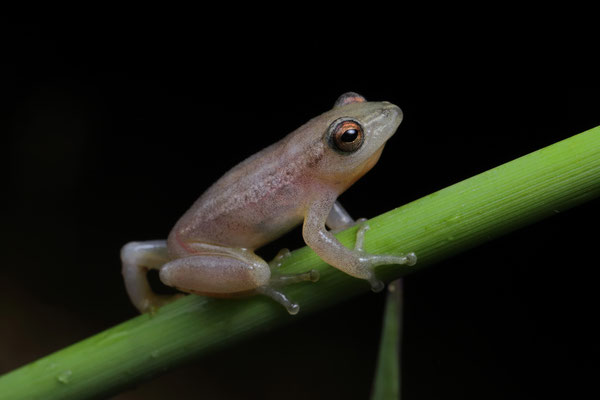
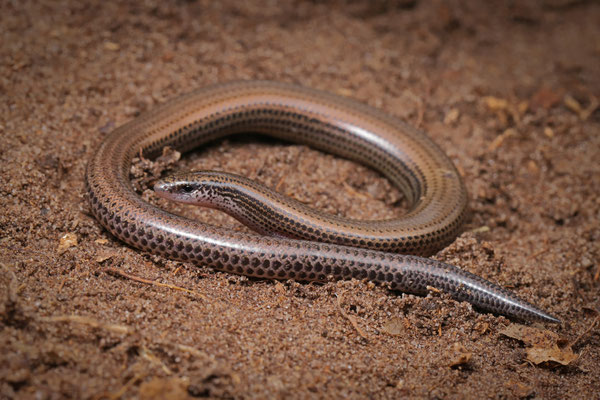
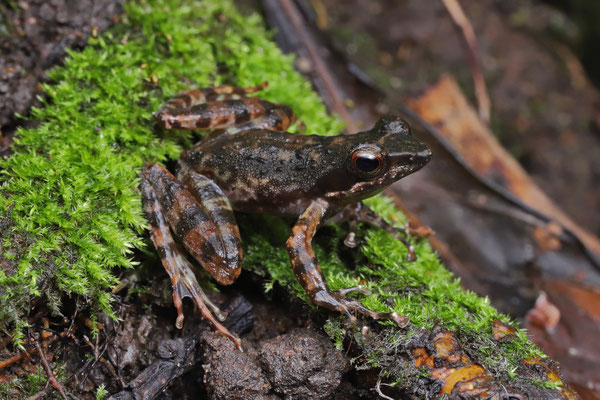
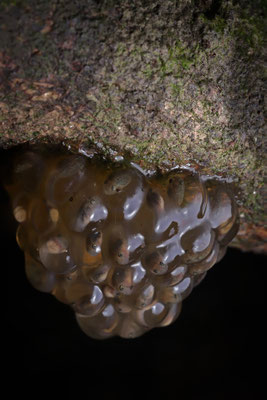
The last day in Durban we met up with another herping friend and teamed up with Miguel. In the morning we visited an urban park which is home to the critically endangered (but probably just range restricted) Durban Dwarf Burrowing Skink (Scelotes inornatus) which was readily found. Fantastic to see the love Miguel has for these tiny lizards and how he seemed to know them all individually. Afterwards we set out to a remote valley in a heavily overgrazed landscape. At the bottom of the valley however, a strip of native forest persists and within minutes we saw several Kloof Frogs (Natalobatrachus bonebergi) including egg clumps in various stages. Fantastic to see this endangered species in good numbers. In the evening we teamed up again with Richard, Candy, Nick and Carla for another memorable evening of frogging with again two very beautiful frog targets. We hadn't even arrived at the waterfall yet or I spotted a Natal Ghost Frog (Hadromoprhyne natalensis) sitting in a crack just looking at us. What a giant and also very special to see the tadpoles of this species in the fast flowing water. A great start! At another stream close by we saw many more Kloof Frogs (Natalobatrachus bonebergi) resting in the vegetation which concluded another great night. Thanks again so much everybody, you are all so busy and still found the time to show us around and our time in Durban was definitely made so much better because of you guys! And also a massive thanks to Myles from the fabulous Cowrie Cove Guesthouse, sadly we didn't spend so much time in your fantastic palace, but we always had a very nice home to come back to after a late night of herping.












Drakensberg
From the 25th until the 30th of November 2025
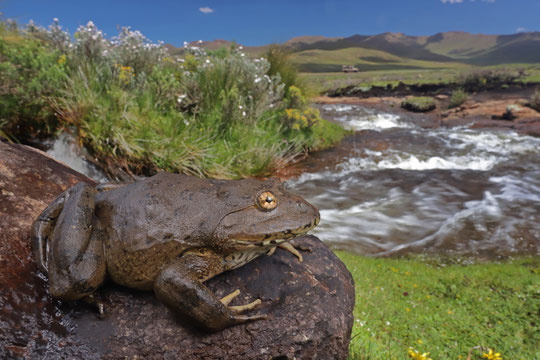
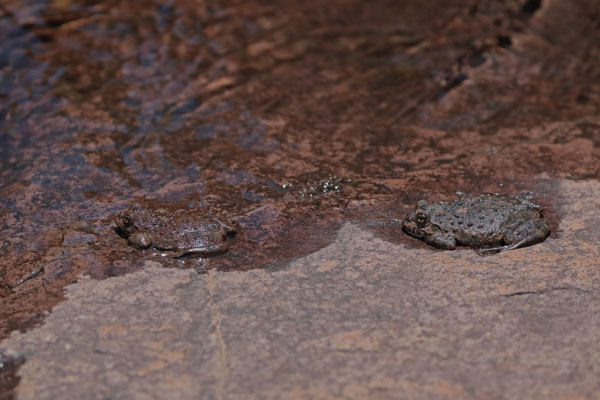
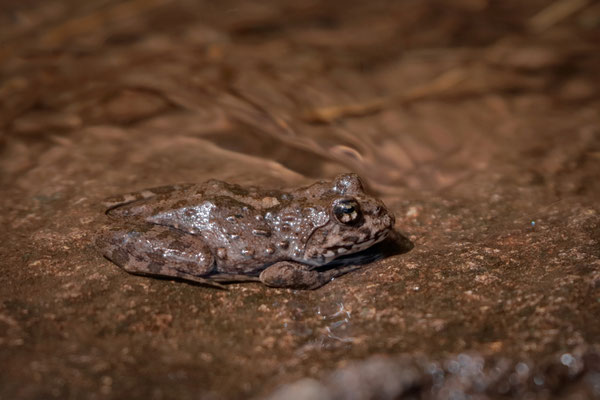
Although a bit sad to leave our new friends behind already, the mountains were calling. The Drakensberg is Southern Africa's highest mountain range and they rise up from the lowlands like a fortress. The steep cliffs and rugged peaks form a dramatic landscape full of species that can be found nowhere else on earth. We started at the southern end of the mountains to drive into Lesotho. One of the largest frogs of Africa can be found here, living in streams in alpine meadows that regularly freeze over in winter. Ever since I found out about the existence of this frog species, I knew I needed to see them in the wild one day. And today was that day! Again we were super lucky with the weather conditions. Above 3000 meters it is often very windy, cold and rainy, but we had a whole day of sun, no wind and no rain. Perfect for high-altitude herping! When we passed the Lesotho border we immediately drove to a good looking stream and started searching. Within seconds I spotted the first Maluti River Frog (Amietia vertebralis) and many more would follow. Giant flat frogs with the most beautiful eyes were soaking up the sun along the stream and that was truly one of the highlights of the entire trip. Besides these frogs we also saw Amietia delalandii, Vandijkophrynus nubicola, Pseudocordylus subviridis and finally also the first Lacertidae of the trip: a stunning male Cottrell's Mountain Lizard (Tropidosaura cottrelli) and a female Essex's Mountain Lizard (Tropidosaura essexi). While turning rocks I unearthed another massive highlight and found a yet undescribed Rain Frog (Breviceps sp.) endemic to the high plateau. At the end of the afternoon we were back at the lodge after a whole day of high altitude frogging. We could watch the sunset from our private hot-tub, enjoyed a lovely dinner afterwards and set out to search for chameleons. Besides the rain frog, there is also an undescribed chameleon from this area and it is a looker. The previous night we found around 20 babies, but an adult was missing. Again we had to search for quite long, but finally Laura spotted a stunning Emerald Dwarf Chameleon (Bradypodion sp. Emerald) high up in a willow tree. What an ending to a fantastic day!


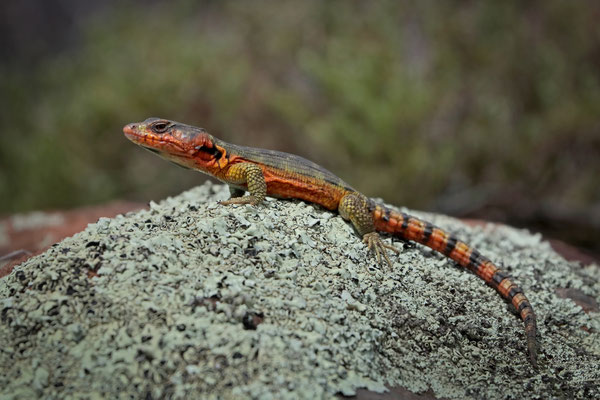
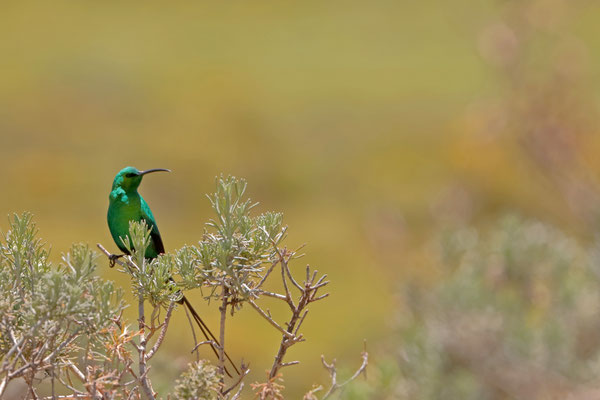
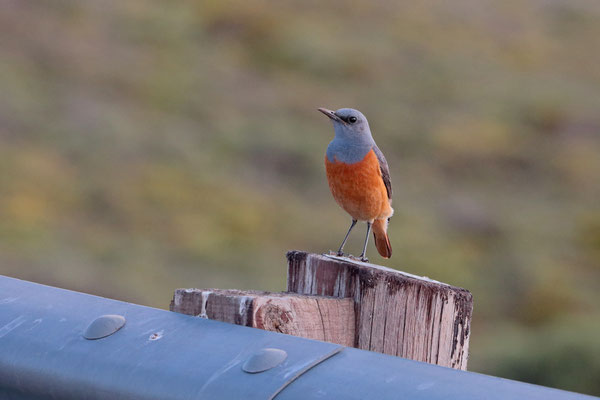
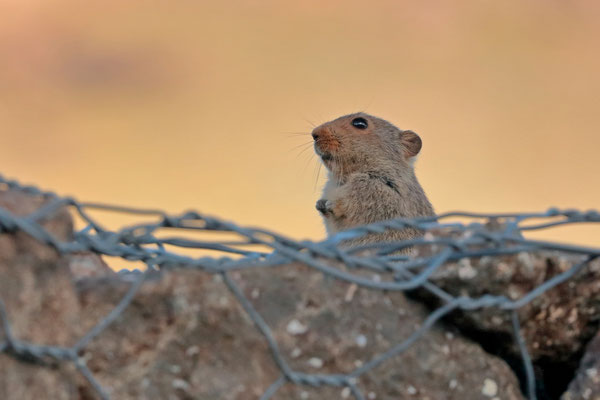
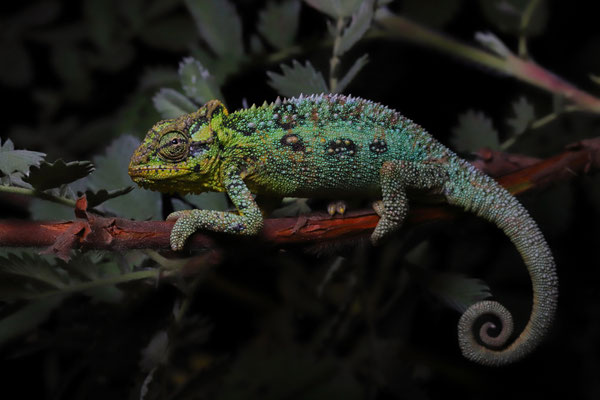
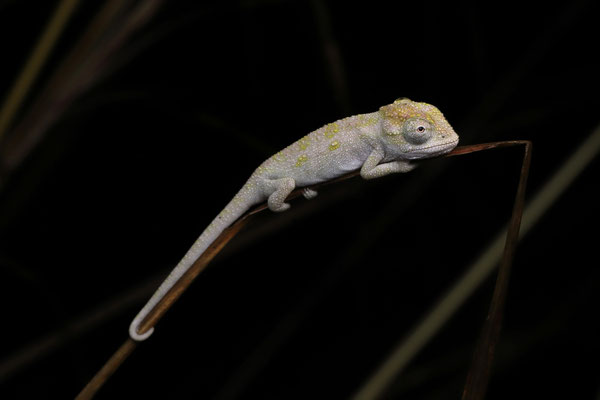
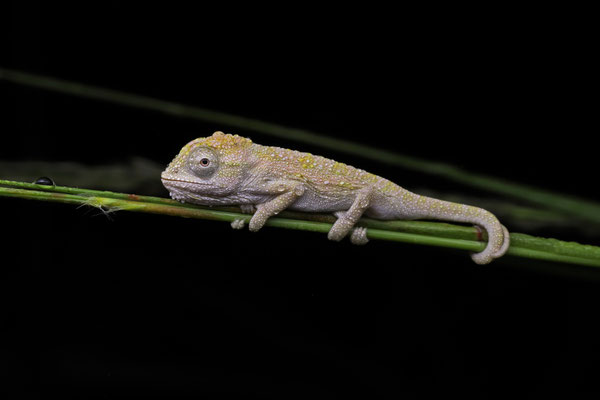
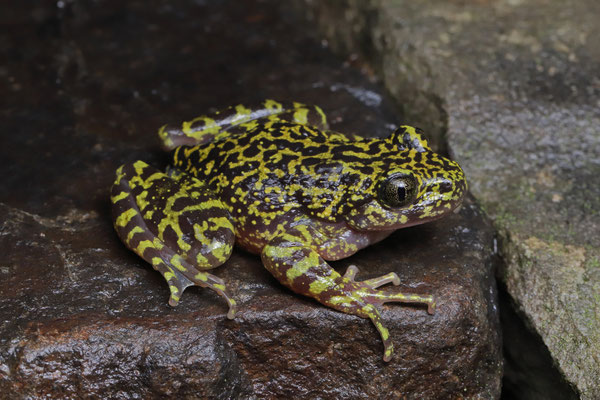


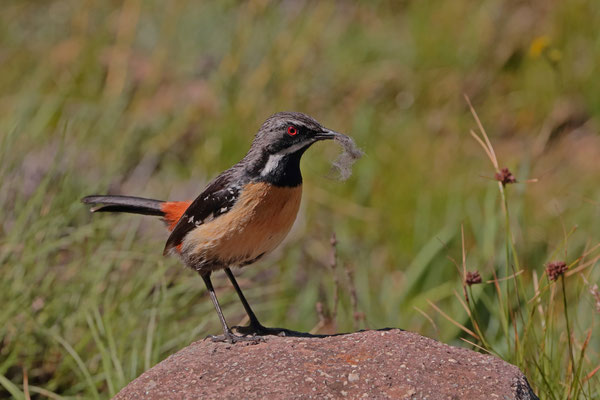
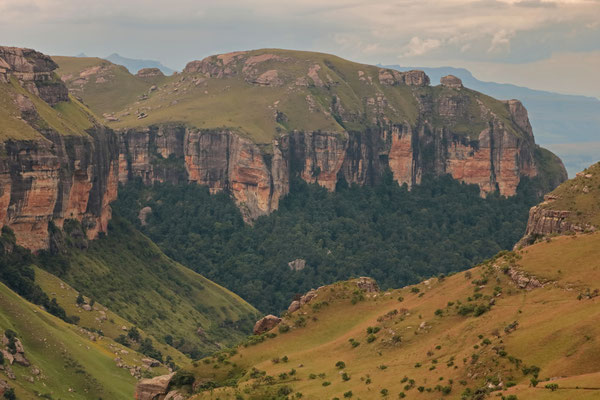
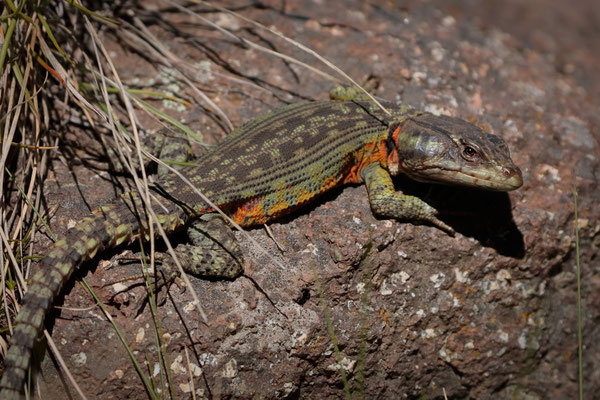
The southern part of the Drakensberg treated us very well, and we couldn't complain about the northern part either. We had a very nice lodge to stay in with spacious rooms, heating blankets, hot showers and plentiful food. Perfect to make our stay in these windswept mountains very comfortable. On our first evening we already searched for the endemic chameleon that is to be found here. It took a long time searching, but finally I spotted a stunning male Drakensberg Dwarf Chameleon (Bradypodion dracomontanum) sleeping in a very low bush and close to the ground. The next day we did a small hike towards a nearby waterfall and I even discovered a female during the day, just basking in the tall grass. Crazy to see a chameleon that lives in alpine meadows that don't look that different from the ones back home in the Bavarian Alps! Other lizards that feel right at home here are the Crag Lizards. The Drakensberg Crag Lizard (Pseudocordylus subviridis) is found on most altitudes, whereas the Spiny Craig Lizard (Pseudocordylus spinosus) lives on the slightly lower altitudes. It also prefers the smaller holes closer to the ground. For another endemic crag lizard we had to go quite a bit higher. Although we first struggled to differentiate Lang's Crack Lizard (Pseudocordylus langi) from the much more common P. subviridis, it seems that the latter species has a fear of heights, whereas P. langi can be found solely at cliffs of dizzying heights. And this lizard was not the only specialty we found up there. Via 60 meter long chain-link ladders we could haul ourselves up the precipitous rock wall and onto the plateau. Small mountain streams on this windswept plain are home to the small Phofung River Frogs (Amietia hymenopus) which like to bask in the splash zones of fast flowing streams. Again such an odd high-altitude frog that manages to survive these harsh conditions and is so similar in appearance to our European Fire-bellied Toads. What Laura and I both didn't realize before we went up there (and which made the experience only better) was that this place is not only special because of the frogs. Apparently the world's second highest waterfall is to be found here, and all the other tourists we met along the way (not many) were there only for the Tugela Falls. Not the frogs! Well, that was a very nice bonus for us and that scenery is one that will take some time to beat. Absolutely breathtaking! Other species we found here are Psammohylax rhombeatus, Amplorhinus multimaculatus, Trachylepis punctatissima and Vandijkophrynus nubicola.
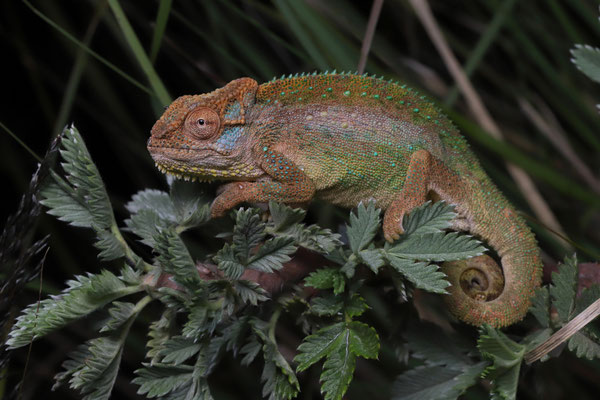
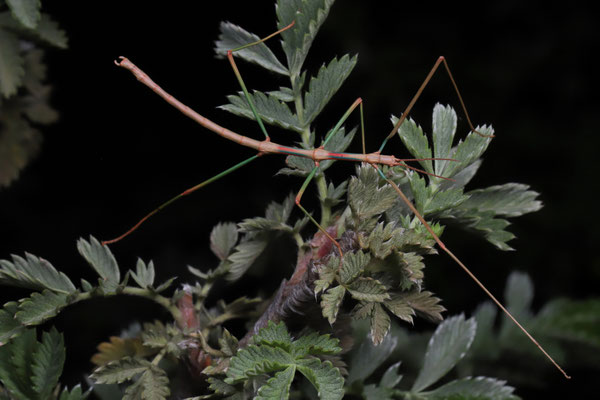


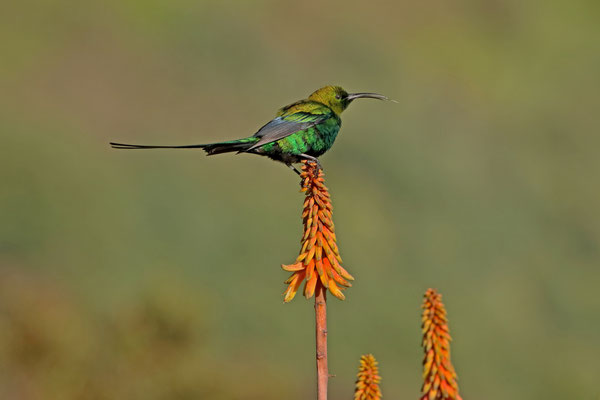







The Midlands
From the 30th of November until the 1st of December 2025
Home to one of the most strikingly coloured chameleons of Southern Africa, this place could not be missed from our itinerary. During the day we scouted several good looking places, had a fabulous meal in a German restaurant nearby and started our search. We scanned many hedgerows and bushes which looked good, but we had a very hard time finding our chameleon target. I had chosen an accommodation with a large piece of land where we could also search, but also there we didn't spot any chameleons. Or anything else for that matter. Only when we searched a piece of non-native woodland in the garden of the property I spotted a Natal Midlands Dwarf Chameleon (Bradypodion thamnobates) in a European privet bush. Although I was hoping to see a lot of variety for which this species is known, we were very happy to get to see at least one beautiful male! And also in such strange habitat full of willows, oaks, ivy and privet where I had the feeling I was herping in the Netherlands.


Northern Wild Coast
From the 1st until the 2nd of December 2025
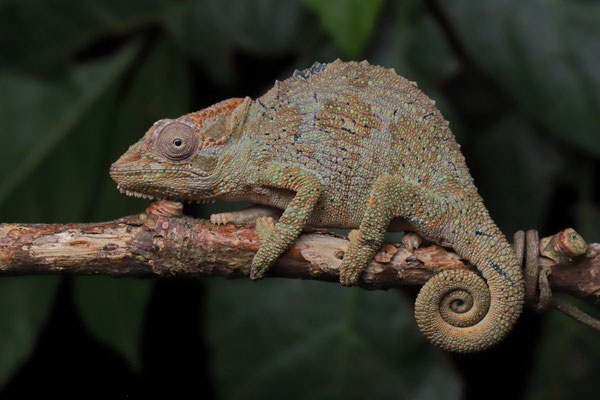
After a very long drive we finally arrived at the coast. We explored the habitat with the little daylight we had left and had a very good meal in our accommodation. Sadly it came with live music, so we ate as fast as we could and headed into the forest. Luckily this species turned out to be plentiful and within minutes we saw the first Transkei Dwarf Chameleon (Bradypodion caffrum) female with several babies. In total we saw 10 individuals of this stunning chameleon species and even spotted a Crotaphopeltis hotamboeia hunting for frogs.



Southern Wild Coast
From the 2nd until the 3rd of December 2025
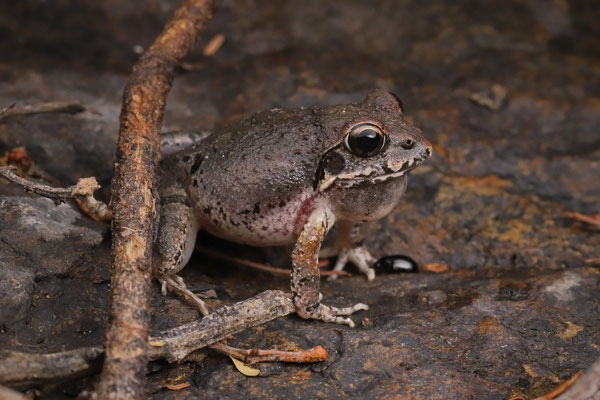
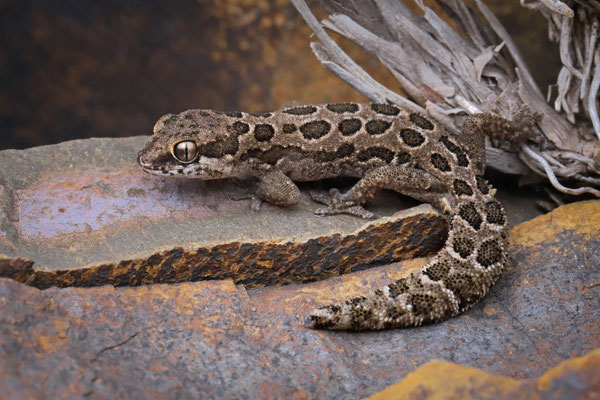
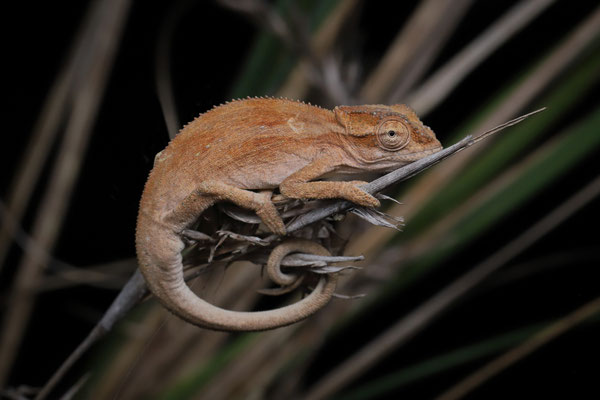
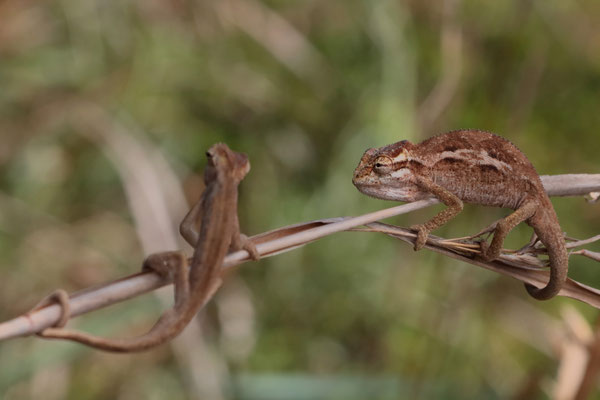
Another stop along our route west and another chameleon target to be found. When I told herping buddy Courtney we would pass by there he didn't have to think long and also booked a night in the same accommodation as us. When we first met we found out we are both members of the Leopard Print Society and with our matching attire we set out to find lizards. However, the afternoon was windy and rainy, so we only spotted some Cordylus cordylus hiding in cracks. The pizza dinner was one of the best I ever had though. That came as a bit of surprise as the entire accommodation smelled a bit like a zoo, one where hippies roam freely and walk barefoot through the dogshit. When the sun had set we walked to a nearby dam. It was almost anticlimactic how easy it was to find Kentani Dwarf Chameleons (Bradypodion kentanicum), but we were no less happy because of that! Another lifer chameleon for all of us! The fun didn't stop there. We followed some strange calls coming from a nearby rocky stream and discovered a thriving population of Yellow-striped Reed Frog (Hyperolius semidiscus) which was another lifer for us. Also a beautiful Spotted Thick-toed gecko (Pachydactylus maculatus) was found by Courtney and that little gecko was another huge highlight for me.






Port Elizabeth
From the 3rd until the 6th of December 2025
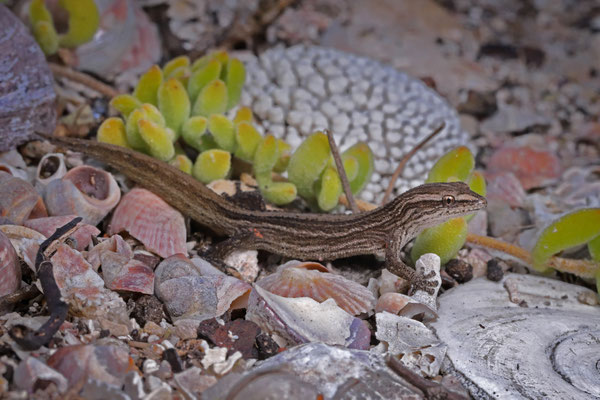
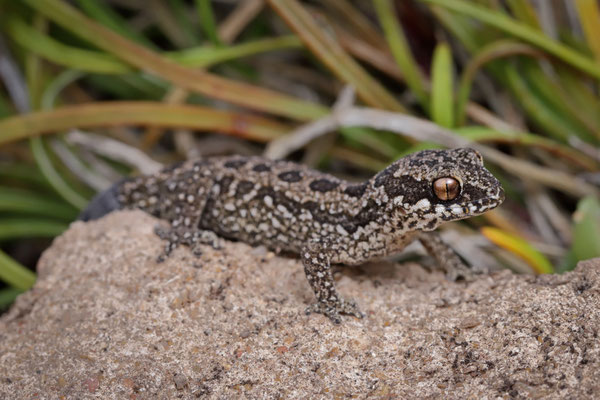
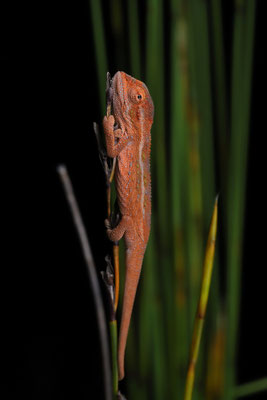
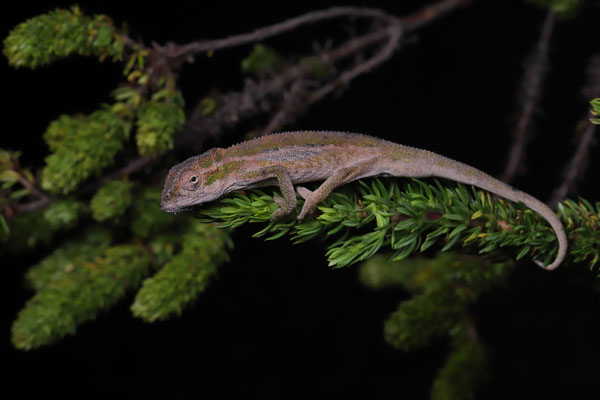
After three consecutive nights in different (and sometimes questionable) accommodations, Laura and I were looking forward to having three nights in a very comfortable guesthouse. This manor came with a private pool and a massive garden to explore, so naturally we spent quite some time here. But of course we also had some target species to find here... So when we drove the coastal road on our way to a restaurant and did a spontaneous stop to look at the sunset, I couldn't resist lifting some vegetation to search for a special endemic gecko. I was surprised myself how quickly I could find a Salt Marsh Gecko (Cryptactites peringueyi). These tiny geckos only occur in a tiny strip of coastal vegetation around Port Elizabeth and it was another species I had wished to see for a long time. In the evening we visited several spots for the local chameleon, but in the end found it in the garden of our manor. A stunning female Eastern Cape Dwarf Chameleon (Bradypodion ventrale).
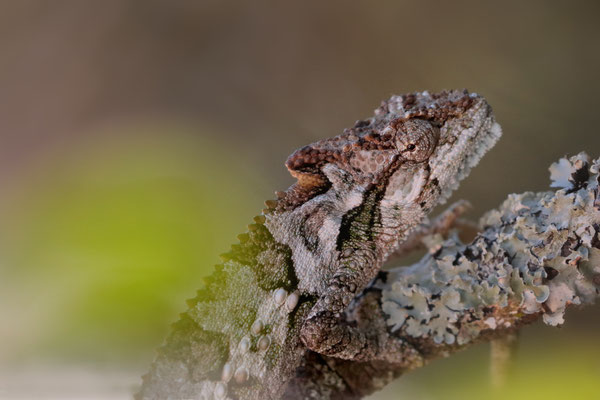
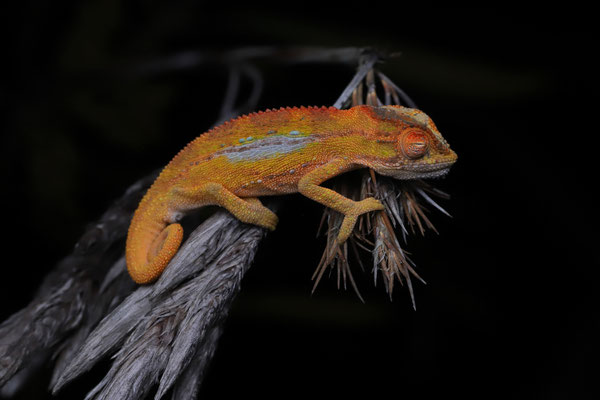
The second night we tried our luck with another chameleon species. In the late afternoon we drove into the mountains north of the city, admired a stunning sunset and when it was dark descended the mountain again. The Elandsberg Dwarf Chameleon (Bradypodion taeniabronchum) turned out to be the most common chameleon so far and we found over 50 individuals (mostly babies) of this species. They were also far prettier than we would have thought and we found the reddish individuals especially striking.






Baviaanskloof
From the 6th until the 7th of December 2025
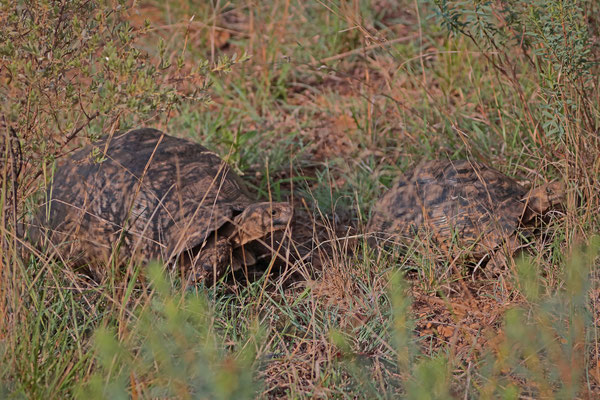
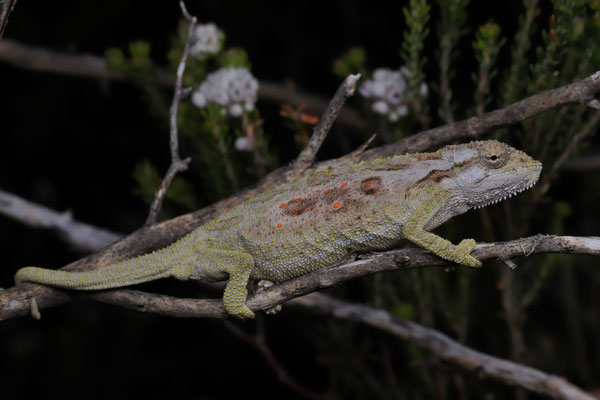
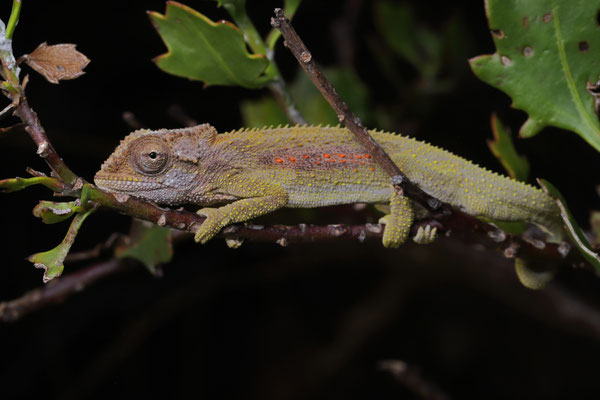
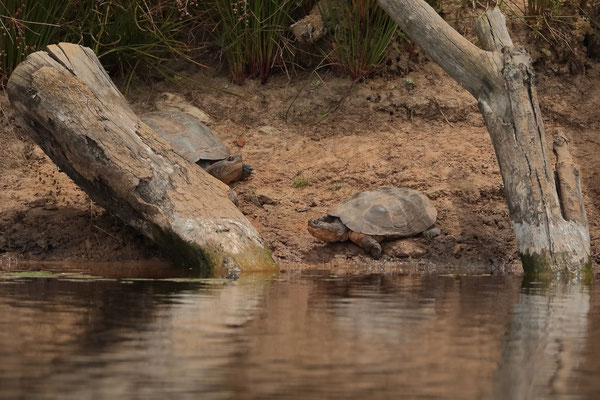
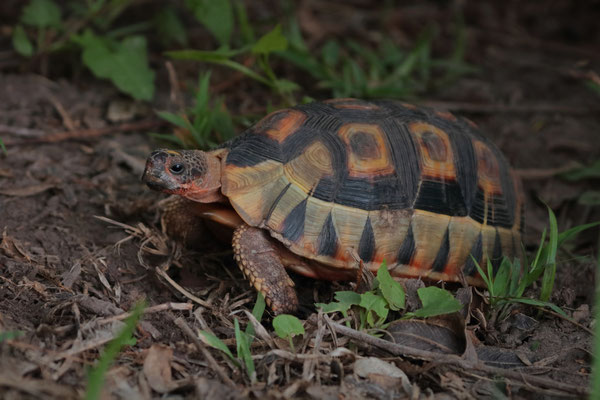
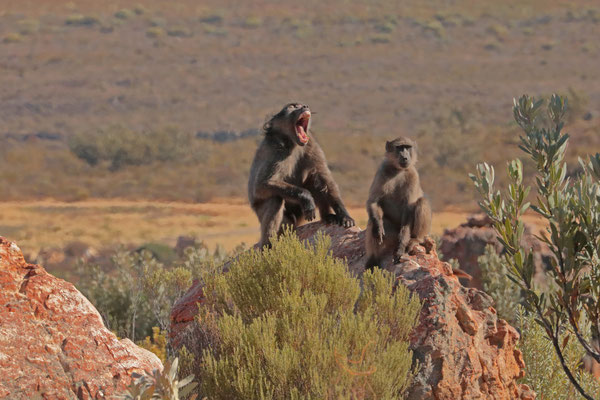
A long drive over many kilometers of unpaved road wasn't much to the liking of our rental car - or us - but we finally made it to our guesthouse in the Baviaanskloof. Along the way we already spotted many Baboons, Ostriches and some huge Leopard Tortoises (Stigmochelys pardalis). We wanted to hike up a nearby mountain path in darkness to search for an endemic chameleon which has only been described in 2022 and is so far only known from that path. Thanks to a good friend we could arrange permission from the landowner and started the ascent in the late afternoon. The hike turned out to be quite strenuous, very steep and full of scree. But the scenery along the way was breathtaking! After dark we reached the highest point and started to slowly make our way down. The first chameleon wasn't immediately spotted, but in the end we found three very different Baviaanskloof Dwarf Chameleon (Bradypodion baviaanense) on the windy slopes. A little past midnight we were back at our accommodation, ate a simple dinner and went to bed. Luckily we weren't in a hurry the next day so we could sleep in a bit and enjoy the private pool of our beautiful accommodation.




Uniondale
From the 7th until the 8th of December 2025
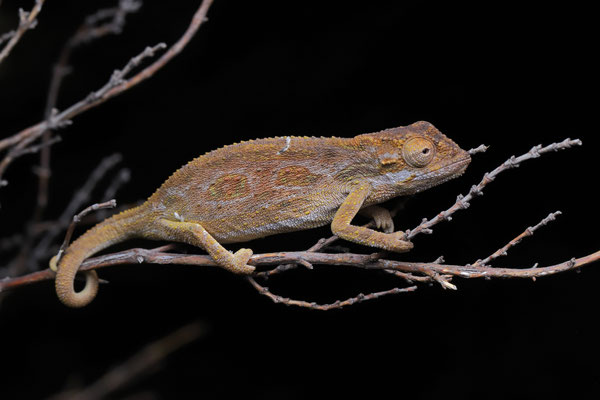
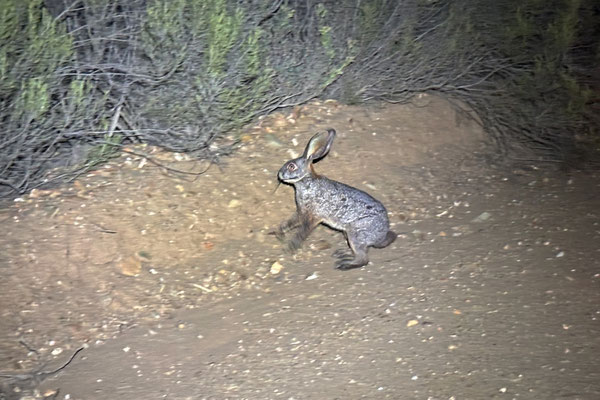
Today we searched for another chameleon described in 2022 and again we could get in contact with someone who has them on his land thanks to a good friend. In the late afternoon we drove there and met with Alan and his son Charlie to go look for chameleons. And even better, Alan took us in his bakkie and drove us to a known spot, sparing us from another grueling hike. It was fantastic to learn more about the fynbos and renosterveld from Alan and his son who were are both experts on this ecosystem an it was great spending time with them. Very similar to the night before, we didn't immediately see chameleons, but in the end I managed to find four Beardless Dwarf Chameleons (Bradypodion barbatulum) while spotlighting from the bakkie. Thanks again so much Alan and Charlie from showing us around! On the way back to our lovely Schulteheim Hotel in Uniondale we even spotted two Riverine Rabbits (Bunolagus monticularius) which was a very cool and unexpected mammal find!


Swartberg
From the 8th until the 9th of December 2025
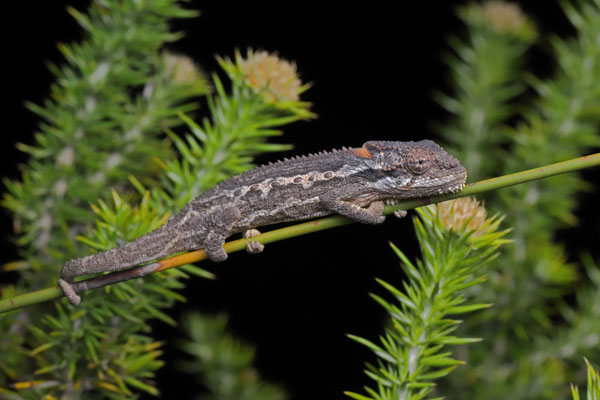
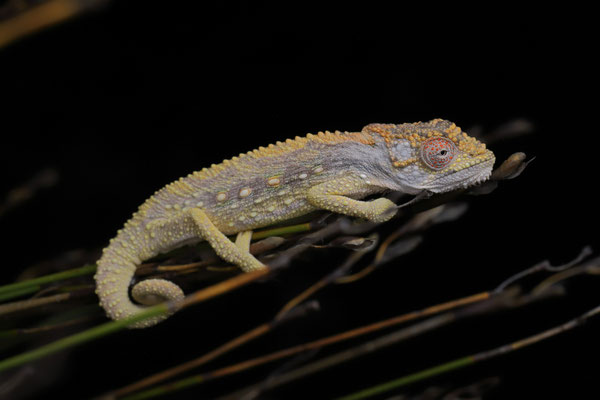
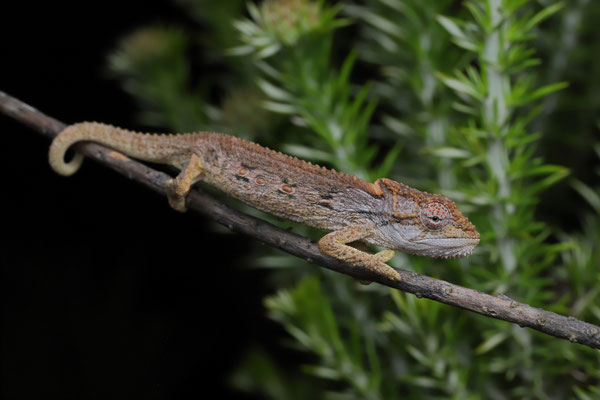
Another mountain and another endemic chameleon. Also another place where we again only planned one night due to time constraints, but where we would love to come back. We arrived rather early and where we expected a backpackers lodge, we got a lovely farmstay with friendly owners and friendly farm animals running around and a private swimming pool, hidden in the bush. After driving and hiking a lot the last days, we took it easy, enjoyed the swimming pool and the sun, played some pingpong and prepared for the night. We also treated ourselves to dinner in a very posh restaurant and had the best ostrich steak I ever had in my life. Around sunset we arrived at the mountain pass and were greeted by a blasting cold wind. Not ideal for herping, so we drove down a little and searched at some good looking habitat. Like the previous two nights we had to work a little for this species, but in the end found three Swartberg Dwarf Chameleons (Bradypodion atromontanum) sleeping in the high grass. We also searched a bit more afterwards at the top, but the blasting wind wasn't ideal so we soon gave up on our search for the endemic gecko there. The drive down was great fun though and many mammals such as Cape Genet (Genetta tigrina), Bat-eared Fox (Otocyon megalotis), Klipspringer (Oreotragus oreotragus), Cape Grysbok (Raphicerus melanotis), Smith's Red Rock Hare (Pronolagus rupestris) and several mice species (Rhapdomys and Dendromus). The next morning I photographed the cheeky Spotted Sand Lizards (Pedioplanis lineoocellata) that eluded me the day before and then it was time to leave this wonderful place behind.


George
From the 9th until the 12th of December 2025
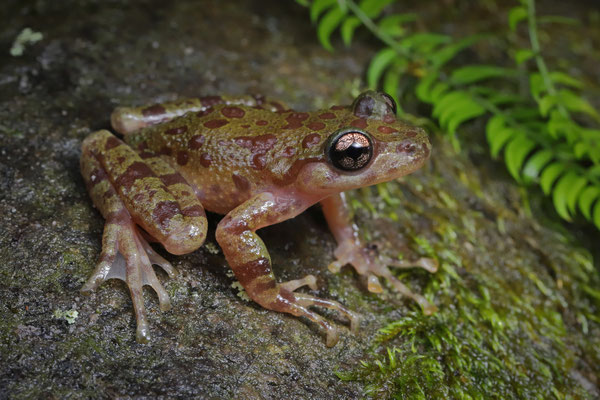
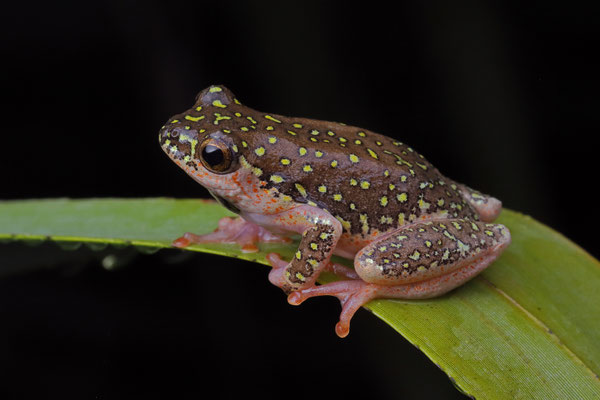
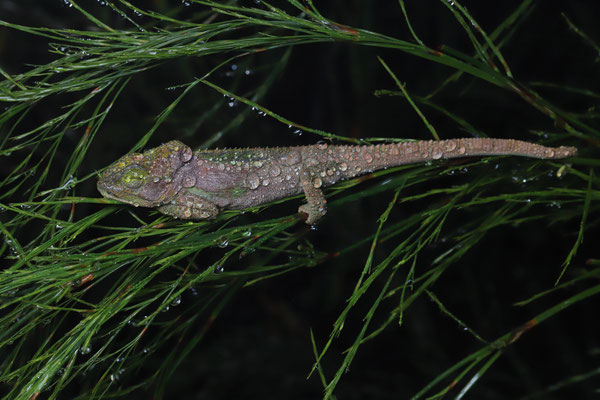
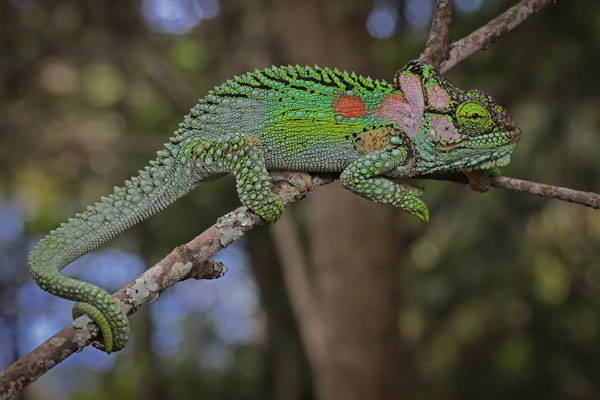
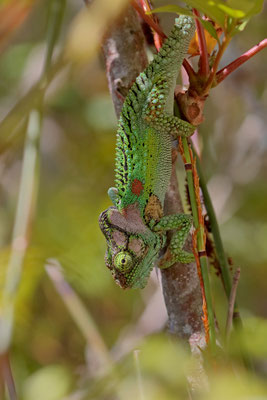
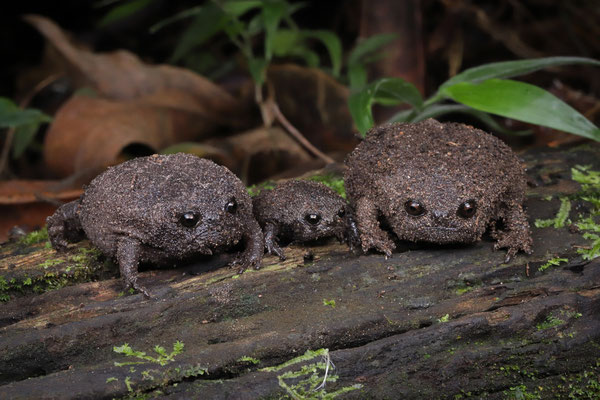
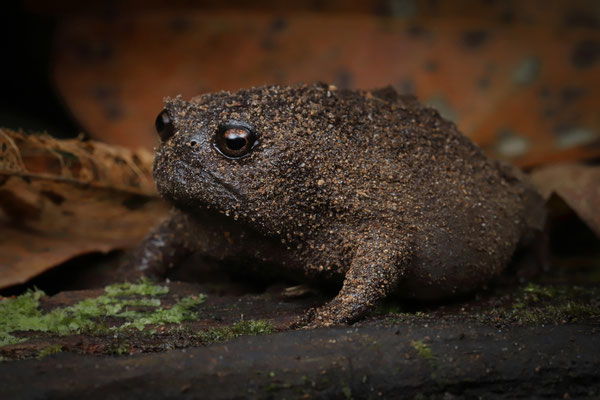
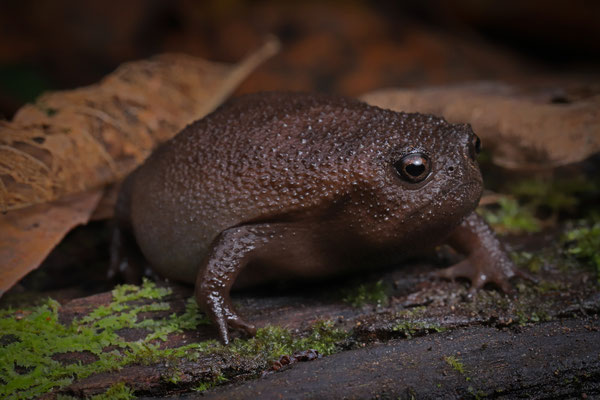
The lovely town of George was our home for the next three nights. We choose a place to stay a bit north of the city so we could easily visit some places out of the city as well. Our main targets were another dwarf chameleon species, another ghost frog and another rain frog and they could be found within walking distance of our accommodation. Thanks to a good friend we could even visit a known hotspot for all three within walking distance of our cottage. Thanks again so much dude! On our first night we were blessed with heavy rain and after another amazing ostrich steak we set out. A deafening orchestra of Hyperolius marmoratus verrucosus was welcoming us and many more amphibians such as Sclerophrys capensis, Xenopus laevis and Amietia fuscigula were out and about. Along a small stream running through some native forest we spotted many tadpoles of a very special frog and finally Laura spotted a Royal Ghost Frog (Heleophryne regis) perched above the stream. That was already fantastic, but the real highlight were the great many Knysna Dwarf Chameleons (Bradypodion damaranum) sleeping in the vegetation. We counted over 50 of them and not only were they common, this must be the prettiest dwarf chameleon we have seen on our trip. Everything about this species is just gorgeous, the big tubercles on the long tail, the striking colouration, the weird scalation on the casque... We were in love! One species we had hoped to see, but only heard calling was still missing though. So the next morning we set out to another forest nearby and hoped the rain brought this fossorial species more to the surface. And it did! Within a couple of meters of our hike we found a whole family of Black Rain Frogs (Breviceps fuscus)! We couldn't believe our luck and thoroughly enjoyed seeing these "angry avocados".
Another morning we headed into the mountains were we quickly found many Blue-spotted Girdled Lizards (Ninurta coeruleopunctatus) and a couple of Cape Mountain Lizards (Tropidosaura gularis). Especially the latter were amazing to see for a lover of lacertids such as myself.
We strolled through the magical place close to our accommodation every night and often during daytime as well. It was just so great to have these amazing chameleons on our doorstep and we will definitely miss that place!













Grootvadersbos
From the 12th until the 14th of December 2025
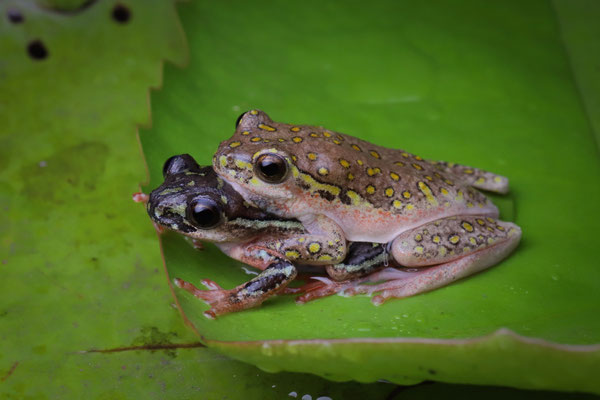
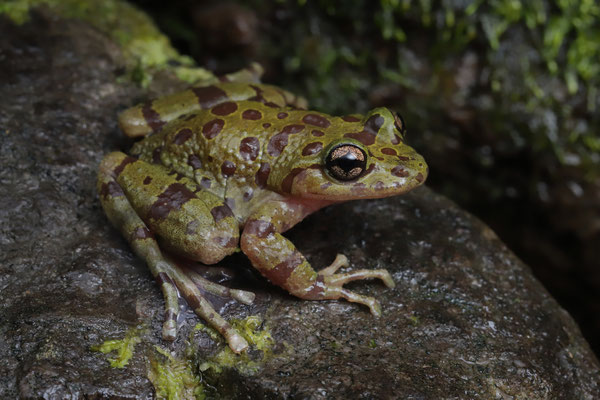
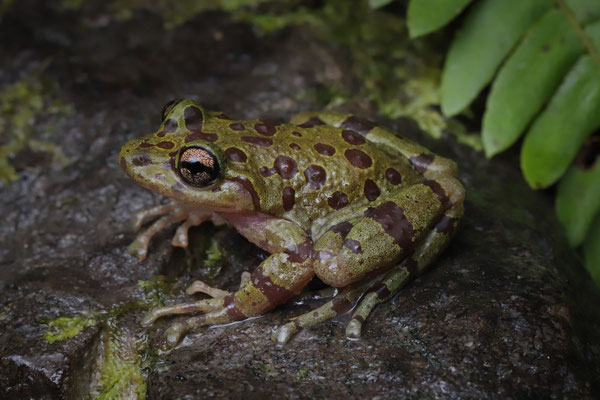
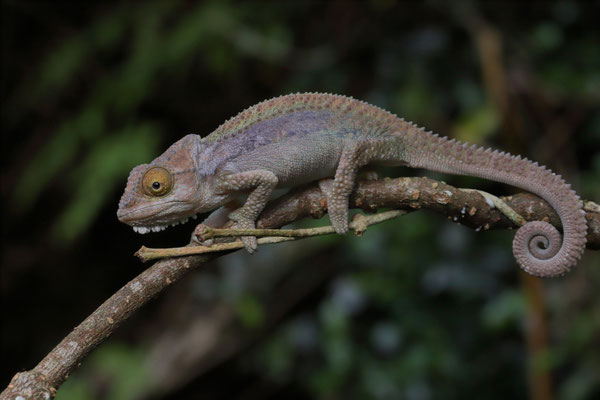
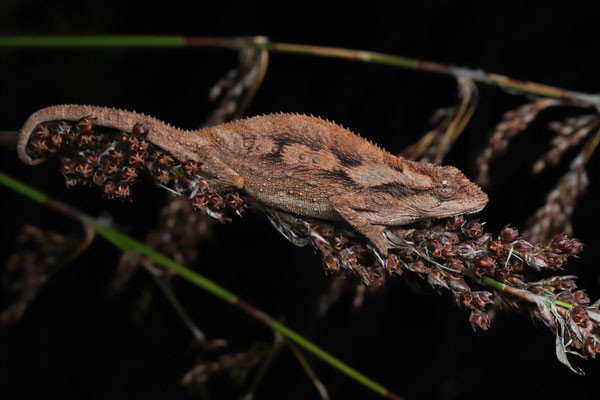
Also in this place we had another endemic chameleon, another ghost frog and another rain frog on the menu. When we arrived in the afternoon we immediately noticed how dry the forest was. Many streams had gone dry, it was very hot and sunny and the forest floor looked as if it hasn't received rain in a long time. We still set out to explore a bit and couldn't resist searching a bit around a small stream. We already saw tadpoles of one of our main targets so we took that as a good sign. And it was! We were amazed to find two Eastern Ghost Frogs (Heleophryne orientalis) under rocks. While hiking back to our accommodation (a glamping tent with private hottub) we were just saying how some rain would do this forest some good, when dark clouds moved in. During dinner we couldn't believe our luck as it indeed started to rain. Just like our first magical night in George! Inside the forest it didn't take us long to find what we came for when I spotted a beautiful subadult male Grootvadersbos Dwarf Chameleon (Bradypodion venustum) sleeping in the vegetation. This species is a known canopy dweller and not easy to observe. It also has one of the smallest ranges of any extant chameleon species and can only be found in a small section of forest inside the Grootvadersbos. Incredible to see this species so quickly and although we thought we would see many more, we didn't see any other individuals despite two nights of searching for them. From the streams we heard many Amietia fuscigula calling and even another main target as well. To see one we had to wait a little though. During our hike the next morning we saw the forest was still quite dry, but we started searching for our frog target as we knew they were active last night. Just when we were about to give up we found three stunning Strawberry Rain Frogs (Breviceps acutirostris)! Incredible to have such a similar experience here to George and find our three main targets for an area within 24 hours. The last night we explored the fynbos habitat surrounding the forest itself and again within several meters we spotted a Little Karoo Dwarf Chameleon (Bradypodion gutturale) sleeping in the tall grass and heather, surrounded by dozens of stick insects. That also was my last Bradypodion species so a very special moment for me under the starry skies. Afterwards I searched a bit more inside the forest in the hopes of finding more of the forest dwelling chameleons, but didn't find any other individuals. And also the hottub was calling...
Again we had a hard time leaving a place behind with so many things to like. The lovely accommodation, the interesting endemics on our doorstep and this beautiful forest that felt a lot like walking through Dadia Forest in Greece to me. Just with more chameleons and rain frogs...



De Hoop Nature Reserve
From the 14th until the 16th of December 2025
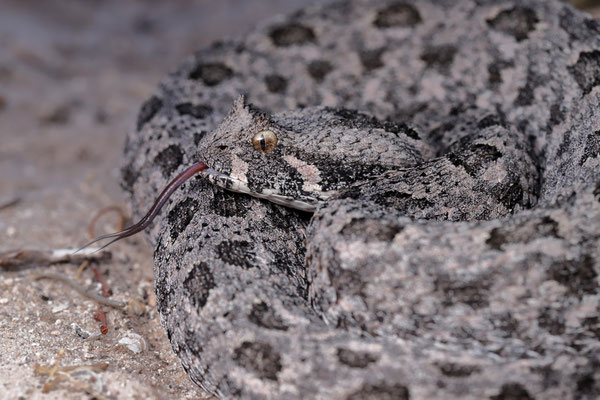
This area full of stunning coastal fynbos is also home to a very beautiful species of dwarf adder. A species we were very keen to see! We got up shortly after sunset and started our search in a
stretch of fynbos where sandy soil is mixed with rocks and where our Swedish friends have had success in the past. The temperatures were rising quickly and we knew our time window to find this
small viper was closing. Despite our efforts we didn’t find it, but found Tetradactylus tetradactylus, Pachydactylus
geitje, Agama atra, Cordylus cordylus, Pseudocordylus microlepidotus
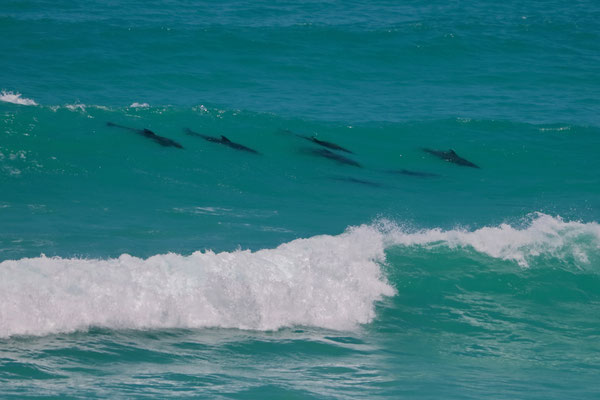
and Trachylepis homalocephala. We spent the hottest part of the day at the beach where we had a lovely lunch, a refreshing swim and watched three
different pods of Indo-Pacific Bottlenose Dolphins (Tursiops aduncus) playing in the waves. The next morning we had another try for the viper and went back to the same stretch of great
looking habitat. Just when we were about to give up I heard a soft hiss coming from a small crack in the ground. And there she was, a stunning female Southern Adder (Bitis
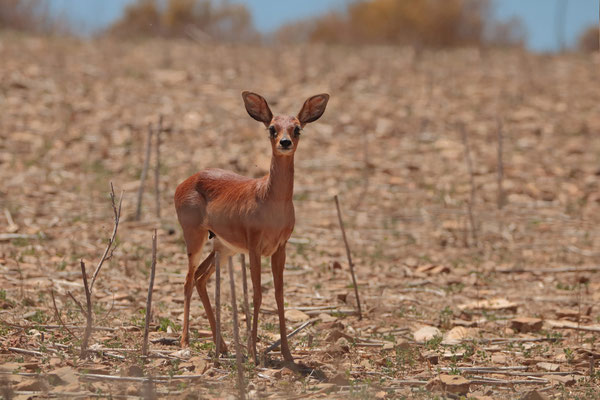
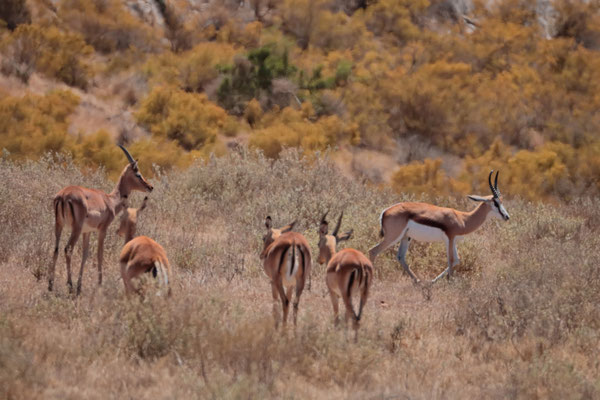
armata)! We couldn’t believe our luck when we were finally admiring this stunning viper and also in this beautiful habitat where big animals such as Eland, Zebra, Bontebok and
Ostrich roam.









Cape Town
From the 16th until the 20th of December 2025
Although Laura and I were both not keen to drive into another big city, there is simply too much wildlife around to skip the second-largest city and legislative capital of South Africa. The first
day we met up with new herping buddy Frank and explored a nearby city park. Although we had hoped the rain of the previous night would be enough to bring out the frogs, sadly I missed seeing
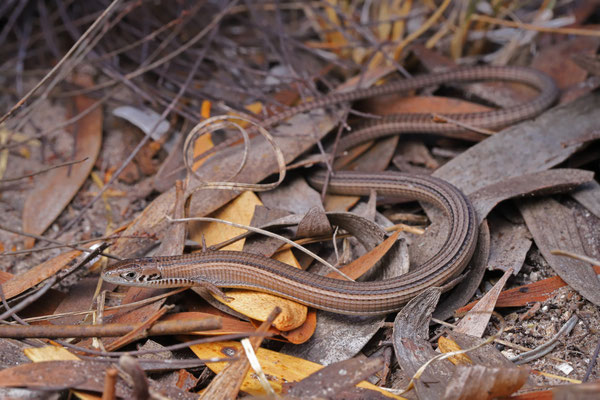
Giant Rain Frog once more. We did find Duberria lutrix, Strongylopus grayii and Frank found a stunning Cape Dwarf Chameleon
(Bradypodion pumilum). Very nice to finally meet you and hope to see you again soon Frank! Afterwards Laura and I explored a small nature reserve in the vicinity to try and find
Arum Lily Reed Frog, but the strong winds and solar radiation was probably not to the liking of the frogs. We decided to search for chameleons again in another city park and there we saw several
individuals enjoying the late afternoon sun.
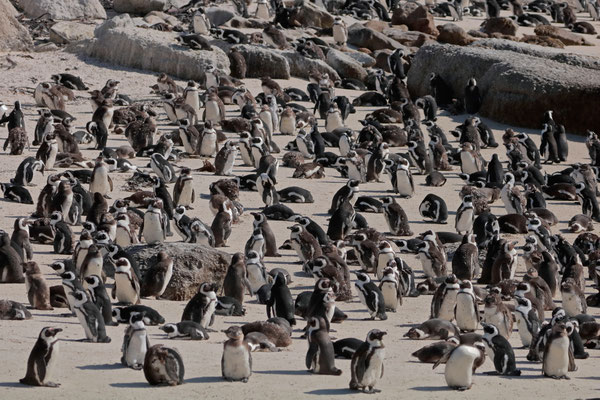
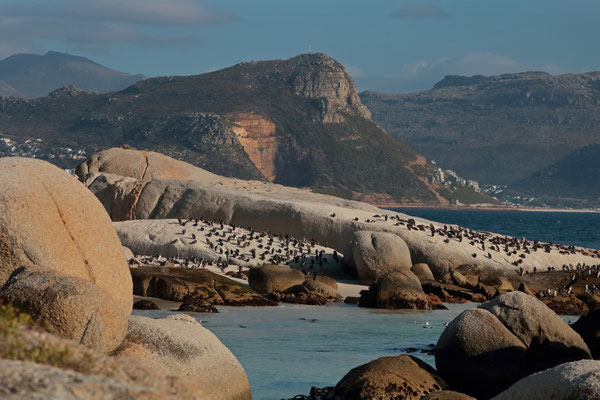
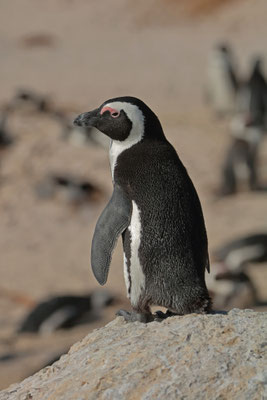
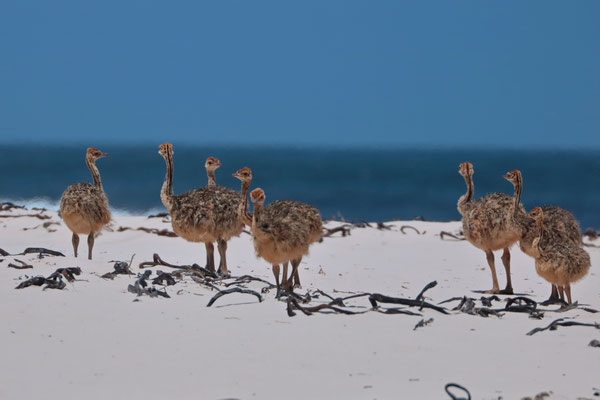
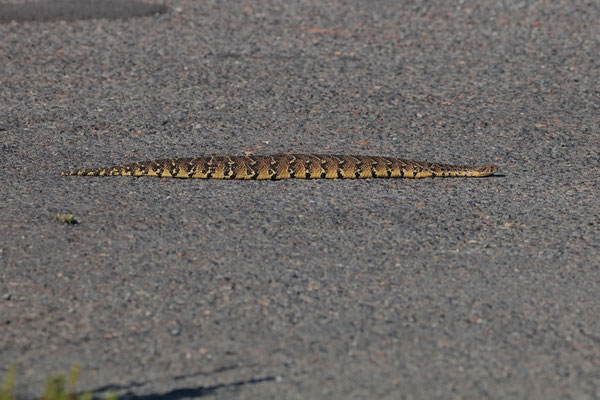
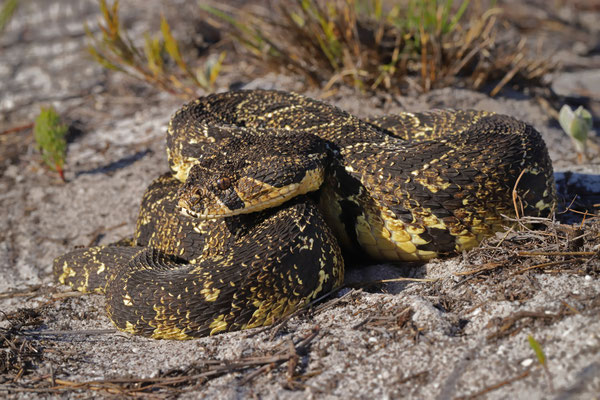
The next day we explored the area south of Cape Town. We got up early to be the first at Boulder’s Beach and that worked. We were the first in the small nature reserve and we had the beach and the African Penguins (Spheniscus demersus) to ourselves. It was molting season, which means the penguins are changing into a new waterproof coat, can’t swim nor eat and are all land-bound for a few weeks. The entire colony was on display which was a fabulous sight. At the entrance to Cape Point we were surprised by the super expensive entrance fees (you can also go to the Efteling from that money!), but as the park management knows, we still went inside. Luckily we were not disappointed. Where most people visit to make selfies at certain sign, we steered clear of those areas and had some amazing beaches to ourselves. Well, almost, as there were many Ostriches and a Cape Fur Seal (Arctocephalus pusillus). Herpwise it was tough and we only saw Cordylus niger, Chersina angulata and a lighting fast Psammophis notostictus. In the late afternoon we started roadcruising and were treated to a stunning Puff Adder (Bitis arietans). The colouration here is very different from the rest of their wide range, so this was a real treat for us!
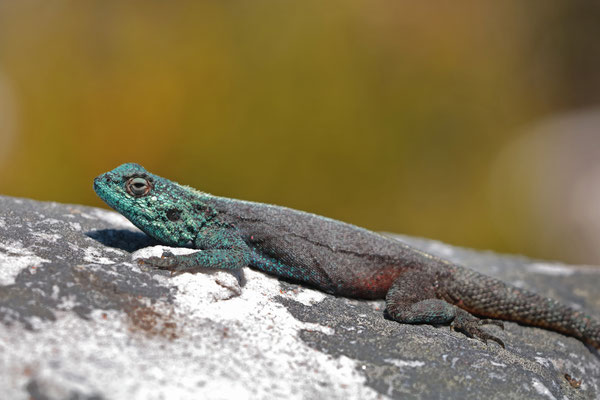
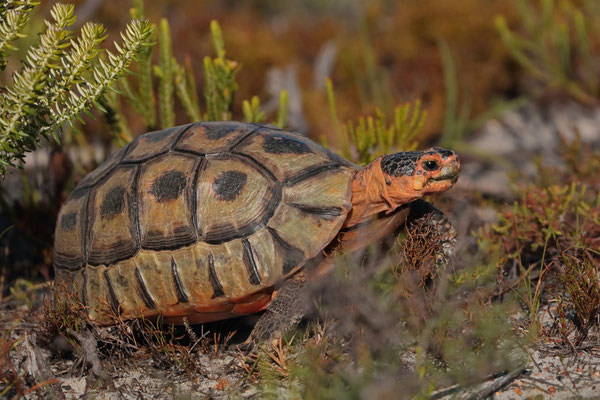
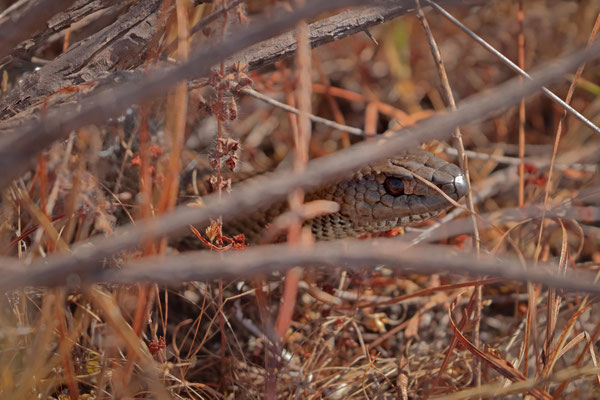
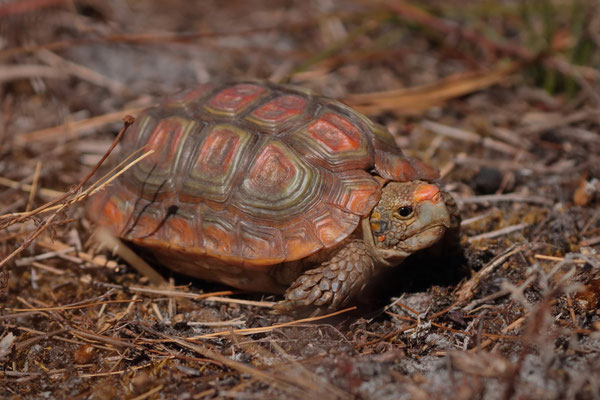
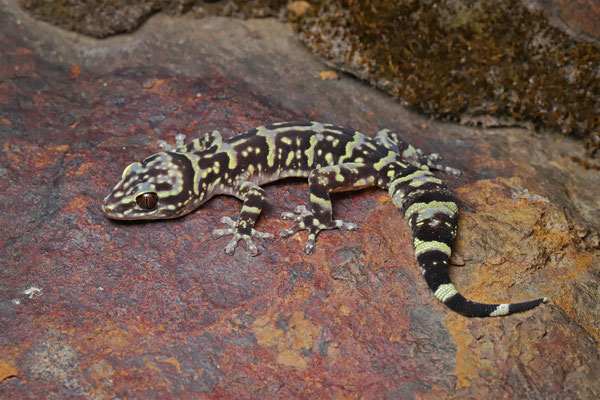
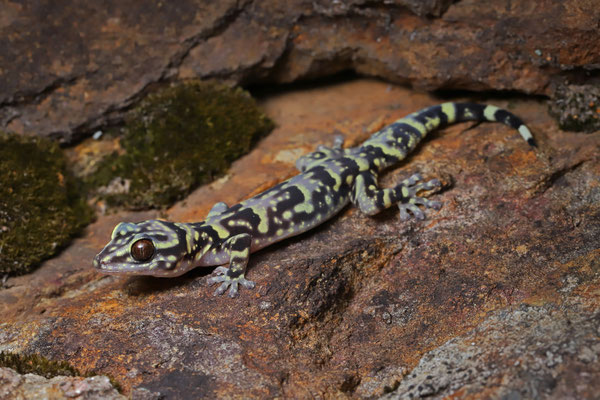
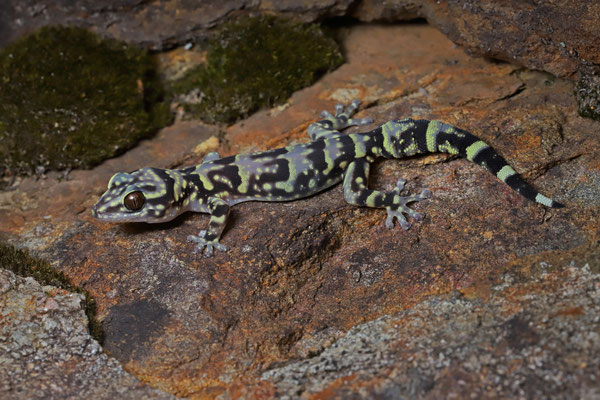
On our last full day in CT we arranged permission to search for tortoises in a very special place. In a tiny remnant patch of moist fynbos in the most unusual place a tiny species of tortoise still thrives. Together with ranger Tania we could search in a corner of the reserve and without difficulty found three Mole Snakes (Pseudaspis cana), and more importantly, seven Parrot-beaked Tortoises (Homopus areolatus). After this massive highlight we collected herping buddy Andries. Of course we couldn’t pass CT and not meet with my herping buddy and fellow crack addict! In a beautiful valley full of streams and waterfalls we tried our luck with another ghost frog species, but again, a whole afternoon of shining in cracks didn’t deliver our target and we only found Amietia fuscigula, Sclerophrys gutturalis and a Lycodonomorphus rufulus. In this season any anuran target is hard to find in the western part of South Africa. We had a traditional dinner at the Roman’s Pizza and searched for a very special gecko afterwards. The lizards proved again to be much more reliable than the frogs, and at a steep rocky cliff we immediately found four absolutely stunning Hawequa Flat Geckos (Afroedura hawequensis). What a great day in the field again! It was good seeing you again Andries and until next time!














Weskus
From the 20th until the 22nd of December 2025
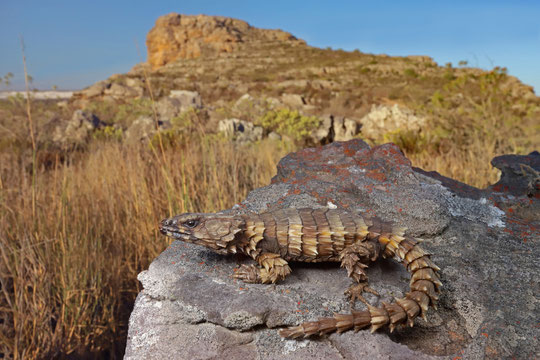
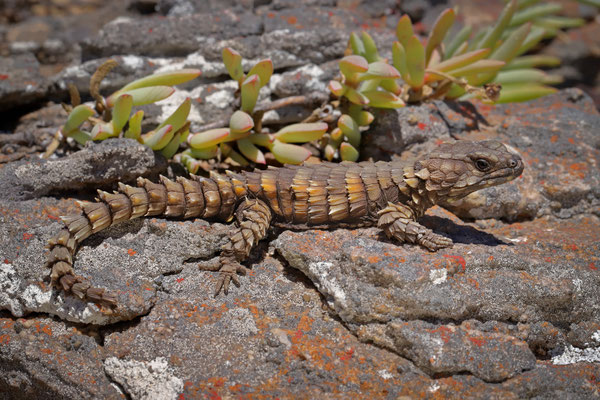
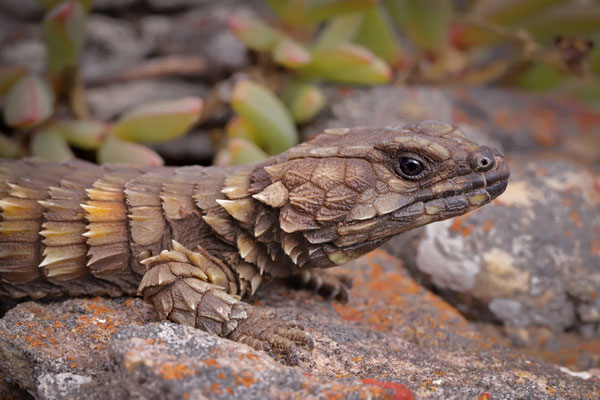
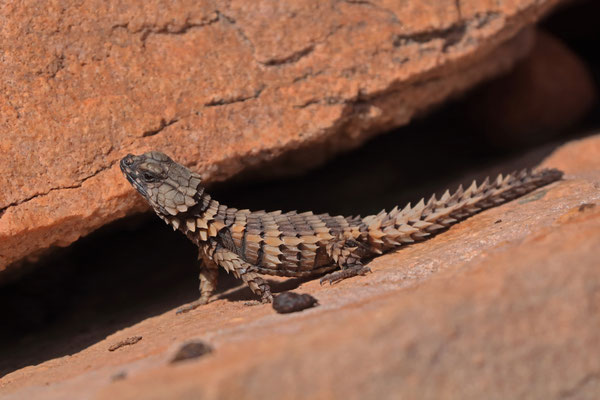
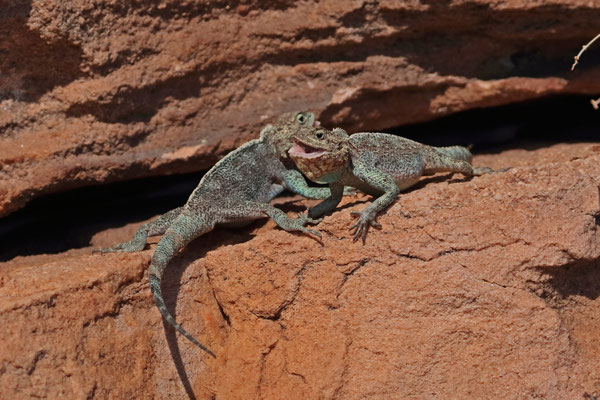
After the hustle and bustle of the city, a tiny town at the coast proved to be a very nice getaway. We had a sole lizard target here and already on our first afternoon we found a thriving population of the Armadillo Girdled Lizard (Ouroborus cataphractus). An absolute dream come true to see these lizards in the wild and we found 12 of them. These lizards are being heavily poached sadly, so we were thrilled to see so many of them. The next morning we returned and besides these amazing little dragons, also found Chondrodactylus bibronii, Pachydactylus formosus, Trachylepis variegata, Agama atra and a couple of lightning fast Psammophis crucifer. On our last morning we searched at a more sandy area in the hopes of finding Homoroselaps or Breviceps, but in this season we knew that would be hard. We did get to see Acontias meleagris, Acontias lineatus, Goggia incognita and many Chersina angulata.



Groot Winterhoek Mountains
From the 22nd until the 24th of December 2025
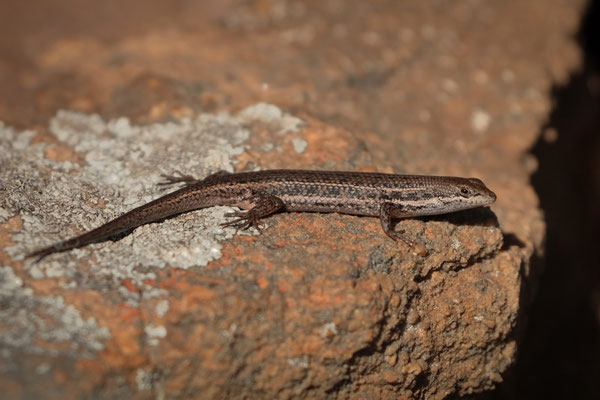
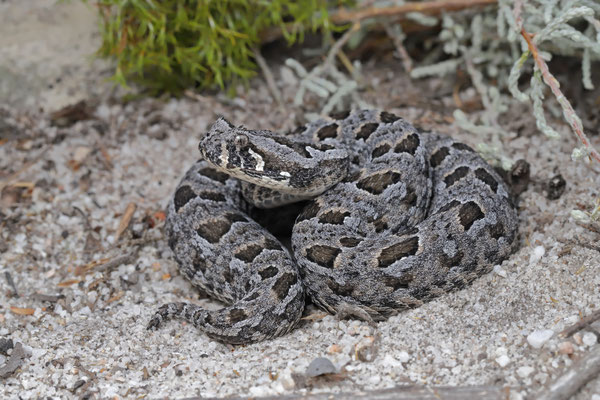
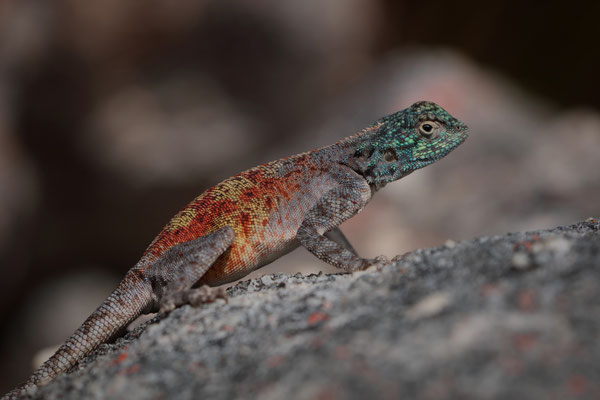
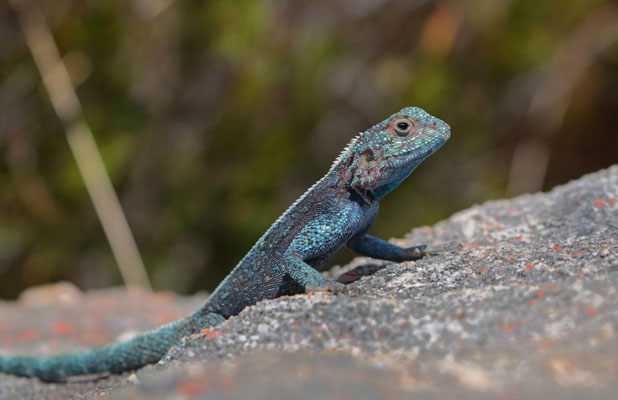
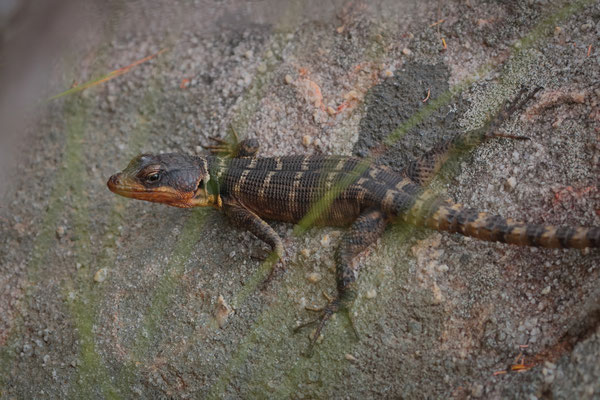
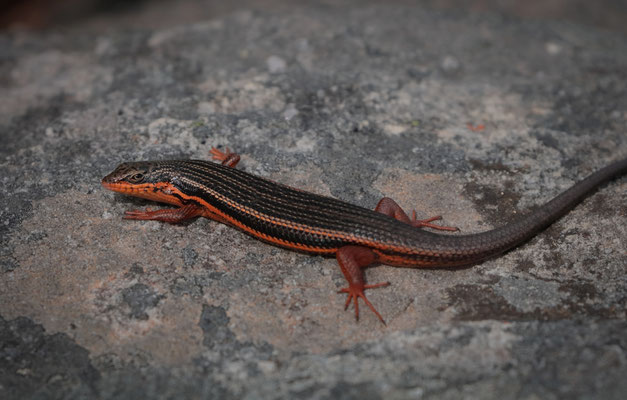
After the coast we headed into the mountains to find a special little viper and a vibrantly coloured lizard. Our accommodation was absolute bliss with a private swimming lake overlooking the mountains and very comfortable rooms. At night the small lake was full of Amietia fuscigula, Tomopterna delalandii and Lycodonomorphus rufulus. On our first morning we got up early and once again, the weather was on our side. It was unseasonably cool and foggy and we already thought this would be perfect to find snakes. After only half an hour of searching Laura spotted a small snake disappear under a rock and when we shone in the crack, we saw a Red Adder (Bitis rubida) staring back at us! We decided to leave it alone and come back later which was a good strategy. After half an hour more the snake was out again and we could have a closer look at this absolutely stunning dwarf adder. When the sun came out, it immediately became hot. We did a hike through the some of the most gorgeous fynbos we had ever seen and ended up at a small stream with several swimholes. That was very welcome under these conditions! We also found several other amphibians and reptiles such as Amietia fuscigula, Agama atra, Trachylepis homalocephala, Pseudocordylus microlepidotus, Tetradactylus seps and a beautiful Prosymna sundevalli. Lizards densities were not high though and no trace of my lizard target. On our last morning we tried a different technique and I climbed up the steep cliffs to try and reach a slightly different habitat. When I finally climbed to above 1000m absl, I immediately noticed a change in scenery. I felt that the lizard was around and only moments later I saw a small tail disappear. A short wait later and I was eye to eye with a Southern Rock Lizard (Australolacerta australis)! This has got to be one of the most beautiful lacertids I have ever seen, but also one of the most skittish. With some patience I managed to get at least some shots, before we sadly had to leave this place behind.








Cederberg
From the 24th until the 26th of December 2025
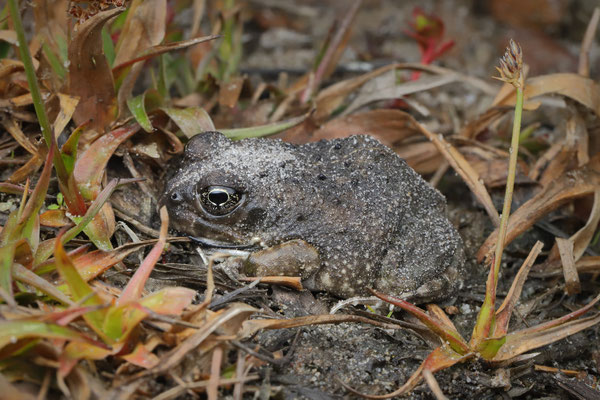
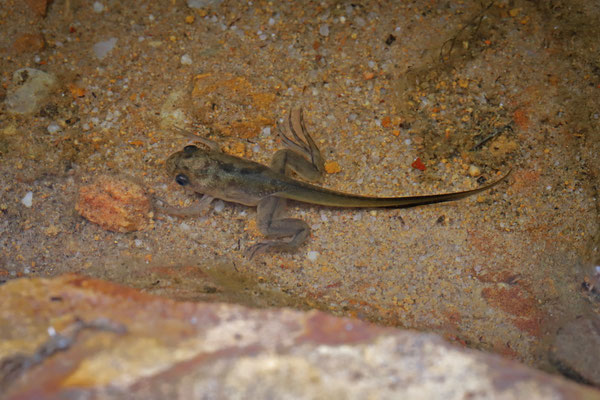
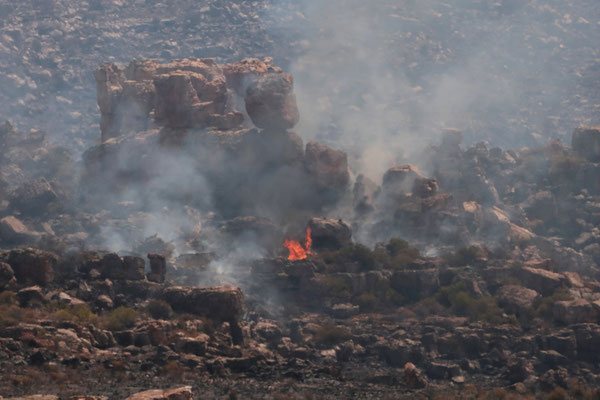
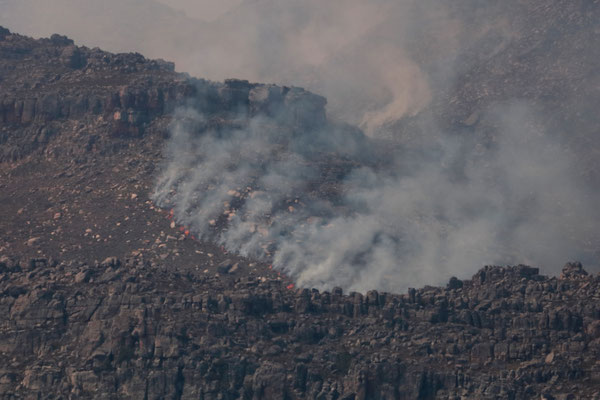
Although we initially planned this location as a backup for three major targets, we were very happy to have seen all three of them on prior stops already. That meant we could take it a bit easy over Christmas and take a little break. And that was also necessary, because not only is the Cederberg incredibly hot this time of year, a tragic car accident also set the fynbos on fire. A huge stretch of the nature reserve was still burning when we drove through and the air was heavy with smoke and ash. We did a hike to some stunning rock formations where we saw more Armadillo Girdled Lizards (Ouroborus cataphractus), Agama atra, Pedioplanis lineoocellata and several Graceful Crag Lizards (Hemicordylus capensis). We visited some caves and cliffs with Khoisan Rock Art, enjoyed the swimming pool of the accommodation and regained some energy for the next part of the trip.





Namaqualand
From the 26th of December 2025 until the 2nd of January 2026
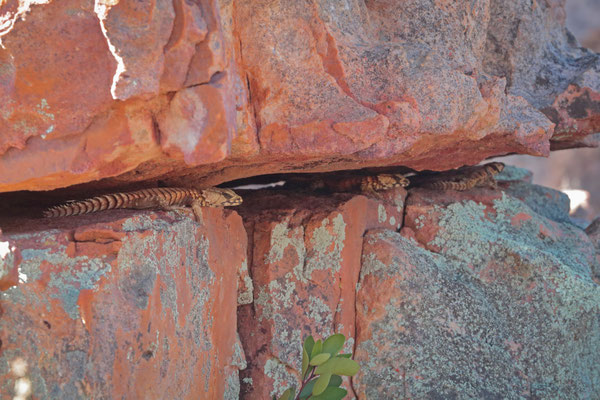
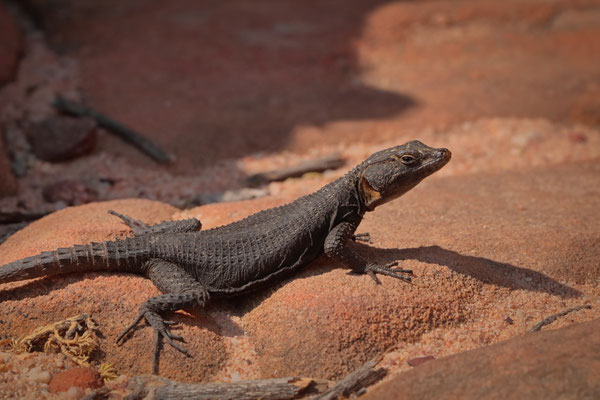
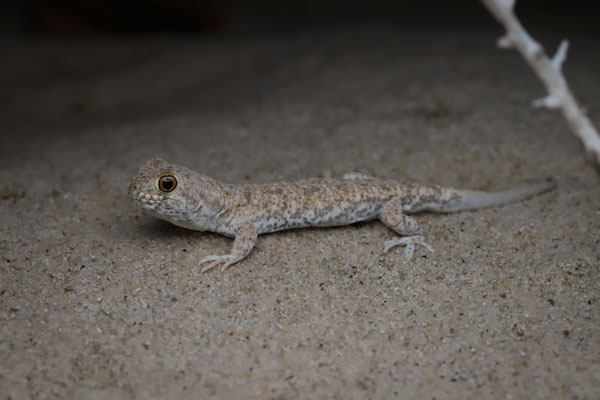
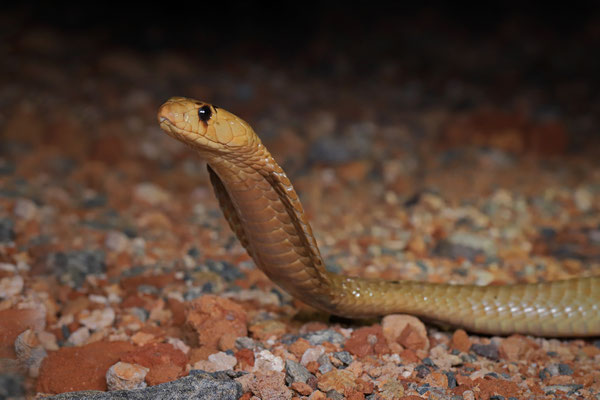
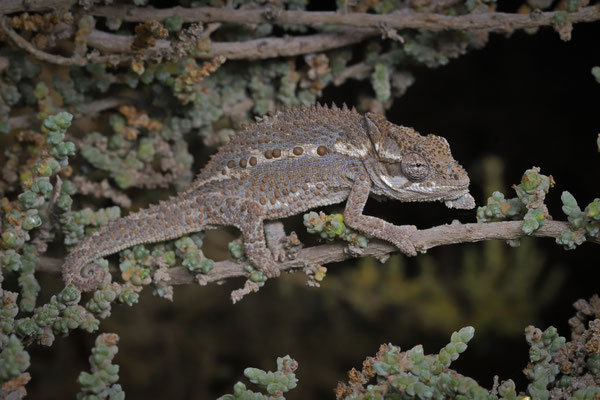
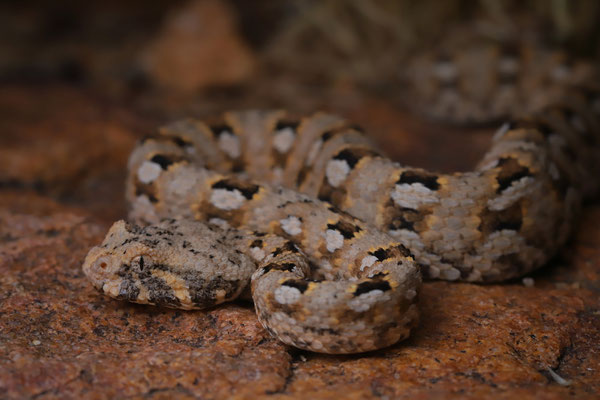
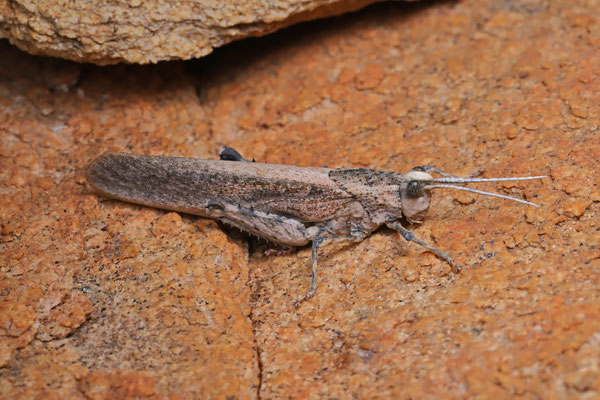
We already thought the Cederberg was hot, but staying in Namaqualand definitely proved to us it could get even hotter. The temperatures were close to 40 degrees Celsius during the day, and at night plummeted to around 20, sometimes 13 degrees Celsius. These extreme conditions meant that we had to get up early, rest during the day, go out again shortly to sunset and spend a lot of time roadcruising trying to find our main targets. It was bonedry though and not many lizards were active during the day and of the tortoises we had hoped to see we only found a dead individual. Also the roads were strangely quiet at night and very few snakes were found. Trying times! Luckily the coast is much cooler and often overcast so we decided to try our luck there. And even better, herping buddy Kai from Austria was traveling with SA herper Kyle and they had the same idea. So we joined forces and found a lot of the specialties of the region. We had just started in the morning when I spotted a Diamond Coast Barking Gecko (Ptenopus adamanteus) basking. Very unusual to see these nocturnal animals out and about, and we knew this was a good sign. More animals should be out! Not long after it was Kyle who struck gold as he followed some snake tracks and discovered a beautiful female Namaqua Dwarf Adder (Bitis schneideri). Seeing the world's smallest viper in real life and in these beautiful coastal sand dunes was just mind-blowing! On the open sandy plains Meroles knoxii, Trachylepis variegata and Trachylepis capensis were running around and several Psammophis leightoni were out hunting them. On shrubs we spotted Spiny Ground Agamas (Agama hispida) basking and underneath some trash Kyle found a Pink Blind Legless Skink (Typhlosaurus vermis). It was a pleasure to go herping together guys and this was a very nice morning! Sadly Kai and Kyle had to move south, but luckily Laura and I could stay around a bit longer. At night we tried to find rain frogs, but only found many more barking geckos, Pachydactylus austeni, Chondrodactylus bibronii and Chondrodactylus angulifer. In shrubs we also found a sleeping Namaqua Dwarf Chameleon (Bradypodion occidentale). This was the last of the described dwarf chameleons we had to see and completed our list. That was already a joyous moment, but the night had one more surprise in store for us. Close to midnight we finally spotted a snake on the road after a few snakeless nights. It was big and yellow and Laura and I were both hoping this might be what we thought it was. A stunning Cape Cobra (Naja nivea) was stretched out on the road and even allowed us to take some pictures. Something we didn't expect at all to find here, especially not at night. Not the many-horned adder we were hoping for, but a massive highlight all the same! The nights back inland were rather uneventful and we only found Rhinotyphlops schinzi, Pachydactylus latirostris, Pachydactylus weberi, Ptenopus kenkenses and Vandijkophrynus robinsoni on the roads. Much like in 2019, we did run into many police stops again, but this time the police was way more relaxed. And even better, they didn't kill me, something they promised to do if I would ever return... Hiking at night had almost the same results as roadcruising, but the biggest mammal highlight was definitely on foot. It was already 02:00am on our last night in the area and I decided to search a rocky outcrops on foot. One last try for those cheeky cornuta! Obviously I didn't find the snake, but I did run into a curious Aardwolf (Proteles cristatus). This is the smallest of the four hyena species and feeds almost entirely on termites. An amazing animal to see so closely! During the day we did short hikes before and after it got too hot and saw Agama atra, Pedioplanis namaquensis, Trachylepis sulcata, Trachylepis variegata and Karusaurus polyzonus.

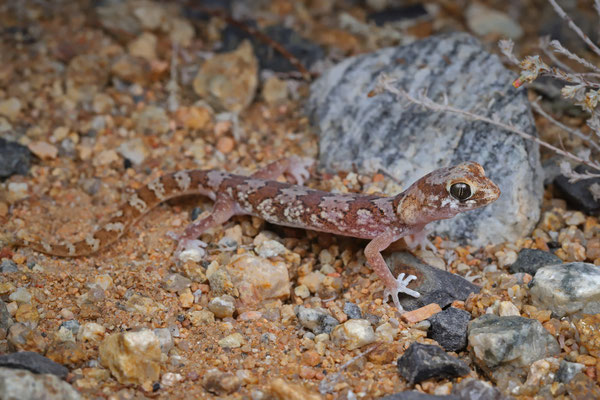
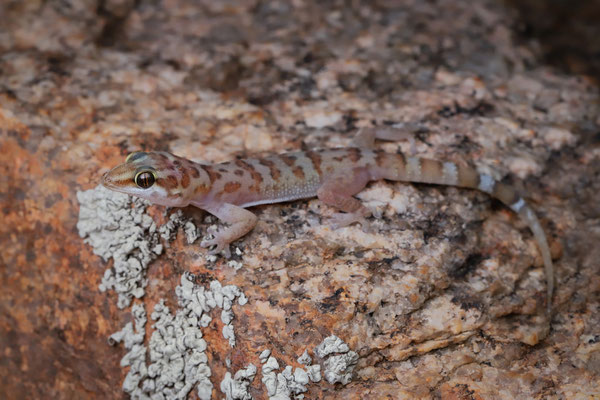


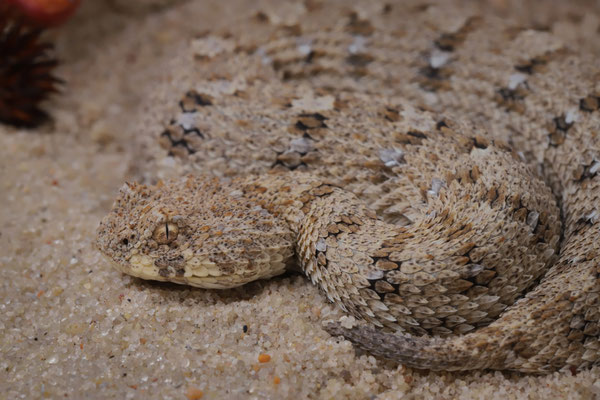


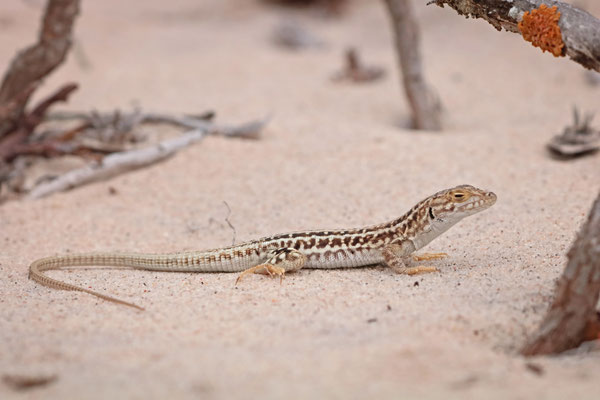


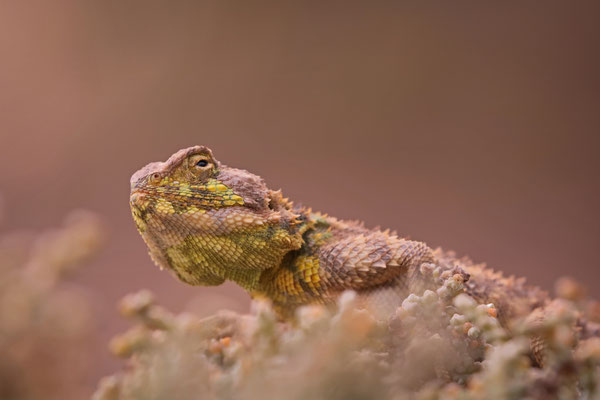
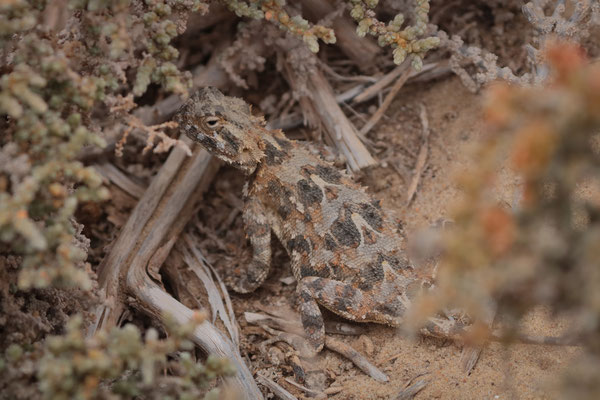
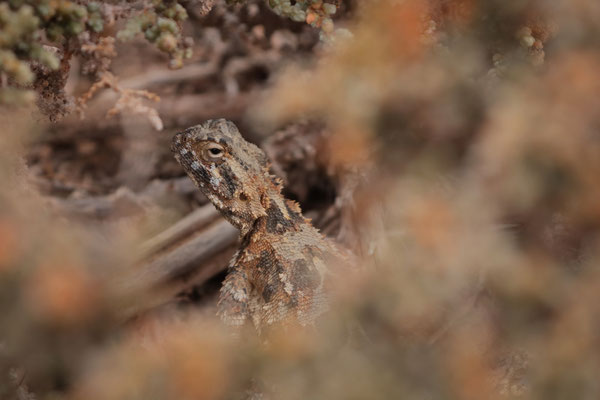


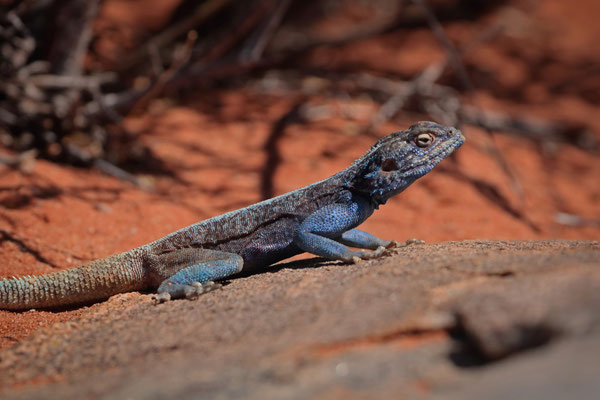
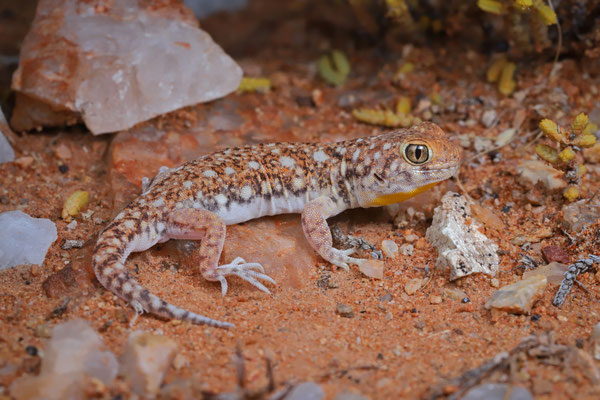
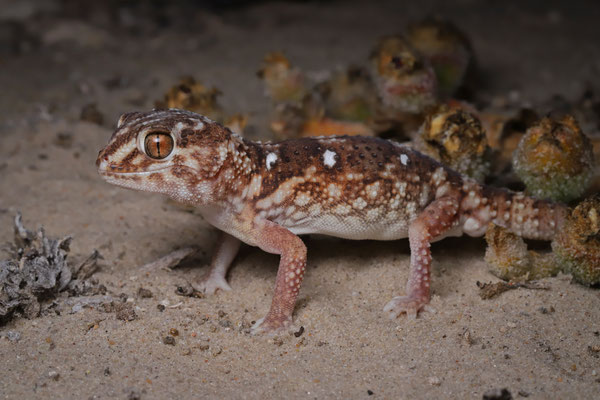





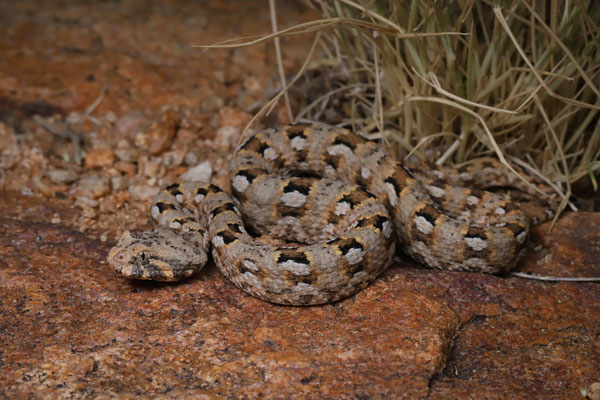
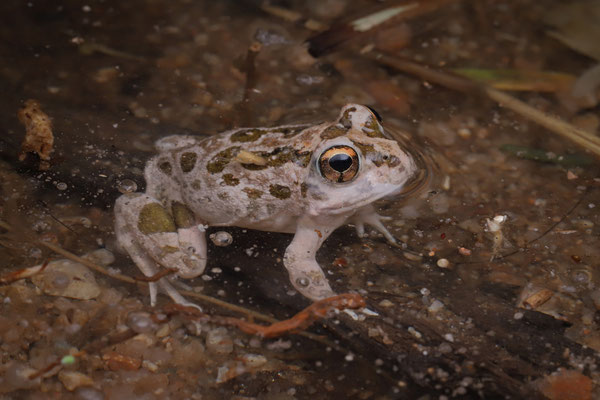
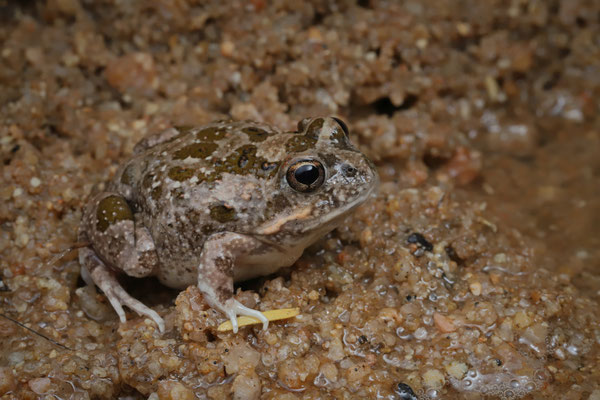
After 5 nights we had to throw the towl in the ring, and despite countless hours searching by foot or by car, we didn't find Bitis cornuta. We drove a little further east to try our luck with another species of dwarf adder. In the last light of day we set out to explore a stunning canyon. It was still blistering hot and even the wind felt like it came from an oven. When the sun had just disappeared behind the mountains I told Laura that we were probably searching the wrong micro-habitat for this species when I saw something moving. Under a tree there was a Desert Mountain Adder (Bitis xeropaga) with stunning colours was on the move in the leaflitter and we couldn't believe our luck! Finding one of these is never easy and to find one on our first attempt felt so rewarding. And what a fantastic species to find on New Year's Eve! It wasn't our last herp of the year though, as we also saw Chondrodactylus laevigatus and Pachydactylus atorquatus on the rocks. Tiny remnant patches of water are home to several hardy amphibians such as Vandijkophrynus robinsoni and many chubby Tomopterna tandyi. What an amazing last night of the year! On New Year's day we explored another gorge, but it was incredibly hot and the blasting wind felt like it came from an oven. Strangely enough we did find a place with a lot of rocky pools which held incredible numbers of Xenopus laevis, but not the marbled rubber frogs we were hoping for. Also Pachydactylus haackei and Pachydactylus montanus were seen on the rocks, but little else was out and about.
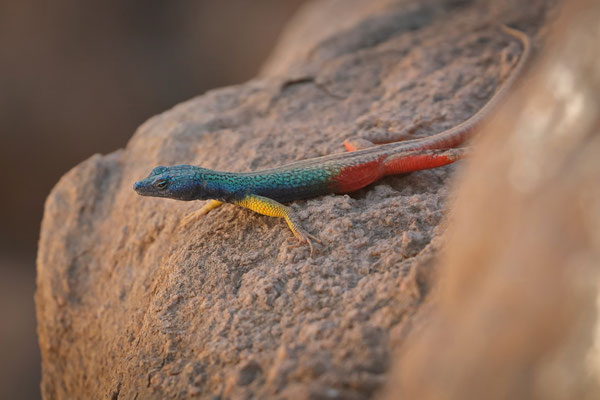
The next day we started our big drive towards Johannesburg, but made time in the morning to visit Augrabies NP. In 2019 my snake stick was confiscated there and put in safe-keeping. I had a handwritten and signed note, that if I would ever return, I could get the snake stick back. The rangers were surprised to see me show up with this note and together we searched their storage. No snake stick. The ranger who confiscated the stick back then was retired, but a few phone calls later it also became clear that this stick would never be returned to me and the "safe-keeping" part was also an empty promise. Pity! We still admired the Augrabies Flat Lizards (Platysaurus broadleyi) before driving towards Olifantshoek for the night. The only herp we saw there was still new for the list as there were several Common Ground Agamas (Agama aculeata) running around the premises of the guesthouse.








Johannesburg
From the 3rd until the 5th of January 2026
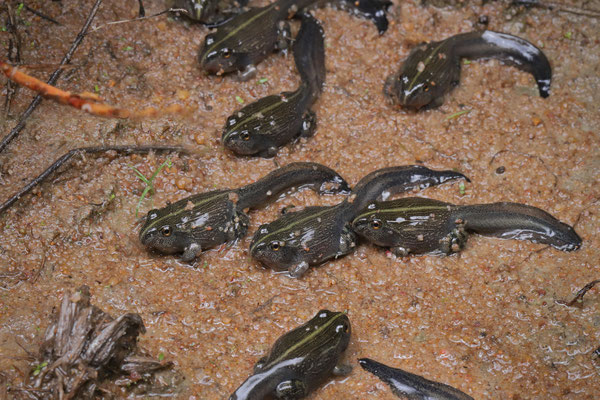
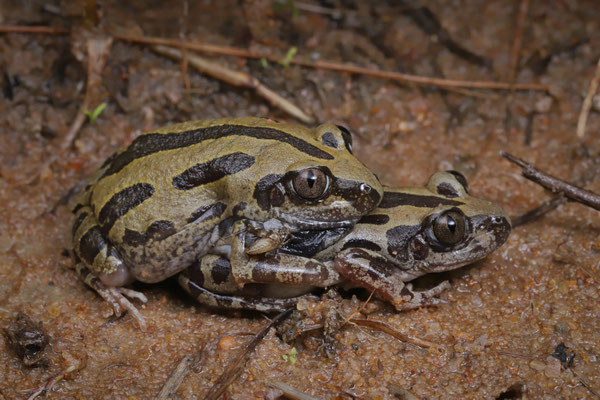
A long drive over the excellent South African roads brought us back to where we started. In Johannesburg we had a single target species to find and our friend Courtney was so kind to let us sleep in his guestroom. The guestroom was amazing and included playful kittens (Florence & Willow) who were very happy with the new visitors. And the new visitors with them! We didn't have a lot of time to play with them though, as there were giant frogs to be found! During dinner we got some heavy rains, but when we were in the field it stopped raining. At first we only found the more common species such as Kassina senegalensis and Xenopus laevis. But when we followed the calls of Cacosternum boettgeri to another body of water, it was Courtney who spotted the first Giant. When I first saw it I couldn't believe it, a Giant African Bullfrog (Pyxicephalus adspersus) was staring at us! Even better was that there were several males in this pond, all guarding their tadpoles who were about to go on land. They were fiercely protecting their offspring and our boots (and fingers) met their wrath. What an experience to be bitten by such a huge frog! The next day we explored the outskirts of town, but the rain and cold soon made place for heat and we didn't find that much except for Pachydactylus affinis, Rhinotyphlops lalandei, Agama atra and Trachylepis punctatissima.
Thanks again so much for the incredible hospitality Courtney and hope to see you soon somewhere in the world!



Epilogue
South Africa was exactly what we needed after three months in the neotropics. Where Central America makes you suffer for the animals you want to see, the climate in South Africa was much more enjoyable. No more hot and humid, or freezing and humid conditions. Here we had agreeable temperatures, and whenever it got hot, it was always dry heat which is way more bearable. Traveling South Africa is fantastic, the roads are in excellent shape and you can make many kilometers on a day. The most amazing supermarkets and restaurants are found everywhere and we fully gorged ourselves on proper food. Breakfast with milktart, lunch with samosas and ostrich steaks at night. That is more like it! The accommodations have all the comforts you need with air conditioning in the hotter areas and even heating blankets where it gets cold at night. The herping was just fantastic and we got so lucky with the weather conditions almost everywhere. For our amphibian targets we got the rain we needed to see them, and on the high altitudes we got blessed with sunny days. When we reached Cape Town and the Noordkaap it was indeed hot and dry, but we knew it would be like that. With a little bit of effort we still got to see most of the species we wanted to see. And the freedom to move around was also greatly appreciated. In the neotropics guides are required in most places, but here we could explore almost always by ourselves or together with many amazing herping friends. I can't thank them enough for all the invaluable advice and the memorable days in the field we had together! South Africa was simply amazing and we will certainly be back to see more of this breathtaking country and the mindblowing biodiversity!
Species
Red Toad (Schismaderma carens)
Guttural Toad (Sclerophrys gutturalis)
Raucous Toad (Sclerophrys capensis)
Eastern Leopard Toad (Sclerophrys pardalis)
Cloud Toad (Vandijkophrynus nubicola)
Paradise Toad (Vandijkophrynus robinsoni)
Drakensberg Rain Frog (Breviceps sp. "Drakensberg")
Strawberry Rain Frog (Breviceps acutirostris)
Black Rain Frog (Breviceps fuscus)
Whistling Rain Frog (Breviceps sopranus)
Common River Frog (Amietia delalandii)
Cape River Frog (Amietia fuscigula)
Phofun River Frog (Amietia hymenopus)
Maluti River Frog (Amietia vertebralis)
Common Caco (Cacosternum boettgeri) - calls only
Bronze Caco (Cacosternum nanum)
Kloof Frog (Natalobatrachus bonebergi)
Edible Bullfrog (Pyxicephalus edulis)
Giant African Bullfrog (Pyxicephalus adspersus)
Delicate Leaf-folding Frog (Afrixalus delicatus)
Fornasini's Spiny Reed Frog (Afrixalus fornasini)
Common Squeaker (Arthroleptis stenodactylus)
Bush Squeaker (Arthroleptis wahlbergii)
Spotted Snout-burrower (Hemisus guttatus)
Natal Ghost frog (Hadromophryne natalensis)
Eastern Ghost Frog (Heleophryne orientalis)
Purcell's Ghost Frog (Heleophryne purcelli) - calls and tadpoles only
Royal Ghost frog (Heleophryne regis)
Red-legged Running Frog (Hylambates maculatus)
Argus Reed Frog (Hyperolius argus)
Marbled Reed Frog (Hyperolius marmoratus)
Pickersgill's Reed Frog (Hyperolius pickersgilli)
Power's Long Reed Frog (Hyperolius poweri)
Water Lily Reed Frog (Hyperolius pusillus)
Yellow-striped Reed Frog (Hyperolius semidiscus)
Tinker Reed Frog (Hyperolius tuberilinguis)
Brown-backed Tree Frog (Leptopelis mossambicus)
Natal Tree Frog (Leptopelis natalensis)
Bubbling Kassina (Kassina senegalensis)
Rattling Frog (Semnodactylus wealii)
Dwarf Puddle Frog (Phrynobatrachus mababiensis)
Natal Puddle Frog (Phrynobatrachus natalensis)
Banded Rubber Frog (Phrynomantis bifasciatus)
Nile Grass Frog (Ptychadena nilotica)
Sharp-nosed Grass Frog (Ptychadena oxyrhynchus)
Clicking Stream Frog (Strongylopus grayii)
Striped Stream Frog (Strongylopus fasciatus)
Cape Sand Frog (Tomopterna delalandii)
Natal Sand Frog (Tomopterna natalensis)
Tandy's Sand Frog (Tomopterna tandyi)
African Clawed Frog (Xenopus laevis)
Angulate Tortoise (Chersina angulata)
Speckled Padloper (Chersobius signatus) - dead
Parrot-beaked Tortoise (Homopus areolatus)
Leopard Tortoise (Stigmochelys pardalis)
Cape Terrapin (Pelomedusa galeata)
Nile Crocodile (Crocodylus niloticus)
Swartberg Dwarf Chameleon (Bradypodion atromontanum)
Beardless Dwarf Chameleon (Bradypodion barbatulum)
Baviaanskloof Dwarf Chameleon (Bradypodion baviaanense)
Transkei Dwarf Chameleon (Bradypodion caffrum)
Eshowe Dwarf Chameleon (Bradypodion caeruleogula)
Knysna Dwarf Chameleon (Bradypodion damaranum)
Drakensberg Dwarf Chameleon (Bradypodion dracomontanum)
Little Karoo Dwarf Chameleon (Bradypodion gutturale)
Kentani Dwarf Chameleon (Bradypodion kentanicum)
Durban Dwarf Chameleon (Bradypodion melanocephalum)
Qudeni Dwarf Chameleon (Bradypodion nemorale)
Ngome Dwarf Chameleon (Bradypodion ngomeense)
Namaqua Dwarf Chameleon (Bradypodion occidentale)
Cape Dwarf Chameleon (Bradypodion pumilum)
Setaro's Dwarf Chameleon (Bradypodion setaroi)
Elandsberg Dwarf Chameleon (Bradypodion taeniabronchum)
Natal Midlands Dwarf Chameleon (Bradypodion thamnobates)
Transvaal Dwarf Chameleon (Bradypodion transvaalense)
Eastern Cape Dwarf Chameleon (Bradypodion ventrale)
Grootvadersbos Dwarf Chameleon (Bradypodion venustum)
Emerald Dwarf Chameleon (Bradypodion sp. "Emerald")
Flap-necked Chameleon (Chamaeleo dilepis)
Southern Tree Agama (Acanthocercus atricollis)
Common Ground Agama (Agama aculeata)
Southern Rock Agama (Agama atra)
Spiny Ground Agama (Agama hispida)
Hawequa Flat Gecko (Afroedura hawequensis)
Pondo Flat Gecko (Afroedura pondolia)
Marbled Leaf-toed Gecko (Afrogecko porphyreus)
Giant Ground Gecko (Chondrodactylus angulifer)
Bibron's Gecko (Chondrodactylus bibronii)
Button-scaled Gecko (Chondrodactylus laevigatus)
Salt Marsh Gecko (Cryptactites peringueyi)
Cryptic Pygmy Gecko (Goggia incognita)
Tropical House Gecko (Hemidactylus mabouia)
Wahlberg's Velvet Gecko (Homopholis wahlbergii)
Common Dwarf Gecko (Lygodactylus capensis)
Spotted Dwarf Gecko (Lygodactylus ocellatus)
Transvaal Gecko (Pachydactylus affinis)
Augrabies Gecko (Pachydactylus atorquatus)
Austen's Gecko (Pachydactylus austeni)
Southern Rough Gecko (Pachydactylus formosus)
Ocellated Gecko (Pachydactylus geitje)
Haacke's Gecko (Pachydactylus haackei)
Quartz Gecko (Pachydactylus latirostris)
Spotted Gecko (Pachydactylus maculatus)
Namaqua Mountain Gecko (Pachydactylus montanus)
Weber's Gecko (Pachydactylus weberi)
Diamond Coast Barking Gecko (Ptenopus adamanteus)
Nama Barking Gecko (Ptenopus kenkenses)
Sand-dwelling Dwarf Worm Lizard (Zygaspis arenicola)
Southern Rock Lizard (Australolacerta australis)
Knox's Desert Lizard (Meroles knoxii)
Burchell's Sand Lizard (Pedioplanis burchelli)
Spotted Sand Lizard (Pedioplanis lineoocellata)
Namaqua Sand Lizard (Pedioplanis namaquensis)
Cottrell's Mountain Lizard (Tropidosaura cottrelli)
Essex's Mountain Lizard (Tropidosaura essexi)
Cape Mountain Lizard (Tropidosaura gularis)
Coppery Grass Lizard (Chamaesaura aenea) DOR
Cape Girdled Lizard (Cordylus cordylus)
Black Girdled Lizard (Cordylus niger)
Common Girdled Lizard (Cordylus vittifer)
Graceful Crag Lizard (Hemicordylus capensis)
Karoo Girdled Lizard (Karusaurus polyzonus)
Blue-spotted Girdled Lizard (Ninurta coeruleopunctatus)
Armadillo Girdled Lizard (Ouroborus cataphractus)
Augrabies Flat Lizard (Platysaurus broadleyi)
Common Flat Lizard (Platysaurus intermedius)
Sekhukhune Flat Lizard (Platysaurus orientalis)
Lang's Crag Lizard (Pseudocordylus langi)
Highveld Crag Lizard (Pseudocordylus melanotus)
Cape Crag Lizard (Pseudocordylus microlepidotus)
Spiny Crag Lizard (Pseudocordylus spinosus)
Drakensberg Crag Lizard (Pseudocordylus subviridis)
Giant Girdled Lizard (Smaug giganteus)
Swazi Girdled Lizard (Smaug swazicus)
Yellow-throated Plated Lizard (Gerrhosaurus flavigularis)
Short-legged Seps (Tetradactylus seps)
Cape Long-tailed Seps (Tetradactylus tetradactylus)
White-throated Legless Skink (Acontias albigularis)
Striped Legless Skink (Acontias lineatus)
Cape Legless Skink (Acontias meleagris)
Lowveld Dwarf Burrowing Skink (Scelotes bidigittatus)
Durban Dwarf Burrowing Skink (Scelotes inornatus)
Montane Dwarf Burrowing Skink (Scelotes mirus)
Cape Skink (Trachylepis capensis)
Eastern Coastal Skink (Trachylepis depressa)
Red-sided Skink (Trachylepis homalocephala)
Rainbow Skink (Trachylepis margiritifer)
Speckled Rock Skink (Trachylepis punctatissima)
Striped Skink (Trachylepis striata)
Western Rock Skink (Trachylepis sulcata)
Eastern Variable Skink (Trachylepis varia)
Variegated Skink (Trachylepis variegata)
Pink Blind Legless Skink (Typhlosaurus vermis)
Nile Monitor Lizard (Varanus niloticus)
Bibron's Blind Snake (Afrotyphlops bibronii)
Cape Thread Snake (Leptotyphlops conjunctus)
Incognito Thread Snake (Leptotyphlops incognitus)
Delalande's Beaked Blind Snake (Rhinotyphlops lalandei)
Schinz's Beaked Blind Snake (Rhinotyphlops schinzi)
Southern Rock Python (Python natalensis)
Common Purple-glossed Snake (Amblyodipsas polylepis)
Bibron's Stiletto Snake (Atractaspis bibronii)
Herald Snake (Crotaphopeltis hotambouia)
Marbled Tree Snake (Dipsadoboa aulica) DOR
Natal Green Snake (Philothamnus natalensis)
Spotted Bush Snake (Philothamnus semivariegatus)
Southern Twig Snake (Thelotornis capensis)
Brown House Snake (Boaedon capensis)
Bug-eyed House Snake (Boaedon mentalis) DOR
Brown Water Snake (Lycodonomorphus rufulus)
Cross-marked Sand Snake (Psammophis crucifer)
Cape Sand Snake (Psammophis leightoni)
Karoo Sand Snake (Psammophis notostictus)
Spotted Skaapsteker (Psammophylax rhombeatus)
Sundevall's Shovel-snout (Prosymna sundevalli)
Mole Snake (Pseudaspis cana)
Many-spotted Snake (Amplorhinus multimaculatus)
Common Slug-eater (Duberria lutrix)
Green Mamba (Dendroaspis angusticeps) DOR
Black Mamba (Dendroaspis polylepis)
Cape Cobra (Naja nivea)
Puff Adder (Bitis arietans)
Southern Adder (Bitis armata)
Berg Adder (Bitis atropos)
Red Adder (Bitis rubida)
Namaqua Dwarf Adder (Bitis schneideri)
Desert Mountain Adder (Bitis xeropaga)
Many thanks to Tim Brammer, Andries Cilliers, Otto & Didrik Claesson, Nick Evans, Kyle Finn, Miguel da Fonseca, Frank Gaude, Carla Goede, André van Hecke, Courtney Hundermark, Luke Kemp, Dylan Leonard, Candice Mckibbin, Richard Mckibbin & Gary Kyle Nicolau for their hospitality, support and for providing valuable intell into making this trip into such a great success!