 Amphibians and Reptiles
of Europe
Amphibians and Reptiles
of Europe
Guatemala
From the 14th of October until the 4th of November 2025
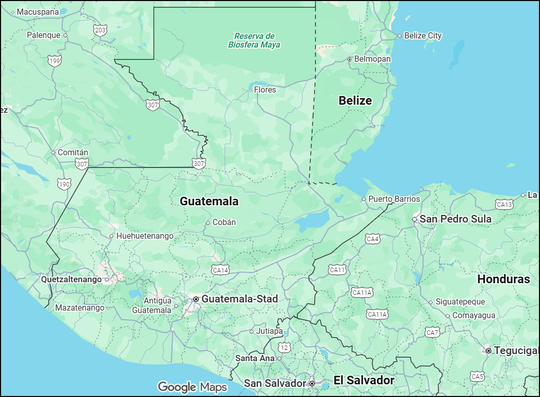
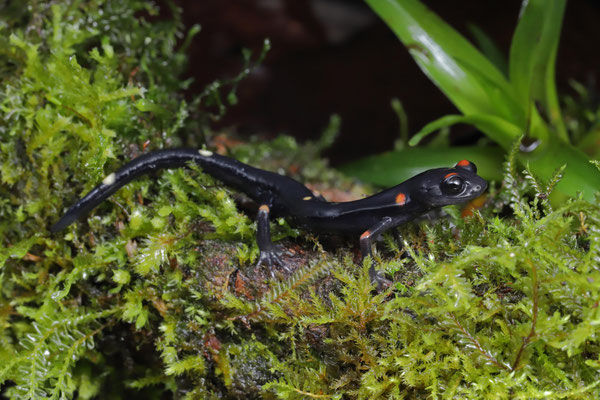
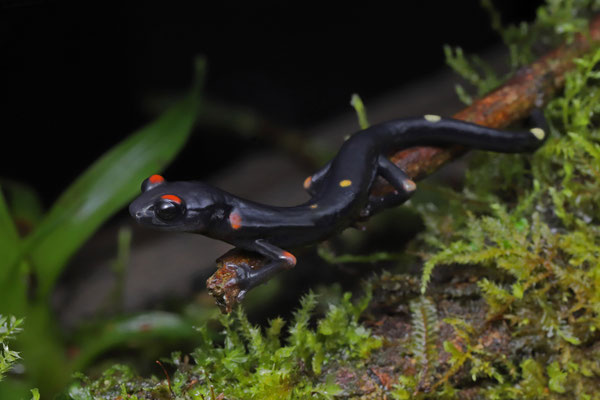
After an amazing 2,5 months in Costa Rica we headed to Guatemala. Another country that wasn’t new to us. Back in 2017 we had a fantastic time in this country, but we were keen to see some rarely seen species that eluded us. One major draw was the rarely seen Bolitoglossa jacksoni which was rediscovered only two months after our visit in 2017. Time to try our luck and see if we could find this stunning salamander this time! And we wouldn't be doing it alone. Of course Wouter couldn't miss from the team going for this golden wonder and to aid us in the search high and low, climbing extraordinaire Ollie from the UK joined as well.

The long drive to the Cuchumatanes
From the 14th until the 17th of October 2025
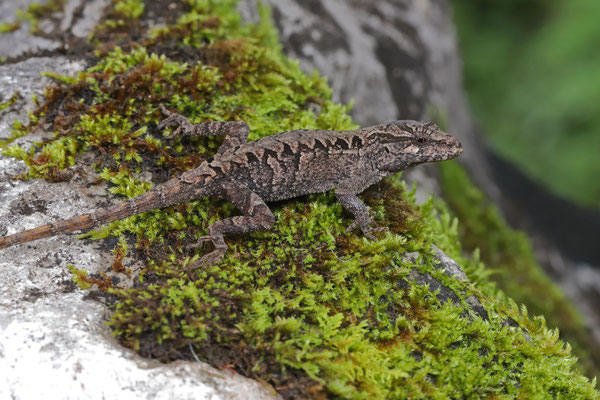
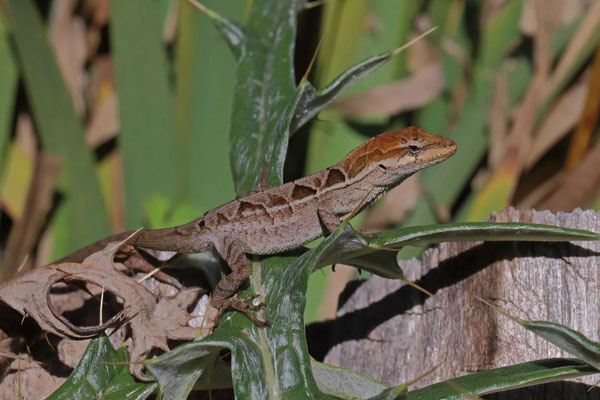
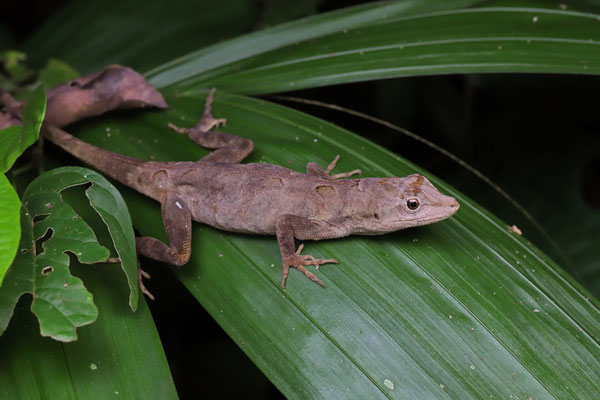
We had a smooth flight and in no-time we arrived in Guatemala City. The immigration went super fast and our luggage was also already waiting for us. Wouter landed an hour before us and after collecting the rental car we drove into the city to collect Ollie. We wanted to get out of the city as soon as possible. As much as we love McDonald’s, we didn’t care to spend any longer than absolutely necessary in a city with a McDonald’s every 100 meters. In a roadside hotel in Sumpango, we found a place to sleep for the night and could enjoy the sounds of roaring trucks all night. The next morning we drove in the direction of Huehuetenango and did some roadside stops to try and find the first herps. This proved to be fruitless and spots we knew from 8 years ago were deforested and turned into rubbish dumps. But then again, the entire road we drove was basically one rubbish dump. The amount of trash was just unbelievable and on top of that, not a single old tree was left standing. Every single stop we did, we had to take care not to step in human faeces or diapers. Our friend Manuel already warned us the country was not the same place we would remember it to be. Habitat destruction, soil erosion, pollution were basically everywhere and this would be the first day of the little big year without a single herp. Perturbation everywhere! A bit disappointed we arrived in Huehuetenango and after a nice meal we went to bed. The next day was basically driving all the time, but in the afternoon we could find the first herps of the trip such as Anolis crassulus, Sceloporus taeniocnemis, Mesaspis chucumatanus and the first salamanders: Guatemalan Mushroomtongue Salamander (Bolitoglossa centenorum). After that we arrived in San Mateo Ixtatán, found some food and a hotel and went to bed.
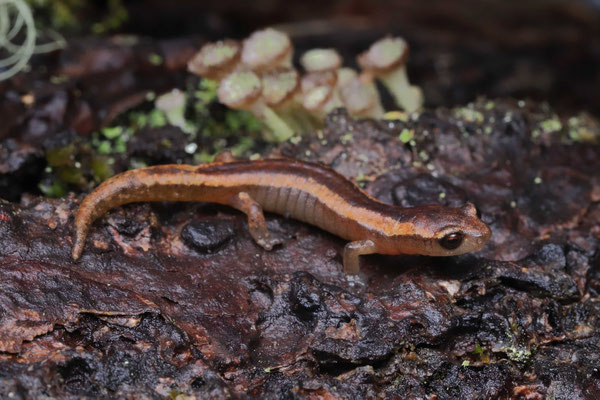
In the morning we were close to the type locality of Abronia frosti, so we tried to find some forest left standing where this lizard might dwell. Although we did indeed find some good trees, our search for that species was in vain. Instead we found all the same species of the previous day, but with a slightly different salamander: Huehuetenango Mushroomtongue Salamander (Bolitoglossa huehuetenanguensis).



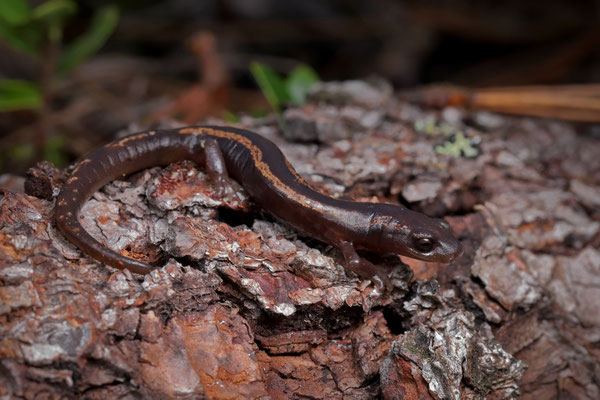

Reserva Natural Privada Yal Unin Yul Witz
From the 17th until the 22nd of October 2025
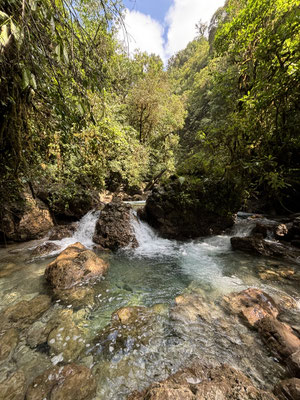
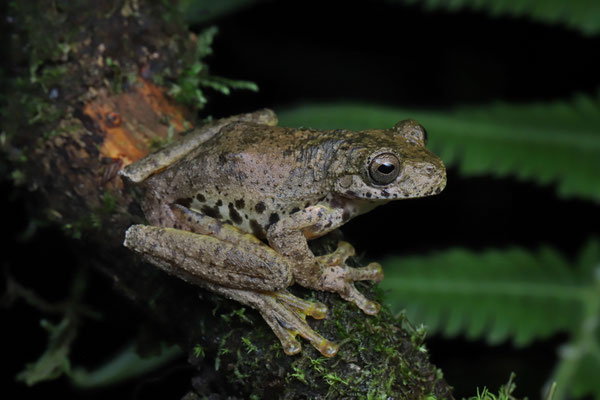
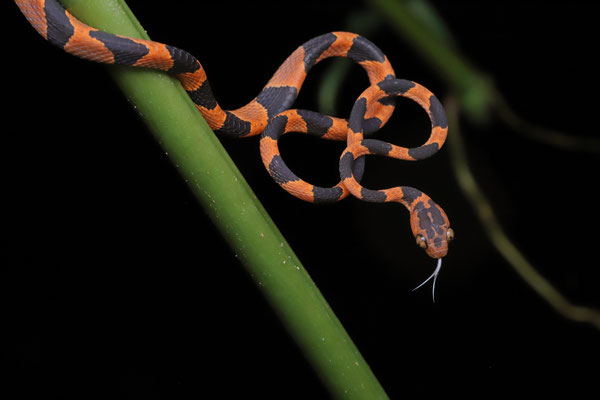
After more than three days on the road we finally made it to Barillas. The small sleepy town without a police force changed into a massive local hub, full of people and cars, noise and dirt. From here we could drive the last stretch of road north towards the reserve. Although the manager prepared us for basic living conditions in the field station, we were delighted to find a house with multiple comfortable rooms to sleep in, a fully equipped kitchen and a large veranda where we could eat and relax. As stated before, the main goal of the trip was to find Bolitoglossa jacksoni. It was known from only two individuals which were both discovered in 1975, after which it was long lost to science. Only in 2017 was a third individual found and in March 2020 a fourth individual. We knew it was going to be a long shot, but we also knew that there are not many people who give this species a decent try. On our first night we walked a small trail along the river. Here we saw the first snakes of the trip such as Ninia sebae, Imantodes cenchoa and Leptodeira septentrionalis. Wouter and Laura spotted some very exciting frogs, which turned out to be a mysterious stream Frog (Ptychohyla spec.) and an Alta Verapaz Spikethumb Frog (Plectrohyla teuchestes).
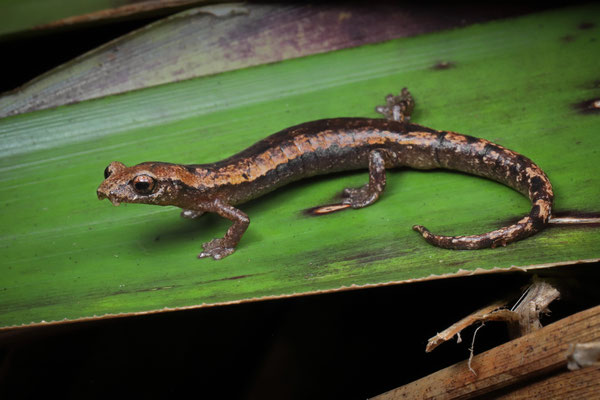
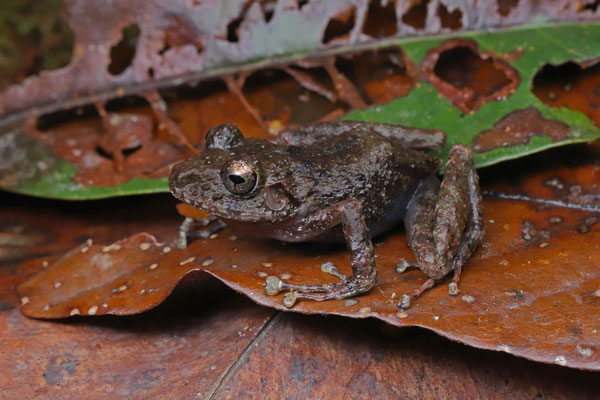
The next day we hiked up the mountain towards a spot where jacksoni can be found according to our guides. Although, when we arrived there we found out it was a patch of forest that looks similar to the forest where Bolitoglossa jacksoni can be found, but wasn't the exact spot. A bit disillusioned, we still gave it our best, but didn't find much during the day. During the descent in darkness we saw many Xibalba Mushroomtongue Salamander (Bolitoglossa xibalba), Craugastor xucanebi and two more Plectrohyla quecchi.
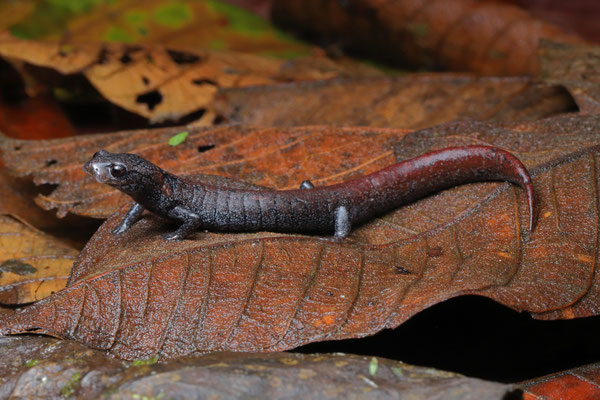
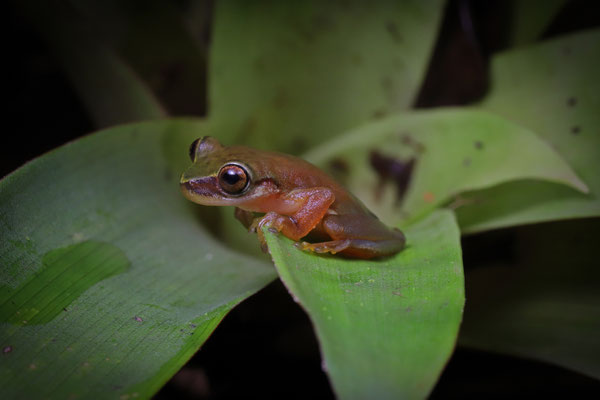
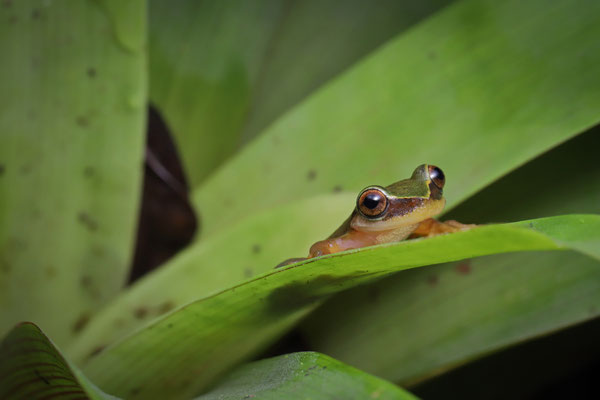
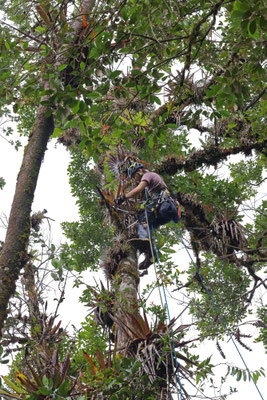
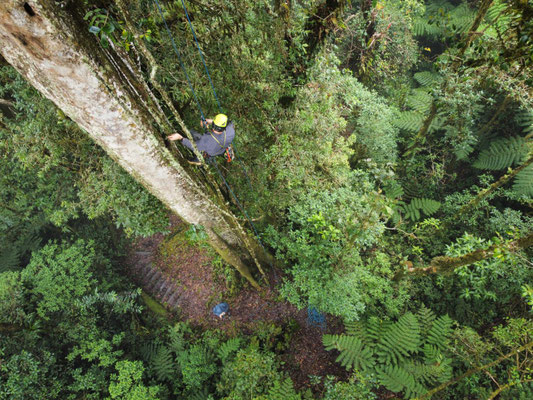
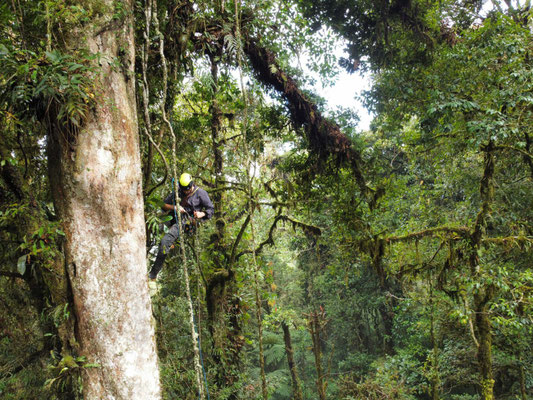
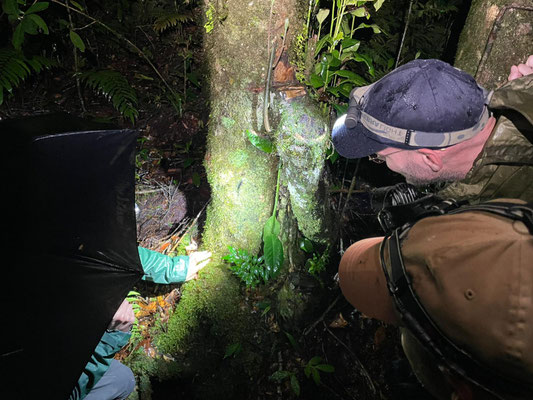
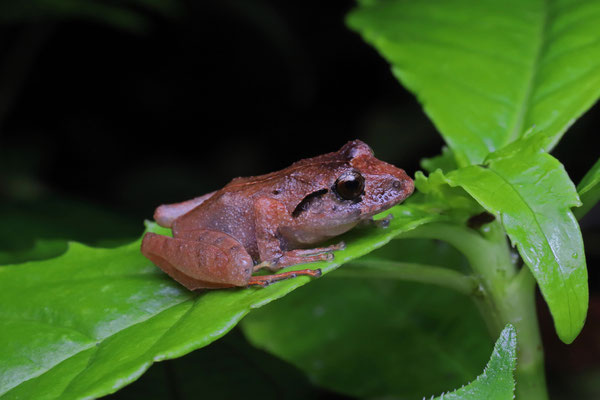
We came to the conclusion that herping these forests were hard work, but communication also. The next day we again hiked up a steep slope which surely must be the spot for jacksoni. Again, only after many sweaty hours of hiking up, we found out that this again was a similar forest, but not the exact one. Communication is difficult in these parts of the world... We decided to make the most of it as the forest did look pretty nice. Ollie is a professional climber (and half monkey) and brought a load of equipment up the mountain that would enable us to search in the canopy. We suspect that the low detectability and overall morphology of this species, hint towards a presence in that micro-habitat which is rarely visited by earthbound herpetologists. Despite our (mostly Ollie's) efforts, no animals were found in the canopy strangely, while lowhanging bromeliads did yield some results. The first animal to appear was a beautiful Perkins' Bromeliad Treefrog (Exerodonta perkinsi) I found inside a lowhanging bromeliad and our guide Francisco found a big Oak Forest Mushroomtongue Salamander (Bolitoglossa cuchumatana) inside a large bromeliad on the ground. Our other guide Caño went full beast-mode and started digging with his bare hands and actually found our first Paddletail Salamander (Bradytriton silus) of the trip! Wouter spotted a small, but beautiful Rhadinaea decorata on the trail. Then the rains came and it started to rain like it can only rain in the tropics. We hunkered down in our rainclothes to wait out the worst of the storm. Luckily the rains gave us a little break and we could make some kilometers down the mountain in darkness. During that dry spell Laura spotted a very nice and chunky Ixil Spikethumb Frog (Plectrohyla ixil). We also saw more Bolitoglossa xibalba and a single Anolis rodriguezi before the rains returned. Soaking wet we arrived back at the field station where we enjoyed our signature fusion cooking (Belarussion ham with Mexican hotsauce and Tang sprinkles were a favourite) around midnight, before turning in for the night.
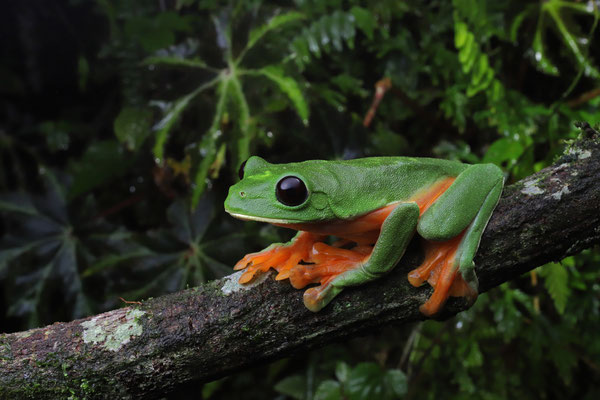
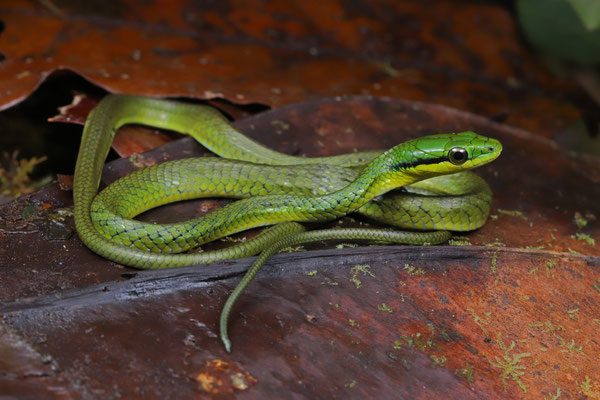
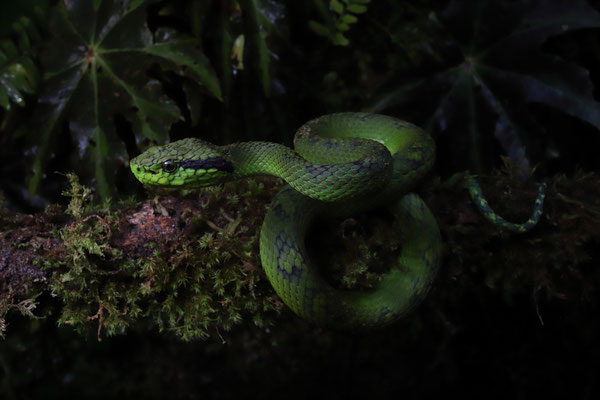
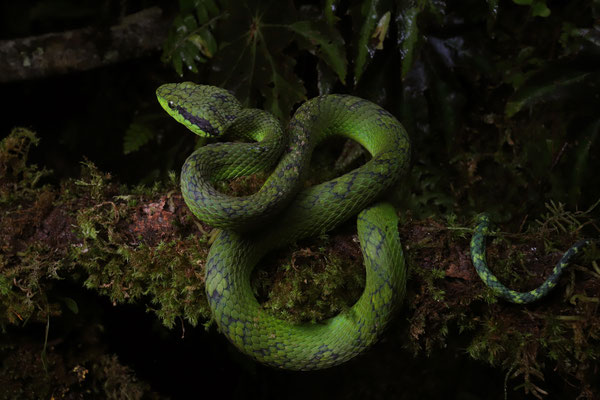
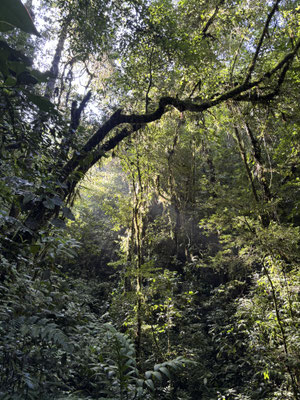
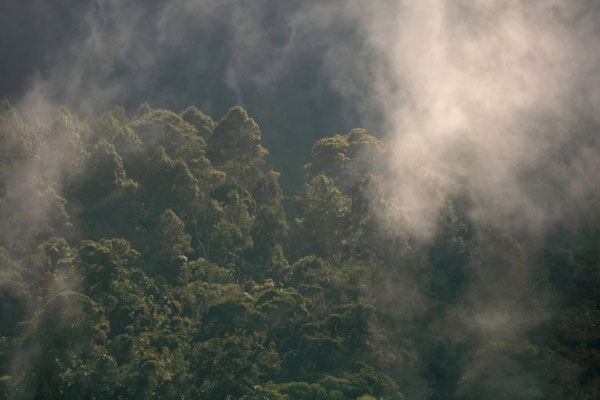
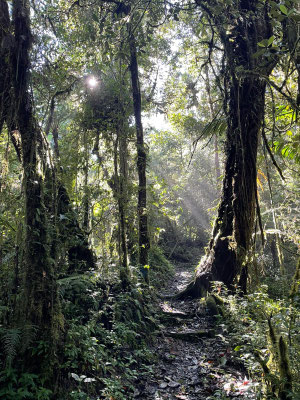
On our fourth day here we finally managed to reach the location where jacksoni was found. It took a while to get here, but the forest was absolutely beautiful. Ollie found a baby Cloud Forest Parrot Snake (Leptophis modestus) before going up into the trees and Wouter found a Scincella cherriei, but otherwise it was a very quiet day. There are simply too many hiding places in this karstic cloud forest. We put our hopes on searching here at night, but as usual, communication was difficult. It turned out we couldn't search here at night as the local community doesn't want strangers walking through the forest at night. So when it got dark we had to make our way down the steepest possible slopes and make it quick, or the community would trap us. On the way down we kept our eyes open. I spotted a big viper hanging in the vegetation. A stunning Yellow-blotched Palm Pitviper (Bothriechis aurifer)! And Laura spotted a second Paddletail Salamander (Bradytriton silus). Back at the field station we also saw some Black-eyed Leaf Frogs (Agalychnis moreletii) and they provided a nice distraction from the fact we couldn't really have a realistic chance of finding our main target.
While the rest of the team hiked up the steep slopes one more time the next day, I searched around the field station and enjoyed some sun at the stream nearby. The results of both teams were the same and absolutely nothing was found. When torrential rains started to fall at night we found ourselves on the struggle bus and choose to stay in, rest and prepare for the next location.
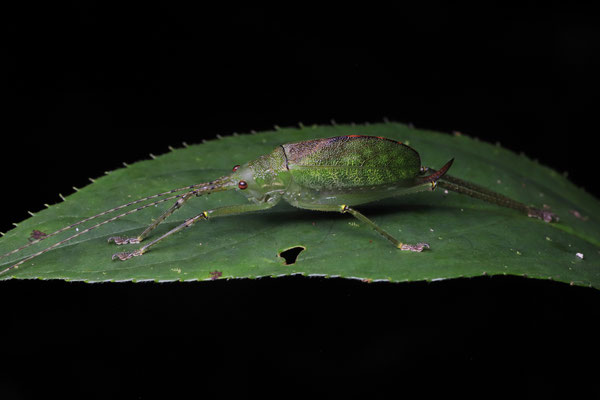
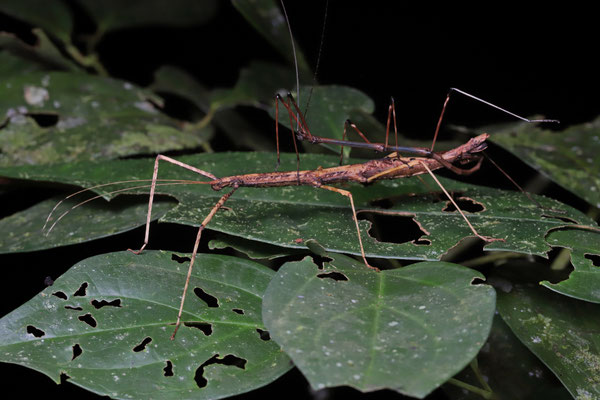
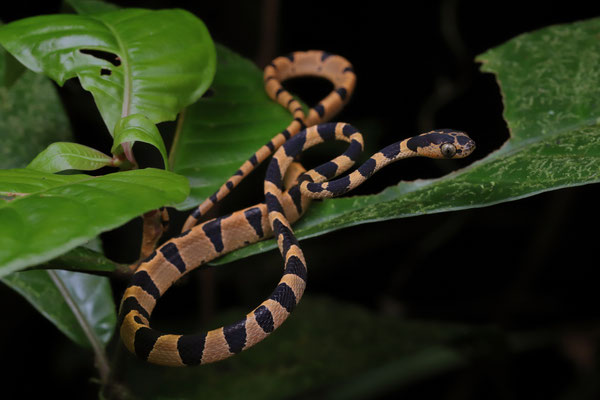
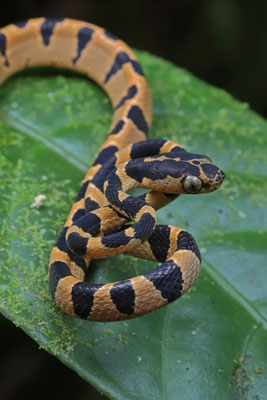
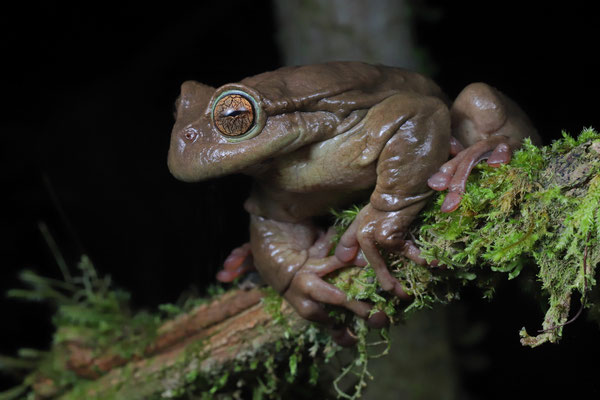
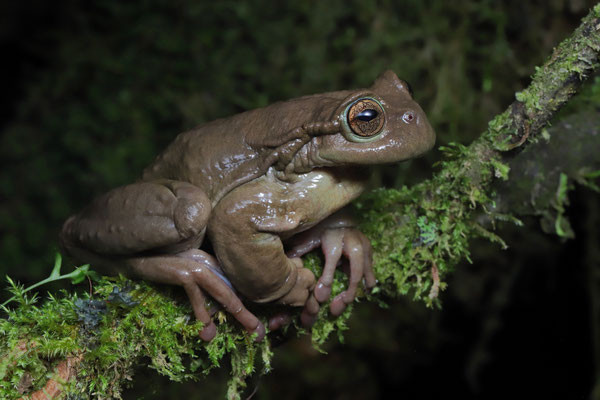

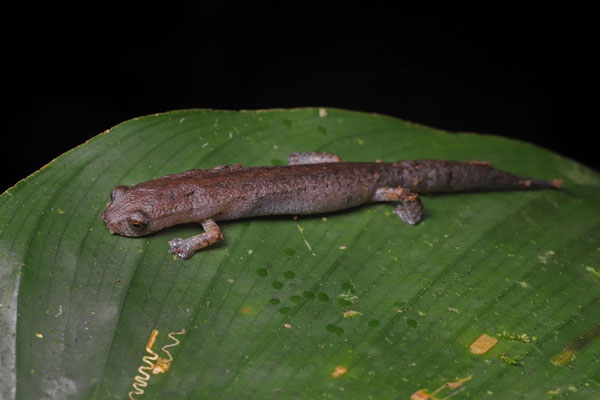
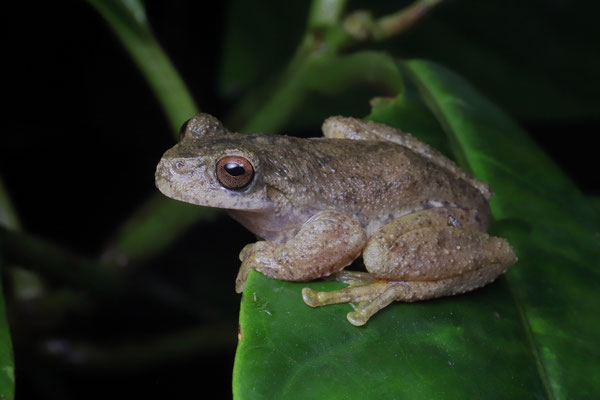
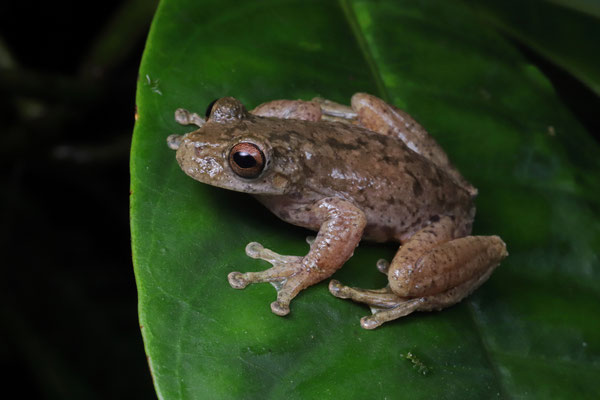
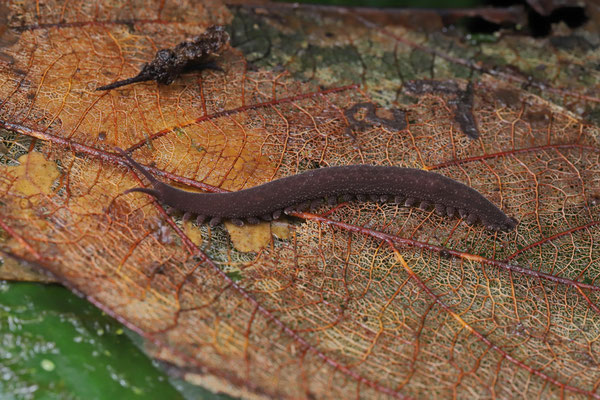
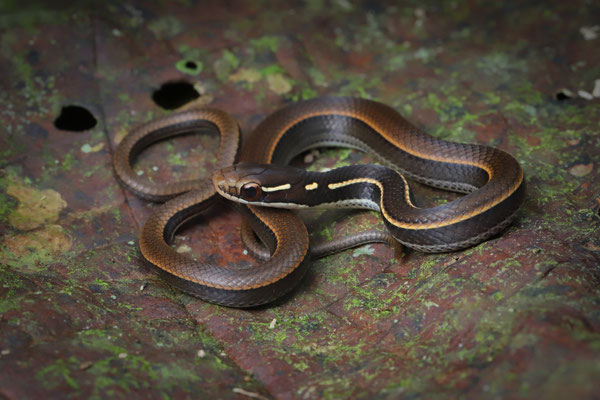
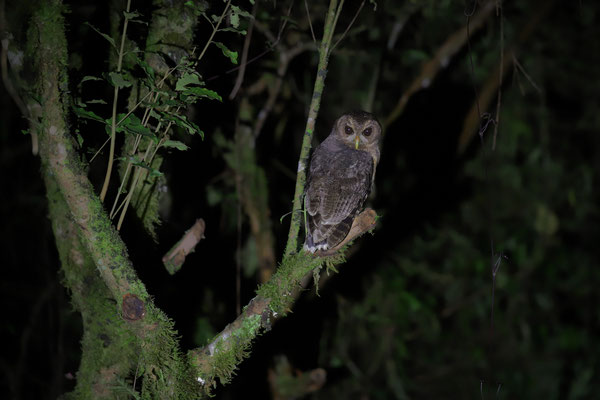

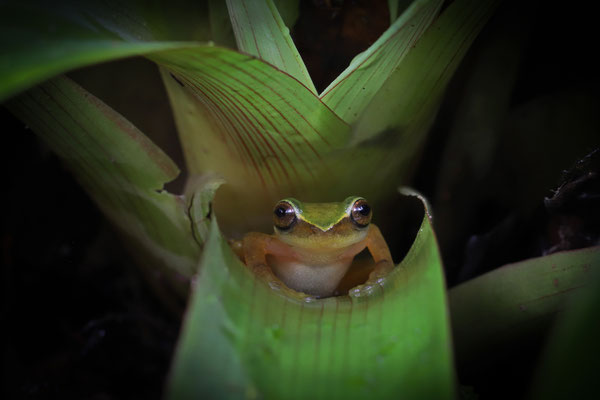
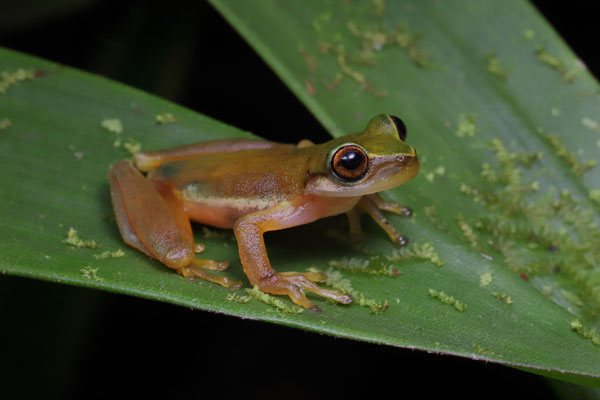
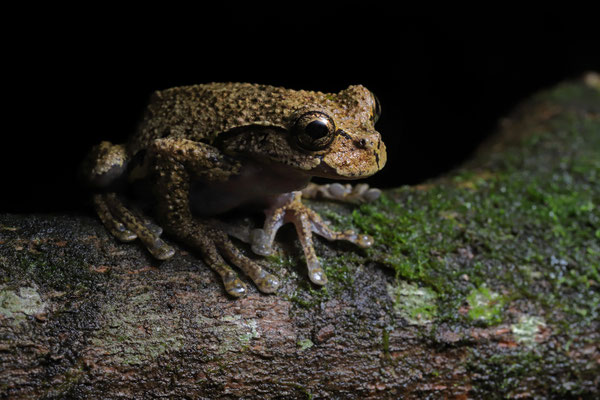
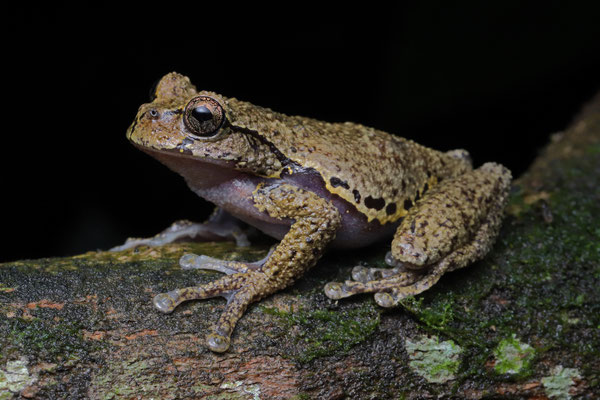

Laj Chimel
From the 22nd until the 25th of October 2025
On the drive towards Laj Chimel, we decided to stop in Huehuetenango again to eat some proper food at La Pomodoro, enjoy a warm(ish) shower at the Las Lomas (Spanish for lukewarm) and to break the drive in half. Late in the afternoon we stopped at a place we knew from 2017. We saw several Sceloporus taeniocnemis, Mesaspis moreletii and Wouter found a beautiful Godman's Montane Pitviper (Cerrophidion godmani). The next day we drove on to Laj Chimel. Again the driving took much longer than expected and we had several organizational hurdles, but when that was all behind us, we were high in the mountains again. We stayed in a cabin built shortly after the civil war by the Spanish Peace Corps, and is nowadays used to house visiting biologists. Mostly birders, but salamander tourism is on the increase. Our host here was Doña Maria, the most kind woman who cooked for us twice a day and tried to teach us the local K'iche language.
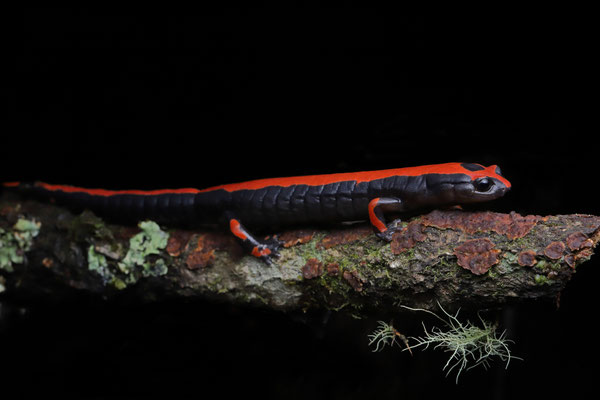
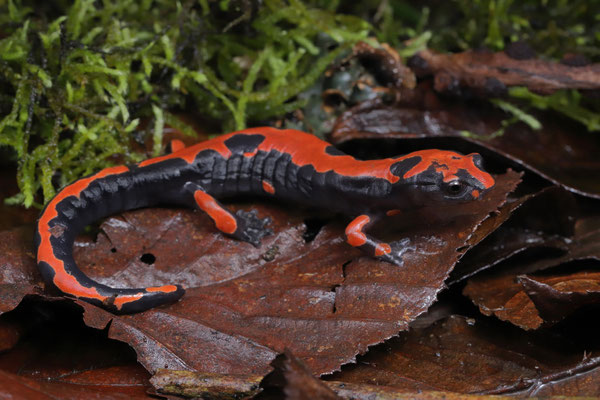
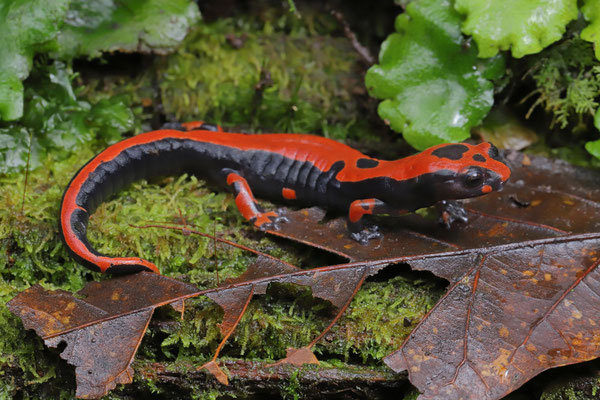
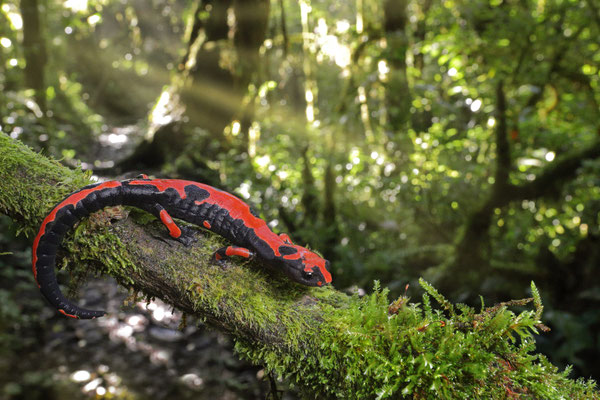
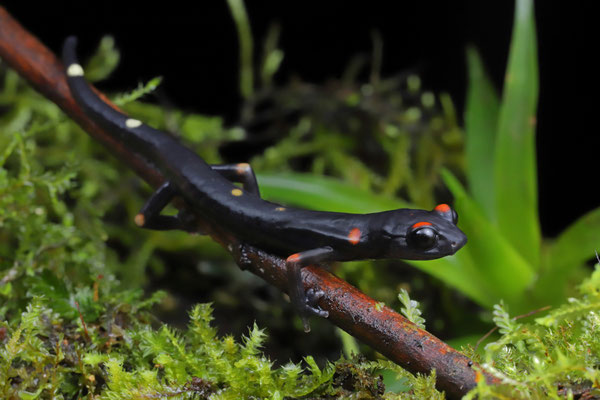
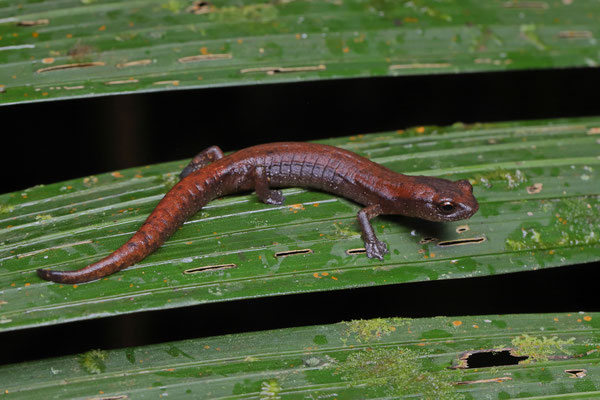
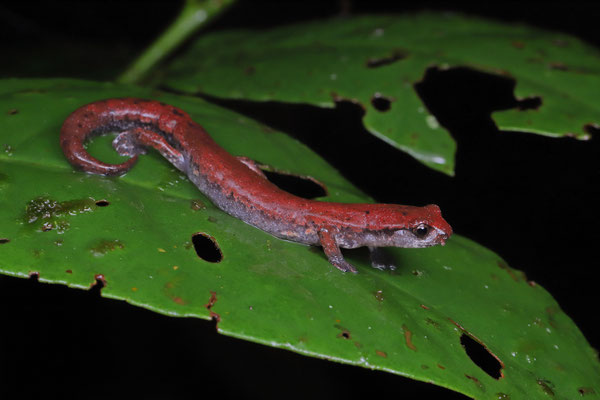
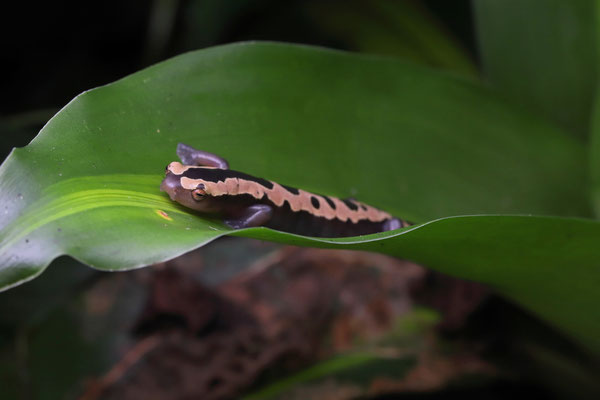
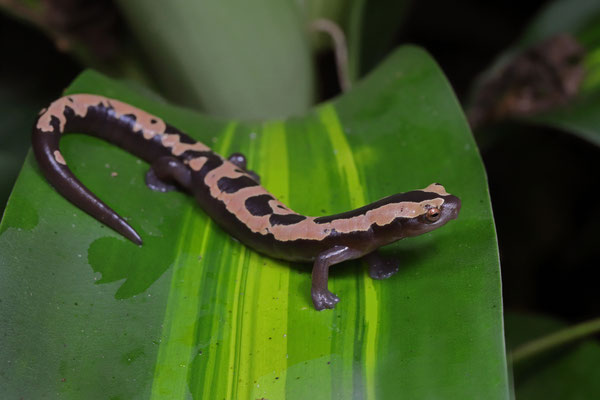
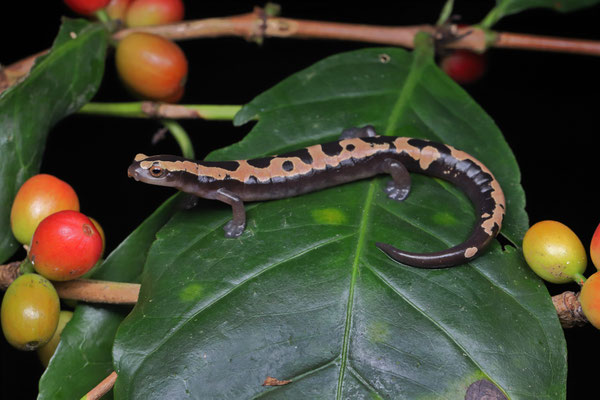
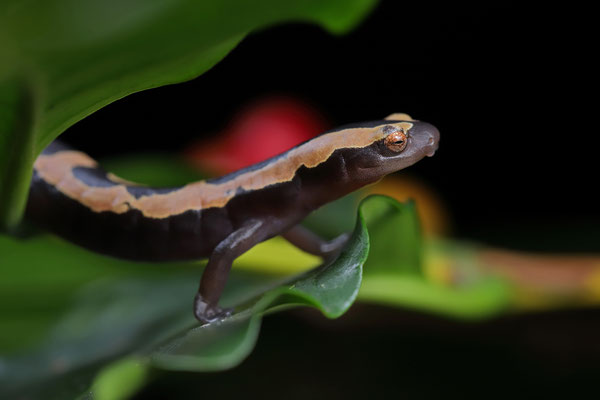
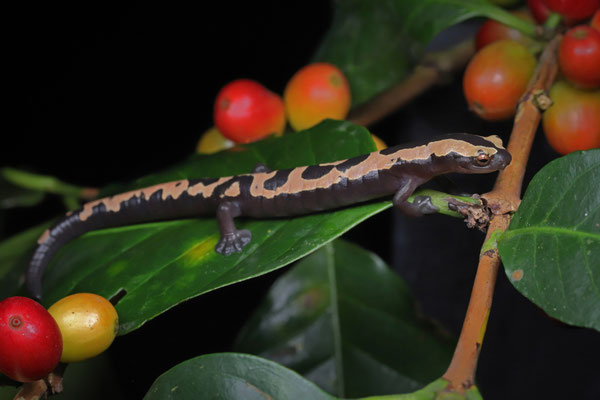
Maltiox Doña Maria! She also told us her life story and how she managed to survive the civil war. These stories sent a chill down our spines and made us admire this powerwoman even more. On the first night we explored a karstic hilltop at 2200m absl in the pouring rain and found many "Ma'ab" of 4 different species. Of course the obligatory Bolitoglossa helmrichi and Bolitoglossa xibalba, but soon the first Lincoln's Mushroomtongue Salamanders (Bolitoglossa lincolni) appeared. Stunning black and red salamanders which proved to be very common. Over the course of two nights we saw over 30 of them! But the true gem was found by Ollie and he found a subadult Nimble Long-limbed Salamander (Nyctanolis pernix) clinging to a tree trunk! Needless to say we were ecstatic with these results!
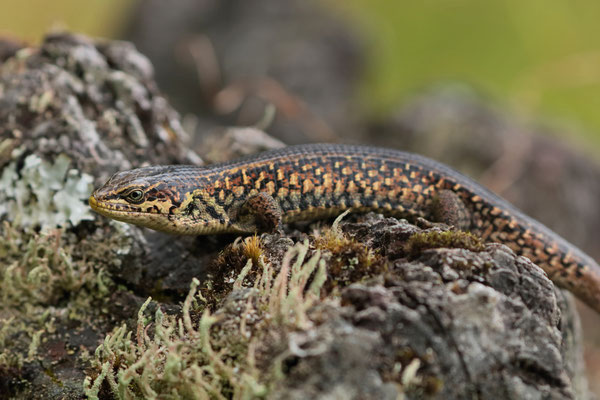
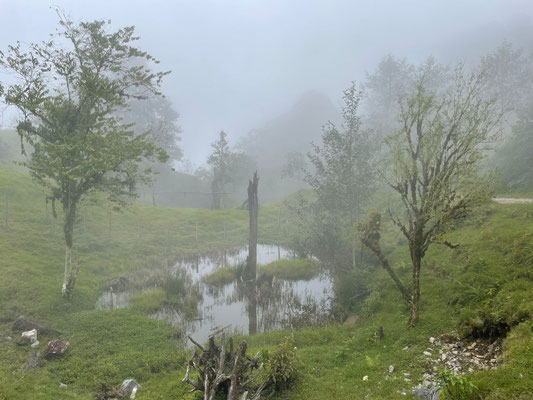
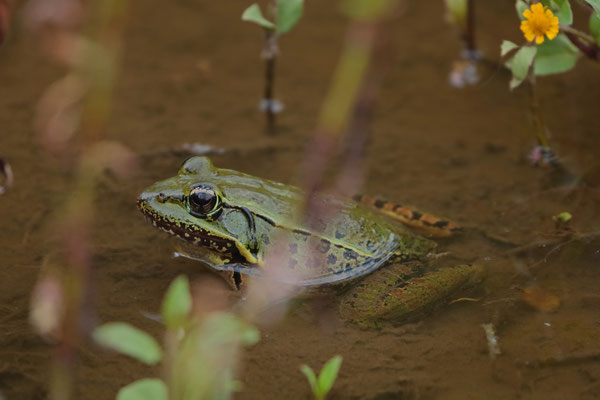
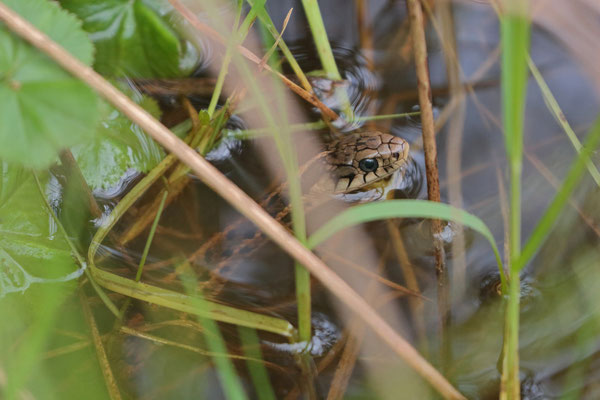
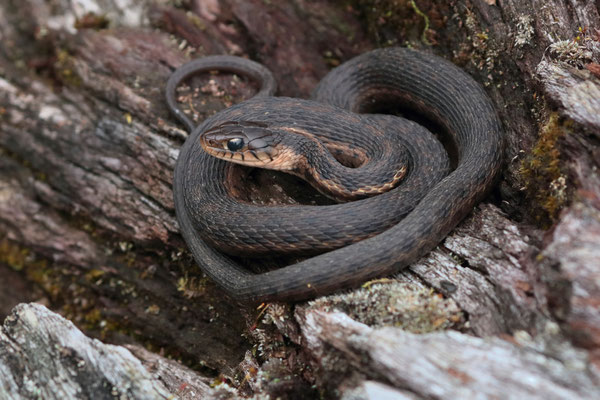
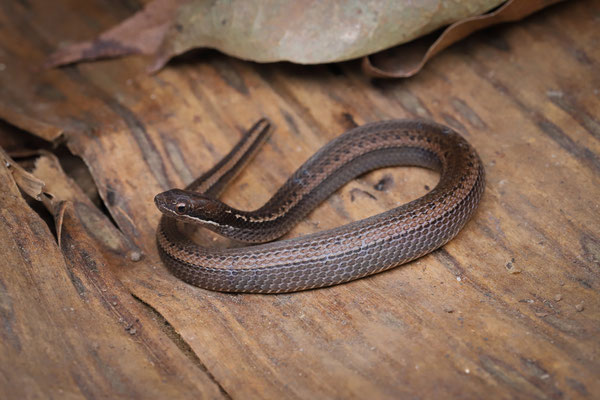
The next day we explored a different section of the forest, both day and night. We tried to get some more climbing done and see if we could find some arboreal salamanders and lizards (read: Abronia), but the only results were many more Anolis crassulus, Anolis campbelli and Mesaspis cuchumatanus. At night we saw many more salamanders of mostly the same species as the previous night, but also saw Craugastor bocourti, Craugastor lineatus, Cerrophidion godmani and a beautiful Stuart's Burrowing Snake (Adelphicos veraepacis). We had one more morning to get some herping done, before it was time to drive to Coban for a final night together as a team. Luckily we had quite some sunny spells and the usual suspects were quickly found. Around some ponds we found Lithobates macroglossa and also their predators. We saw 6 Highland Garter Snakes (Thamnophis fulvus) actively searching for prey and that was great fun to watch!
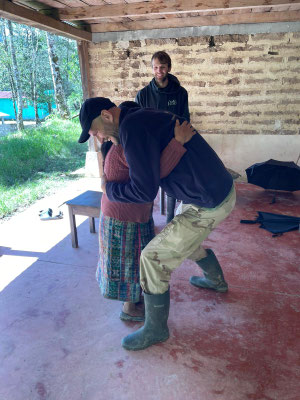
In the evening we arrived in Coban where we had a last dinner together as a team. Sadly Wouter had to fly back to the Netherlands the next day, whereas Ollie was going to get some more climbing done with a friend. We also found out that place was also on our program so that was a fun surprise! We had dinner at the most renowned restaurant in town and as usual the Golden Arches didn't disappoint.





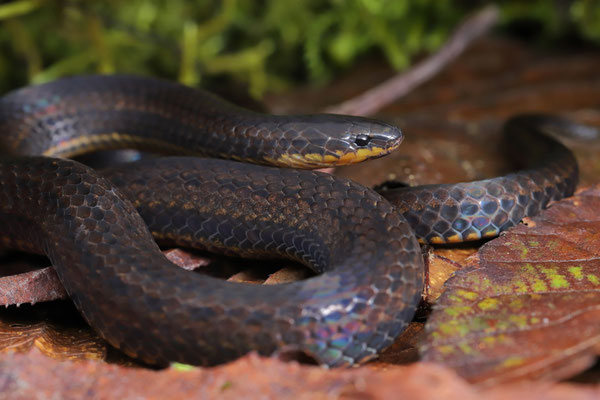
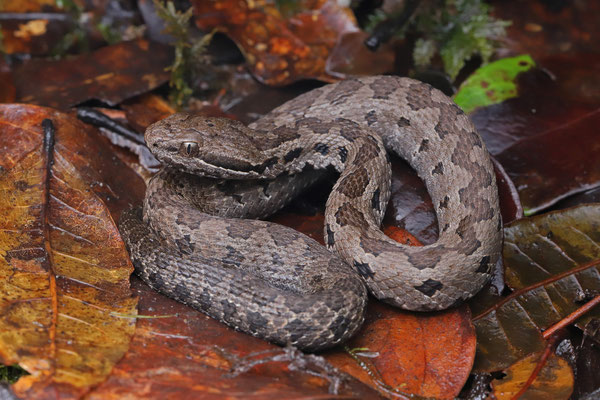
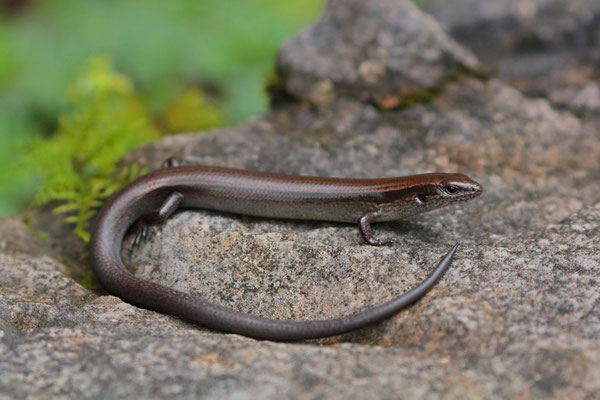

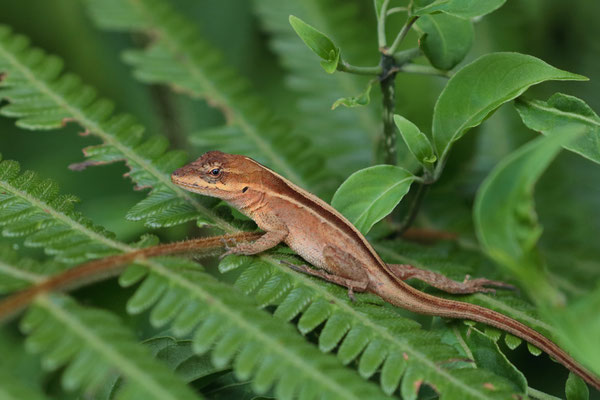
Semuc Champey
From the 26th until the 28th of October 2025
On the last morning together we visited a city park with a surprising amount of wildlife. We could at least add some crocodiles and turtles to the list, as we saw Crocodylus moreletii and Trachemys venusta in a small lake. Then we dropped Wouter off at the bus station and Ollie back at the hotel.
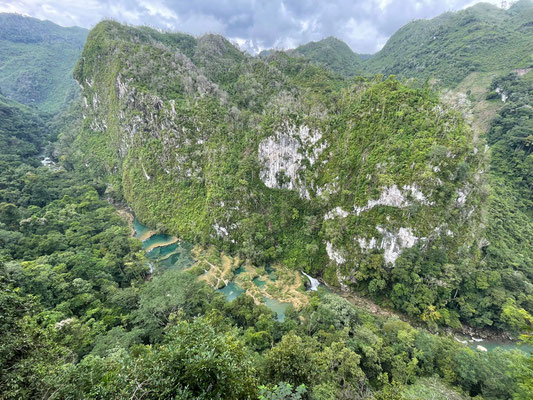
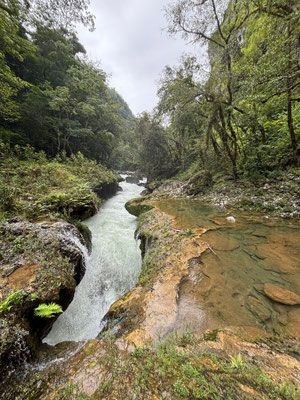
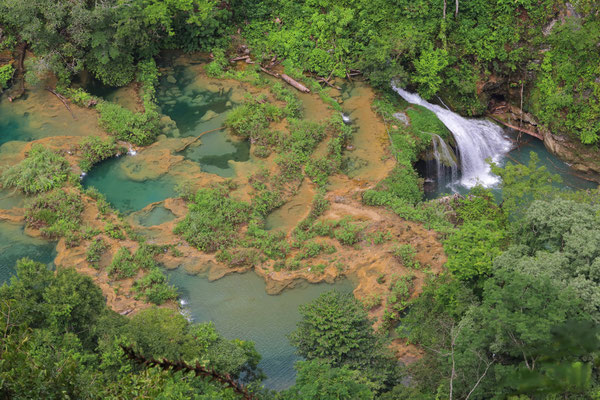
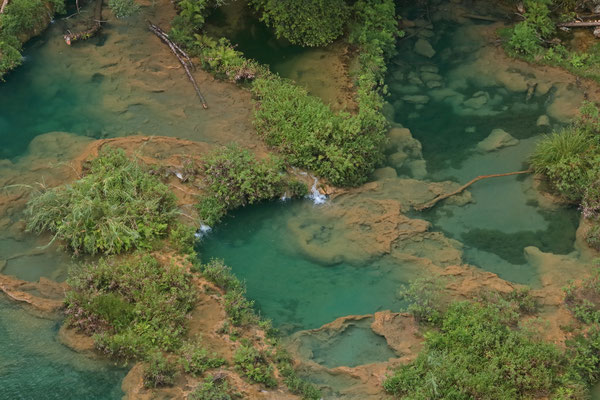
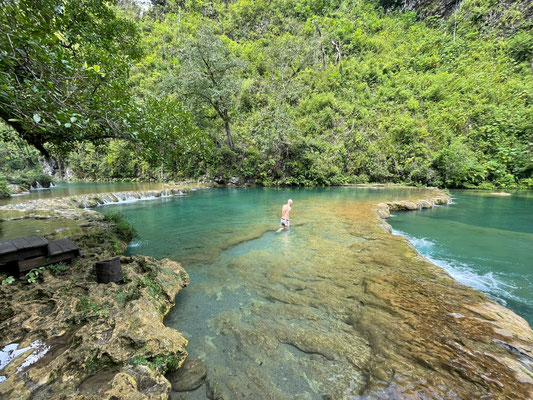
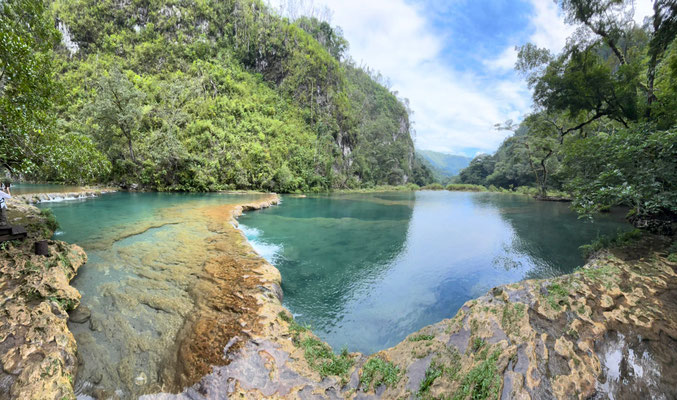
With just the two of us again, Laura and I drove to Lanquín. We stayed at the Viñas Hotel which had a hard time deciding if it wants to be a hotel, a restaurant or a sportsbar with a pool. Although the facilities were fantastic, there was music coming from every direction and we continuously heard three different kind of music at all time. Even so loud that the windows were vibrating. In the swimming pool there were equally loud people who wanted to take selfies with us whenever we got to close, so we were confined to our room. At night most music stopped, except of course from the sports bar right in front of our room... Oh, how we have not missed "civilization". After breakfast the next day we hiked to the natural phenomena of Semuc Champey. Nowadays a rather touristy place, but mighty impressive all the same. The steep cliffs towering high over the cascading blue pools and the roaring river that just vanishes underground and underneath the blue pools is really a sight to behold. The only herps we saw here were Hemidactylus frenatus and Basiliscus vittatus. And for those looking for a culinary delight: Donde Rodin has the most tasty food we had in Guatemala!
Ranchitos del Quetzal
From the 28th until the 29th of October 2025
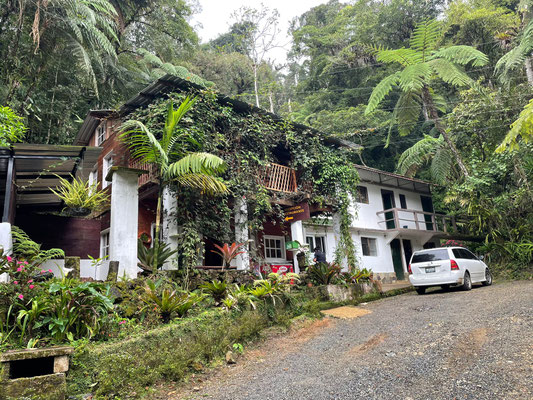
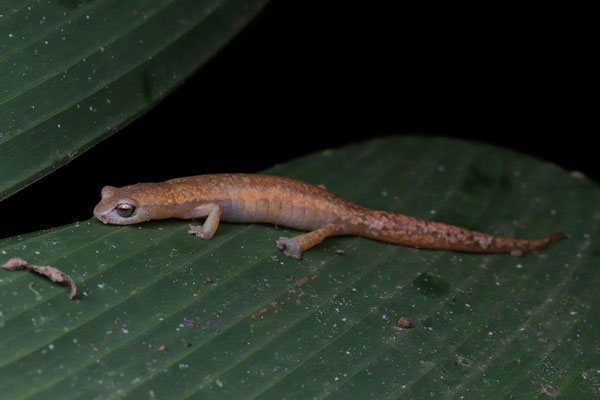
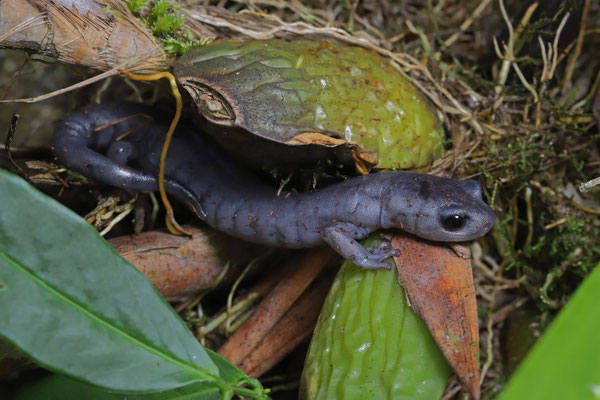
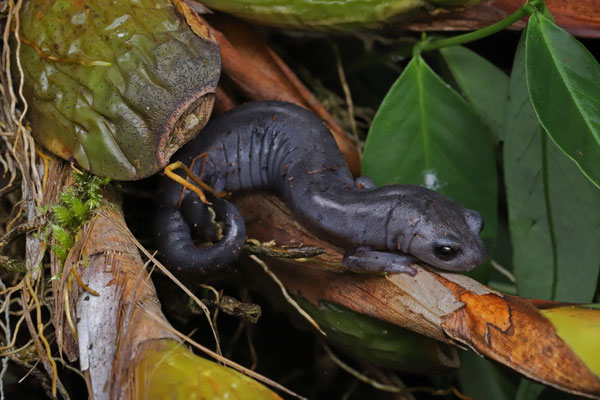
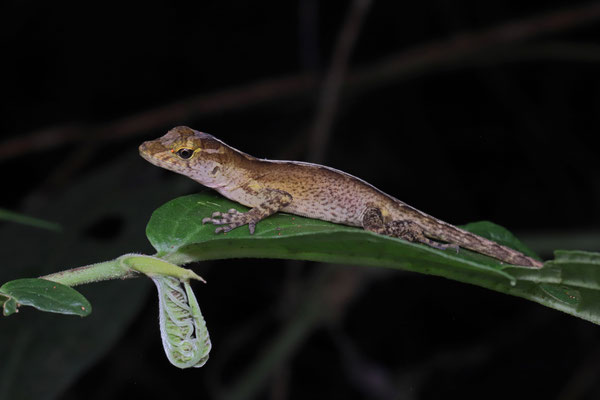
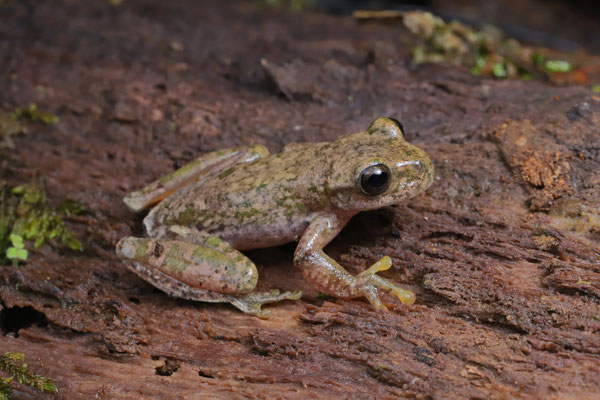
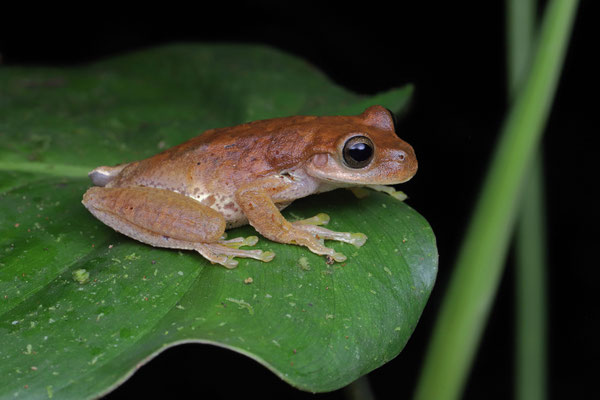
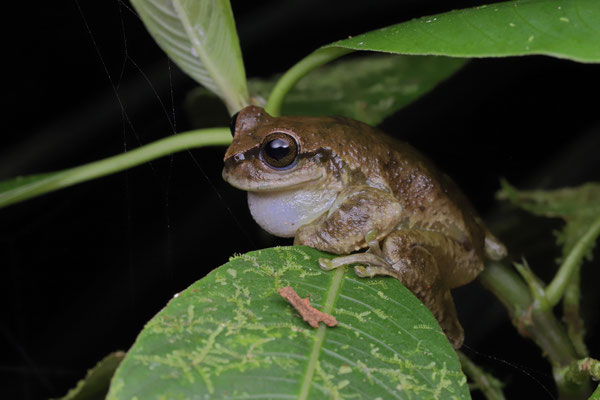
Another place we had fond memories of from our visit in 2017 was the Ranchitos del Quetzal. We were keen on exploring this place again and even Ollie could join us for a few more days! Eight years ago it was a nice and quiet place, with great food and all the freedom to explore the forest by yourself. Nowadays the traffic from the nearby road is deafening, making screaming almost necessary when talking to each other in the garden. The restaurant changed with the portions being tiny and the choices limited. The roaming around freely is no more either and every step you take here comes at a price. We wanted to stay three nights and on the first night we booked a night tour with new owner Rudy. We had company from Hugo and Yoann from France who stayed in the lodge at the same time. Although there is a fixed price for a group of four (and a little add-on for an extra person) Rudy still charged for two groups of four people. He explained the rules (don't leave the trails and don't touch any animals) before we went into the forest. Not for long until we started seeing several Craugastor xucanebi and the French guys were the first to spot Guatemalan Black Salamanders (Bolitoglossa tenebrosa). A great start! Laura expressed her enthusiasm and was greeted by a "psssst" from Rudy. Imagine you damage the salamanders delicate hearing! Deeper in the forest we still heared the trucks from the road, but also saw many Bolitoglossa helmrichi, Anolis cobanensis, several Ptychohyla hypomykter and a single Plectrohyla hartwegi deep in the vegetation. Rudy already made clear at the beginning of the evening he was feeling a bit tired, but when I touched a frog (reflexes, shouldn't have done that) he saw his chance and decided to cancel the entire tour for everybody. I offered to go back by myself as I was the one violating his precious rules, but he didn't want that. We weren't too sad either, as it was a dry night and seeing multiple salamanders was already a big highlight. We knew we couldn't go into the forest unsupervised, so we decided to walk a bit through the garden between the restaurant and the bungalows to look for frogs. We saw some tadpoles of Bromeliohyla bromeliacia, but sadly no adults. The next morning after breakfast, Rudy approached Laura and told her to hand over the keys as we went into the "reserve" at night. We found out that the garden is apparently part of the reserve and if you don't book the expensive night tour, you are confined to your room. It is sad that the Ranchitos is no longer a place where they welcome visitors, but rather keep prisoners. As the whole experience turned out to be not at all what we expected, we were very happy to oblige. After we got our money back of course.


Antigua
From the 29th of October until the 2nd of November 2025
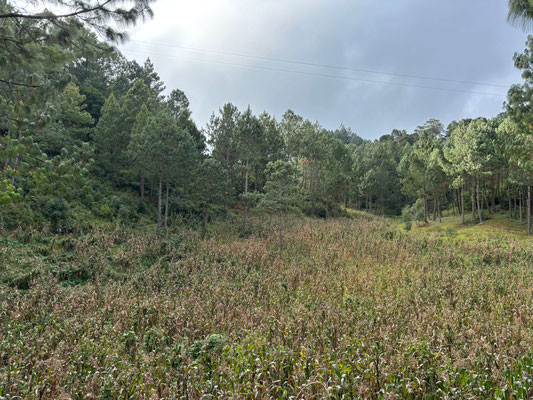
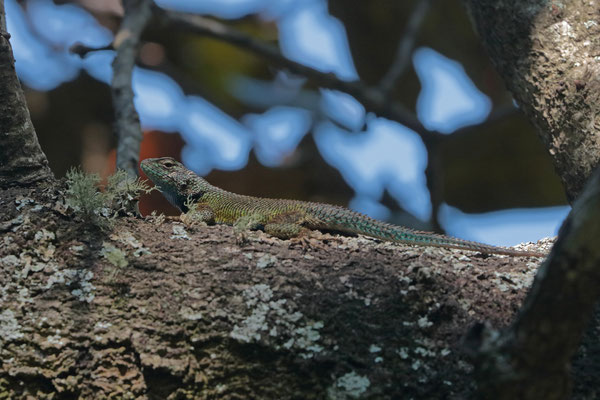
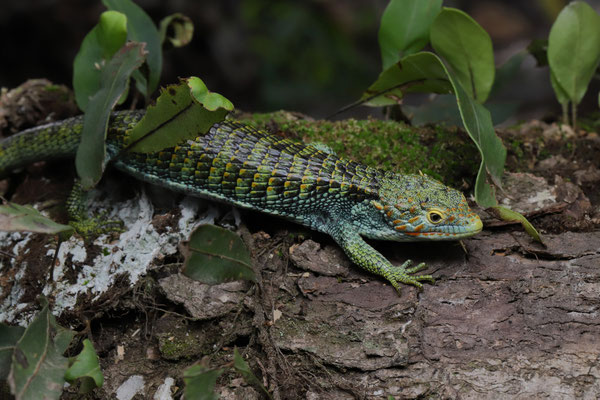
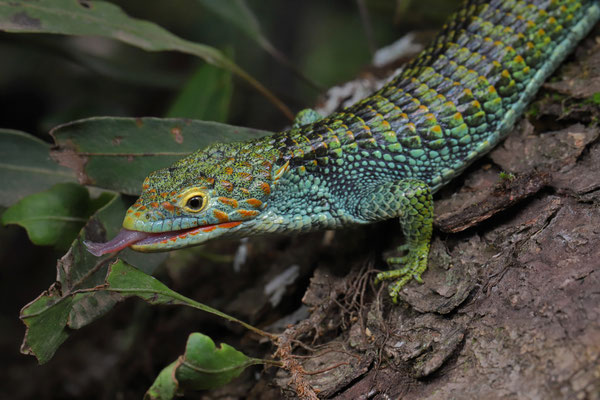
With a bit more time on our hands now, we decided to drive earlier than planned to Antigua. Luckily the Hotel Quinta Vista Verde could receive us earlier than scheduled and Ollie found a more budget-friendly place nearby. On Ollie's last day we followed up on a tip we got from our friend Erica. We drove out of Antigua and into the mountains. It was sunny and lizards were out. Although we saw several Anolis crassulus and Sceloporus smaragdinus, it was only with the help of our new friend Tono that we saw what we came for. He is the owner of this large piece of land and actively involved in the conservation of the endangered Bocourt's Arboreal Alligator Lizard (Abronia vasconcelosii). They are not only endemic to the Guatemalan Highlands, they are among the most beautiful Abronia species out there. On top of that we could enjoy a fabulous lunch in his restaurant! Still amazed by this fantastic species, we drove back to Antigua and had a fantastic sushi dinner at the Nokiate Restaurant. Sadly it was also goodbye to Ollie who was bound for Colombia the next day.
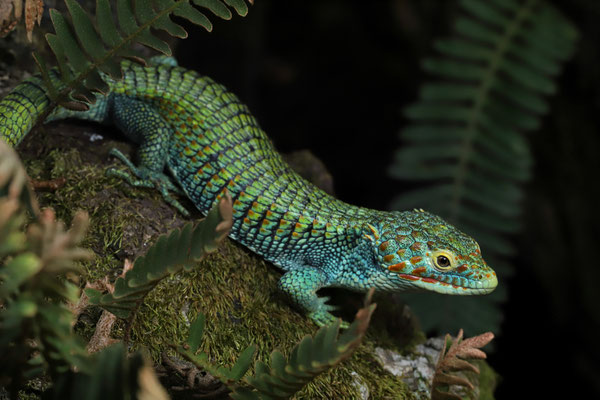
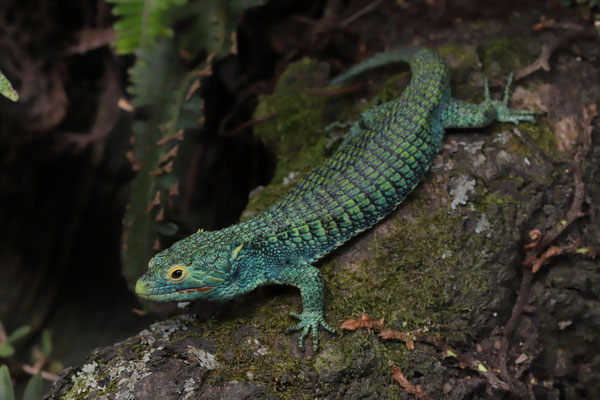
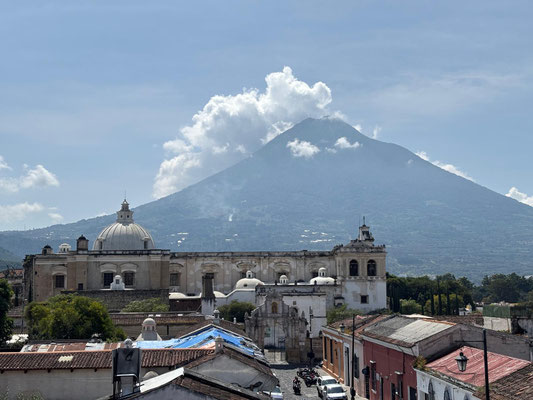
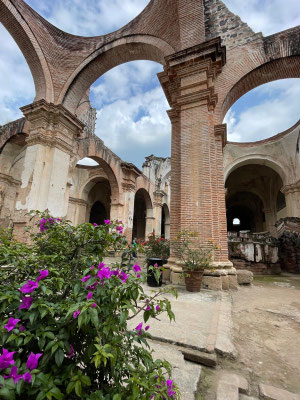
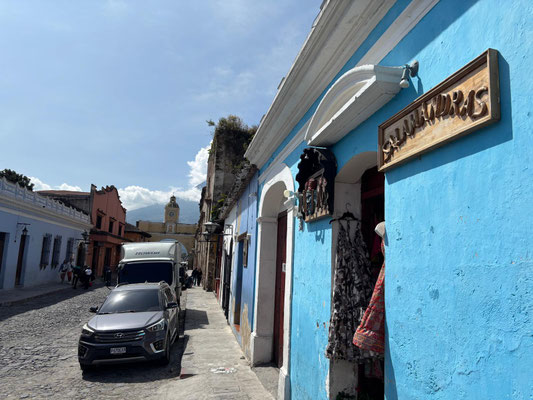
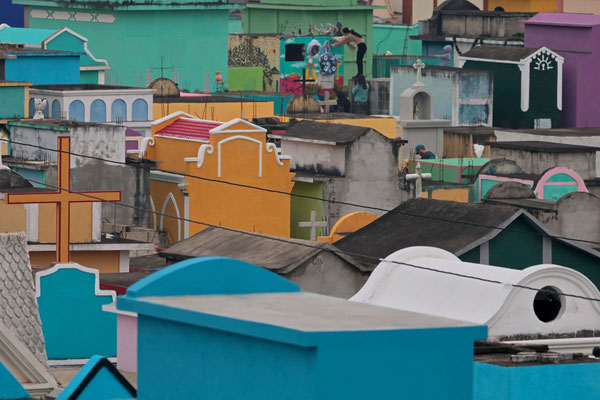
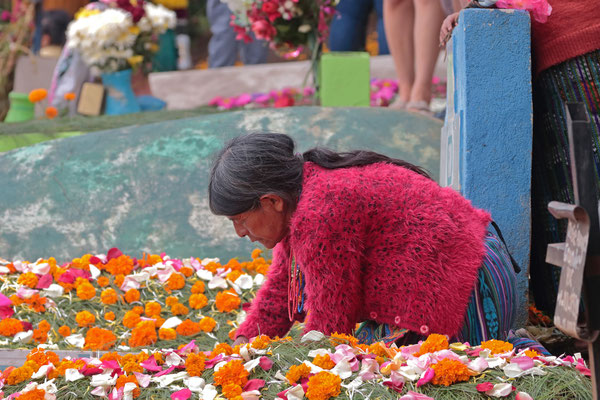
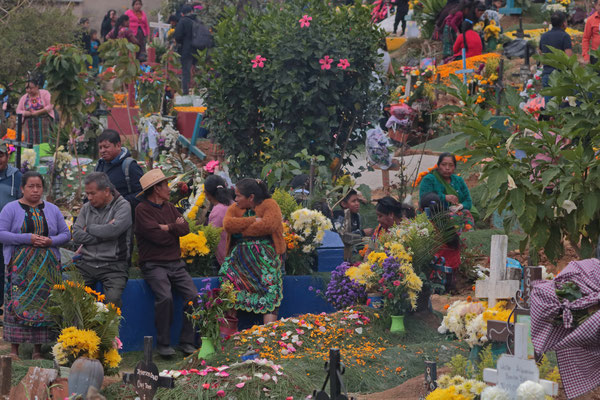
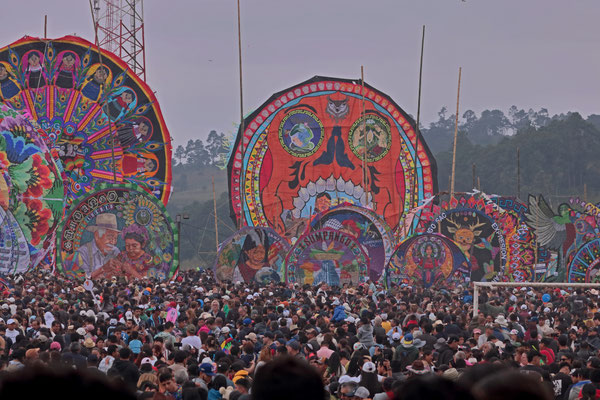
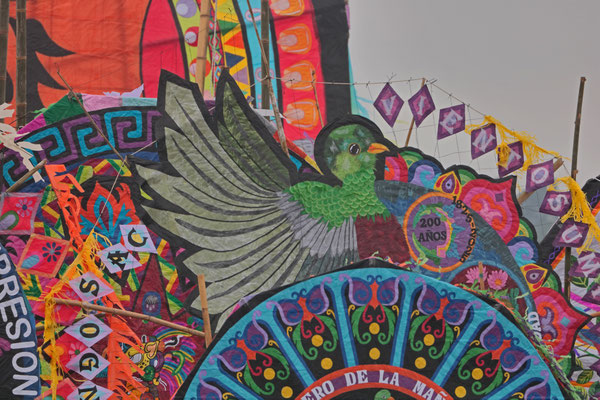
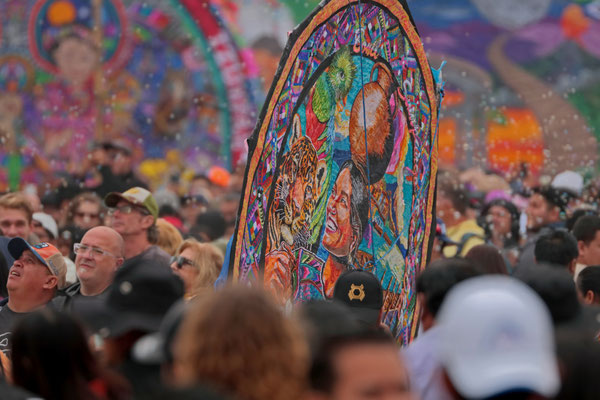
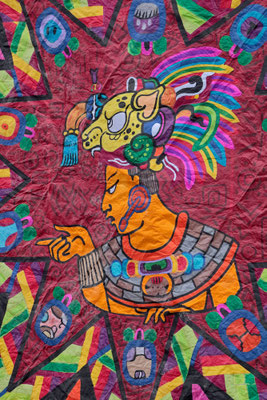
During the next days, Laura and I both felt the tiredness of herping non-stop for the last three months. Luckily Antigua proved to be the perfect place to rest a little, eat some proper food, organize our things and get some sight-seeing in. We admired the city's architecture, visited local cemeteries on Dia de Todos los Santos and saw the biggest kites in the world on the Sumpango Festival de Barriletes Gigantes. Sadly, after four nights in the fantastic Hotel Quinta Vista Verde with exceptional hosts Rafael and Edgar, it was time to move on.




Volcán de Atitlán
From the 2nd until the 4th of November 2025
For our final days in Guatemala, Laura and I splurged a little and went to a rather luxurious resort on the slopes of Volcán de Atitlán. Although a bit over budget, this place proved the perfect place to relax a little bit more and work on our pictures, reports and other organizational tasks. Not only that, the resort is also home to one of the most beautiful salamander species of Guatemala. When we arrived we immediately noticed how dry it was here. When we asked around we found out there hasn't been any rain for the last 10 days so our optimism sank. Before dinner we of course did try to find salamanders and believe it or not, Laura found a beautiful male Salvin's Mushroomtongue Salamander (Bolitoglossa salvinii) sitting at the edge of a plant axil that still held some water. What a find and wouldn't it be great to always get your main target in before dinner?! After dinner we tried to find more salamanders but found Rhinella horribilis, Ptychohyla euthysanota, Craugastor loki, Lithobates forreri, Anolis serranoi and Coniophanes fissidens.
The next day there was still no rain and after a day of relaxation at the pool we did another trail in more natural habitat. Here we immediately saw many Matuda's Spikethumb Frog (Plectrohyla matudai) calling from inside streams, more Ptychohyla euthysanota and the most beautiful Streamside Frog (Craugastor rupinius). The next day we left this beautiful place in the late afternoon and just when we started driving, the rains came back. Of course... And to make matters worse we saw a massive Central American Rattlesnake (Crotalus simus) being killed by a car right in front of us on the highway. Not the nicest sendoff after a fantastic time in Guatemala... But the travel to New York went smoothly and Africa is calling! On to the next stage of our trip!

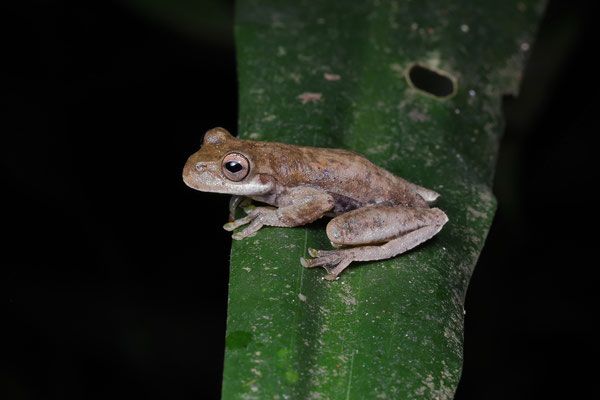
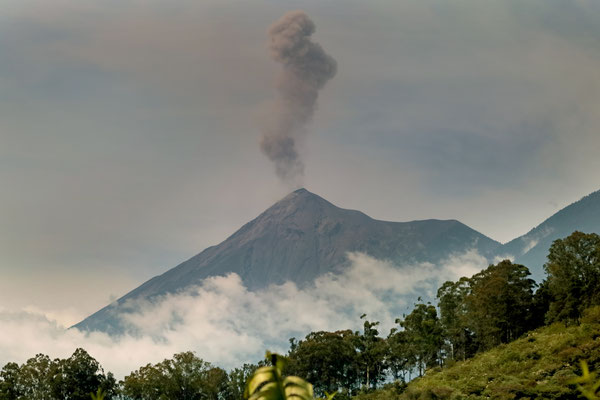
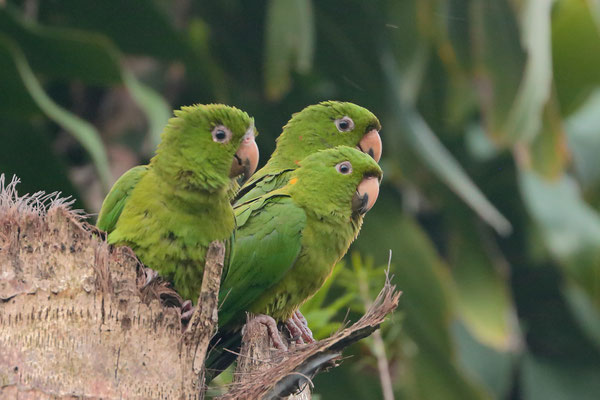
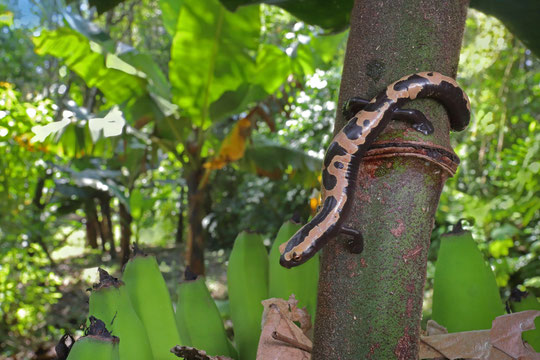
Species
Guatemalan Mushroomtongue Salamander (Bolitoglossa centenorum)
Oak Forest Mushroomtongue Salamander (Bolitoglossa cuchumatana)
Coban Mushroomtongue Salamander (Bolitoglossa helmrichi)
Huehuetenango Mushroomtongue Salamander (Bolitoglossa huehuetenanguensis)
Lincoln's Mushroomtongue Salamander (Bolitoglossa lincolni)
Salvin's Mushroomtongue Salamander (Bolitoglossa salvinii)
Guatemalan Black Salamander (Bolitoglossa tenebrosa)
Xibalba Mushroomtongue Salamander (Bolitoglossa xibalba)
Paddletail Salamander (Bradytriton silus)
Nimble Long-limbed Salamander (Nyctanolis pernix)
Bocourt's Toad (Incilius bocourti)
Gulf Coast Toad (Incilius valliceps)
Western Cane Toad (Rhinella horribilis)
Bocourt's Robber Frog (Craugastor bocourti)
Montane Robber Frog (Craugastor lineatus)
Common Leaflitter Frog (Craugastor loki)
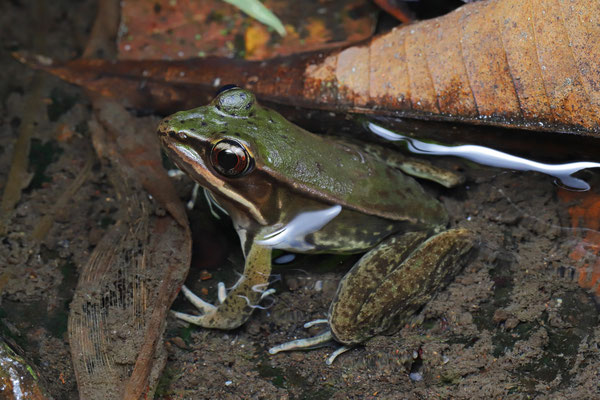
Streamside Frog (Craugastor rupinius)
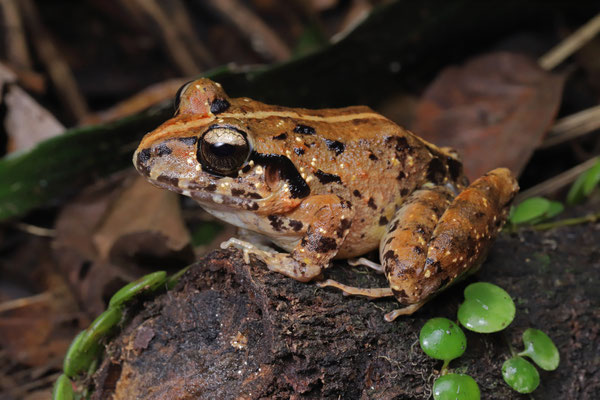
Xucaneb Robber Frog (Craugastor xucanebi)
Black-eyed Leaf Frog (Agalychnis moreletii)
Bromeliad Treefrog (Bromeliohyla bromeliacia) tadpoles
Perkins' Bromeliad Treefrog (Exerodonta perkinsi)
Hartweg's Spikethumb Frog (Plectrohyla hartwegi)
Ixil Spikethumb Frog (Plectrohyla ixil)
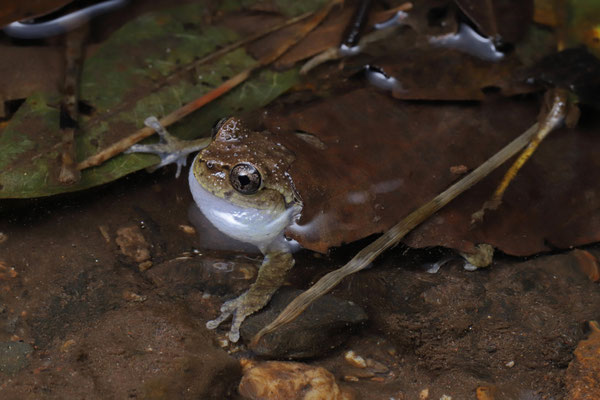
Matuda's Spikethumb Frog (Plectrohyla matudai)
Las Palmas Spikethumb Frog (Plectrohyla quecchi)
Alta Verapaz Spikethumb Frog (Plectrohyla teuchestes)
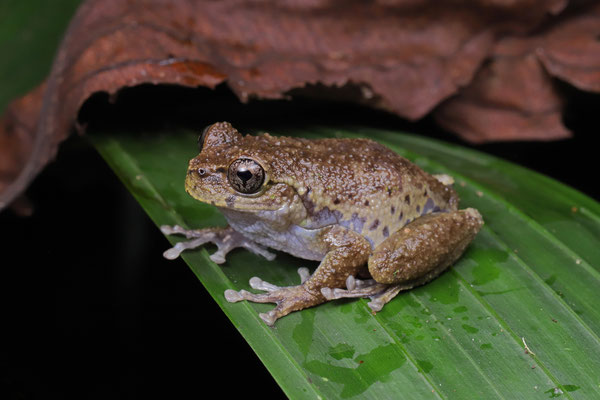
Cloud Forest Stream Frog (Ptychohyla euthysanota)
Copan Stream Frog (Ptychohyla hypomykter)
Guatemalan Plateau Frog (Lithobates macroglossa)
Forrer's Grass Frog (Lithobates forreri)
Meso-American Slider (Trachemys venusta)
Mexican Crocodile (Crocodylus moreletii)
Bocourt's Arboreal Alligator Lizard (Abronia vasconcelosii)
Cuchumatanes Alligator Lizard (Mesaspis chuchumatanus)
Morelet's Alligator Lizard (Mesaspis moreletii)
Common House Gecko (Hemidactylus frenatus)
Campbell's Anole (Anolis campbelli)
Coban Anole (Anolis cobanensis)
Ornate Anole (Anolis crassulus)
Rodriguez's Anole (Anolis rodriguezi)
Serrano's Anole (Anolis serranoi)
Striped Basilisk (Basiliscus vittatus)
Black Spiny-tailed Iguana (Ctenosaura similis)
Bocourt's Emerald Spiny Lizard (Sceloporus smaragdinus)
Guatemalan Emerald Spiny Lizard (Sceloporus taeniocnemis)
Rose-bellied Spiny Lizard (Sceloporus variabilis)
Brown Forest Skink (Scincella cherriei)
Stuart's Forest Skink (Scincella incerta)
Stuart's Burrowing Snake (Adelphicos veraepacis)
Yellow-bellied Snake (Coniophanes fissidens)
Red Coffee Snake (Ninia sebae)
Common Blunt-headed Vine Snake (Imantodes cenchoa)
Northern Cat-eyed Snake (Leptodeira septentrionalis)
Cloud Forest Parrot Snake (Leptophis modestus)
Adorned Graceful Brown Snake (Rhadinaea decorata)
Highland Garter Snake (Thamnophis fulvus)
Yellow-blotched Palm Pitviper (Bothriechis aurifer)
Godman's Montane Pitviper (Cerrophidion godmani)
Central American Rattlesnake (Crotalus simus) DOR